

It is expected to be one of the most dramatic moves on the Tel Aviv Stock Exchange: record IPOs being advanced by the Government Companies Authority for two defense giants — Israel Aerospace Industries, at an estimated valuation of about NIS 100 billion, and Rafael, at an estimated valuation of NIS 60 billion to NIS 70 billion. Offerings of that scale would place both companies among the six largest on the Israeli stock exchange.
The Government Companies Authority is optimistic about the IAI IPO and believes it could be completed in the coming months. However, not all disputes with the Israel Securities Authority have been resolved regarding the public disclosure requirements to which the companies are subject. IAI and Rafael are seeking full or partial confidentiality for some sensitive transactions.
Gallery
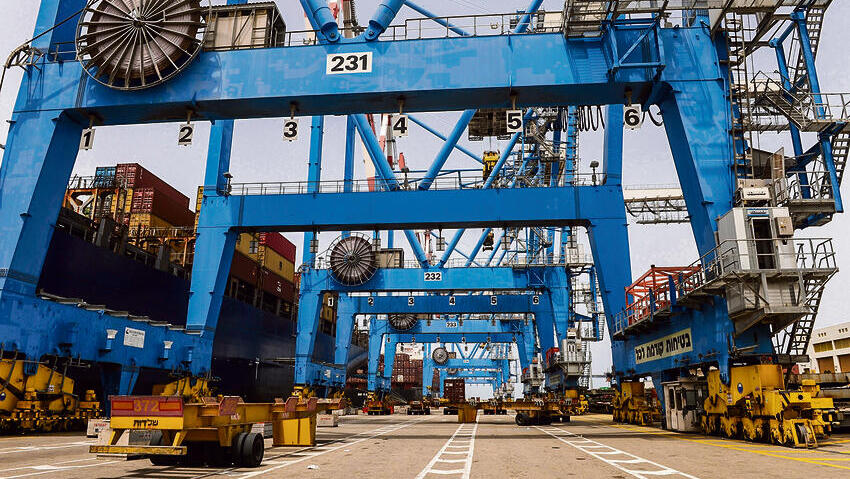
Ashdod Port; the smallest gaps between executive pay and regular employee salaries
(Photo: Avi Rokach)
“IAI’s readiness for an IPO is in advanced stages,” said CPA Elinor Damari, director of the Finance and Control Unit at the Government Companies Authority, expressing optimism. “There is already a government decision, and there has recently been very significant progress on the issue. The process with Rafael is also underway, but its readiness is still at a less advanced stage.”
Damari is soon expected to head a delegation to New York, together with Maayan Harel, director of the authority’s defense unit, to examine U.S. regulation on Nasdaq and the New York Stock Exchange regarding defense companies, and draw conclusions about necessary amendments in Israel. The Government Companies Authority is also considering a dual listing — on the Tel Aviv and New York exchanges simultaneously — similar to leading Israeli companies such as Teva. If understandings are not reached with the Israel Securities Authority, the authority will consider advancing legislation through the Arrangements Law.
The annual report of the Government Companies Authority reveals the extent to which defense companies have become a central pillar of the Israeli economy. Rafael’s revenues jumped 21% in 2025, while IAI’s rose 13%. The result: all-time record revenues for Israel’s government companies, totaling NIS 113 billion in 2025.
“The defense companies are the most important contributors to the increase in revenues and profits,” Damari said. The net profit of all government companies totaled NIS 9.8 billion, compared with NIS 7.6 billion in 2024 — a 28% increase. The profit transferred to state coffers, in the form of dividends declared by the companies in 2025, stood at NIS 1.61 billion, compared with NIS 1.19 billion in 2024.
Another important issue on the agenda concerns the sale of ZIM to Germany’s Hapag-Lloyd. The deal is facing opposition from security officials and the workers’ committee, among others, because Saudi Arabia and Qatar each separately hold more than 20% of Hapag-Lloyd’s shares. ZIM has been privatized and is no longer government-owned, but because of its security importance, the state holds a golden share in the company and the right to veto its sale.
The Government Companies Authority is overseeing the review of the acquisition and has established a team that includes representatives from the Finance, Defense and Transportation ministries, as well as the Competition Authority. “The process,” officials at the Government Companies Authority said, “is underway and will take several months.”
Top earners
The Government Companies Authority is responsible for 70 government companies, including about 15 major companies in the economy. In addition to IAI and Rafael, the list includes the Israel Electric Corporation, Mekorot, NTA Metropolitan Mass Transit System, Netivei Israel, Ashdod Port and others.
This week, the Government Companies Authority’s annual report for 2025 is being published — the first year of Roi Kahlon’s tenure as director of the authority. Kahlon was appointed to the post by Minister Dudi Amsalem, who oversees the authority, in November 2024.
To Kahlon’s credit, the report published this year is more transparent and includes a detailed chapter on employee salaries and manpower at government companies. So which government company is the most worthwhile place to work?
Rafael tops the list, with an average gross salary for a regular employee of NIS 22,700 a month. It is followed by IAI, with NIS 19,800; the Israel Electric Corporation, with NIS 18,400; Mekorot, with NIS 18,000; and Ashdod Port, with NIS 17,600.
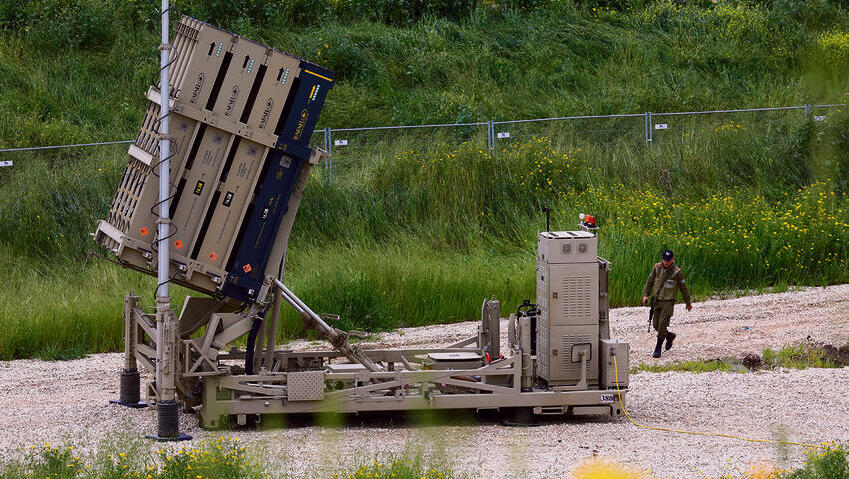
Rafael; a 21% jump in revenues
(Photo: Shaul Golan)
Another interesting figure concerns average senior executive pay: At Rafael, it stands at NIS 85,100 a month; at IAI, NIS 81,600; at the Israel Electric Corporation and Mekorot, about NIS 69,000; and at the Israel Association of Community Centers, NIS 67,000.
Total salary costs at government companies amounted to NIS 23 billion in 2025, compared with NIS 19.3 billion in 2024 — a 19% jump. The Government Companies Authority explains that salary costs rose in line with the increase in company revenues.
The largest pay gap between senior executives and regular employees was found at the Israel Association of Community Centers, where it stood at a ratio of 10 to 1. Another interesting finding is that the smallest gap — just 1.4 to 1 — between executives and regular employees was found at Ashdod Port, indicating high salary costs for regular port workers compared with other companies. The reason, of course, is the considerable power of the port’s strong unions.
Israel Ports Company leads the report with an average salary cost per employee, including executives, of NIS 47,600 a month and a gross salary of NIS 39,000. Rafael ranks just behind it by a small margin, though it is important to note that Rafael has significantly more employees than Israel Ports Company, which holds the record for salary costs.
Government companies such as Amidar and the Israel Association of Community Centers, which employ large numbers of external service providers, show significantly lower costs per employee: At Amidar, the average salary cost per employee is “only” NIS 20,000, while at the community centers association it is NIS 7,400 per employee.
Employing relatives
The authority also examined which company employs the most relatives, and according to the findings, in some companies it is no cliché to say that the workplace is like family.
Mekorot clearly employs more relatives than any other company, with relatives accounting for 38% of all employees. It is followed by Ashdod Port, at 27.7%; Rafael, at 24%; IAI, at 21%; and the Israel Electric Corporation, which was once the leader in employing relatives, at just 14.1%.
A review of the share of new employees hired in 2025 who have relatives at the company found that Ashdod Port ranked first. It also ranked first in the share of employees — 6.1% — who have more than two relatives at the company. At Mekorot, the figure was 6.1%, while at Rafael it was 5.4%.
Women underrepresented
The report reveals that the share of women among managers at government companies is far from equal. At Ashdod Port and IAI, women account for only 17% of senior executives. The situation is somewhat better at Rafael, with 23%, and Israel Railways, with 26%.
The most equal company is Ayalon Highways, where women make up 48% of senior executives. Ayalon Highways is also the only government company headed by a female CEO — Orly Stern — a bleak figure that requires correction. The authority acknowledges that the issue needs improvement.
In terms of representation of various sectors, the report shows that the share of Arab employees, excluding Druze, is especially low relative to their share of the population, averaging between 1% and 3%. By contrast, the employment rate of Israelis of Ethiopian descent has improved and stands at 2.9%. The employment rate of people with disabilities has also risen, to 3.58%.
Damari said: “We led a process of unifying reports in order to make the report more accessible and create fuller transparency. In addition, a chapter on salaries and manpower at the companies was added. In the past, there were separate reports published at different times.
“Our goal is to reduce costs, sell and privatize companies where there is no comparative advantage in government ownership. We are promoting business standards with the companies, such as an ‘optimal capital structure.’ The authority examines the companies’ financial structure, and we encourage them to ensure that there are no excessive cash balances that could encourage inefficiency. We also encourage them to raise debt. The goal is to strengthen efficiency, improve performance and enable intelligent use of state resources.
“Another achievement this year by the authority under Kahlon is reducing the portfolio of companies that do not need to remain under government ownership: We passed a government decision to privatize Midreshet Ben-Gurion, Hakfar Hayarok, Mikveh Israel and Meir Shfeya Youth Village. We are merging Ashra, the Israel Foreign Trade Risks Insurance Corporation, into Inbal Insurance Company. We led the dismantling of the wholesale market company and the Administration for Arrangements, and the merger of Elta into IAI.”