

A shortage of Tnuva cottage cheese caused by a malfunction in a sophisticated system purchased abroad has exposed a much broader problem facing Israeli manufacturers. Factories across the country say they have become increasingly isolated, with foreign technicians refusing to travel to Israel even when they are needed to install, maintain or repair industrial machinery.
A ynet review found that the disruption spans nearly every branch of Israeli manufacturing, where factories depend heavily on imported machinery. Foreign specialists are needed both to install equipment at new plants and to keep existing production lines running across sectors such as steel, plastics and food, including facilities that supply export markets.
Israel’s growing isolation is now being felt through technicians’ reluctance to enter the country. Some companies cite Israel’s classification as a war zone, saying insurers will not cover their employees’ stay.
In Italy, however, manufacturers say even that explanation is unnecessary because labor unions are refusing to allow their members to travel to Israel.
Asked how the Economy Ministry, which oversees industry, was addressing the problem, the ministry said: “The classification of Israel as a war zone is a diplomatic matter and does not fall under the ministry’s authority.”
Dr. Ron Tomer, a former president of the Manufacturers Association of Israel and owner of the pharmaceutical company Unipharm, said factories without strong engineering departments were particularly vulnerable.
“We had a new machine worth 20 million shekels ($5.5 million), but with no technicians willing to come, we spent two months installing it remotely with guidance from Germany,” he said. “We had to set up an elaborate camera system so the European technicians could direct our engineering team over Zoom.”
Tomer said the challenge does not end once a machine is installed. Many advanced systems require ongoing maintenance by foreign specialists using proprietary equipment unavailable in Israel.
“We managed because we have a strong engineering department, and the supplier located a technician married to an Israeli,” he said. “We covered the cost of bringing him and his wife to Israel for two months, including their accommodation.”
Israel produces little of the machinery its factories rely on, Tomer said, leaving manufacturers dependent on foreign suppliers and technicians. “For now, everyone is improvising,” he said. “The public notices only when cottage cheese disappears from supermarket shelves, not when a factory lacks a specialized blade for precision machining. This is an insane crisis that the Foreign Ministry must address.”
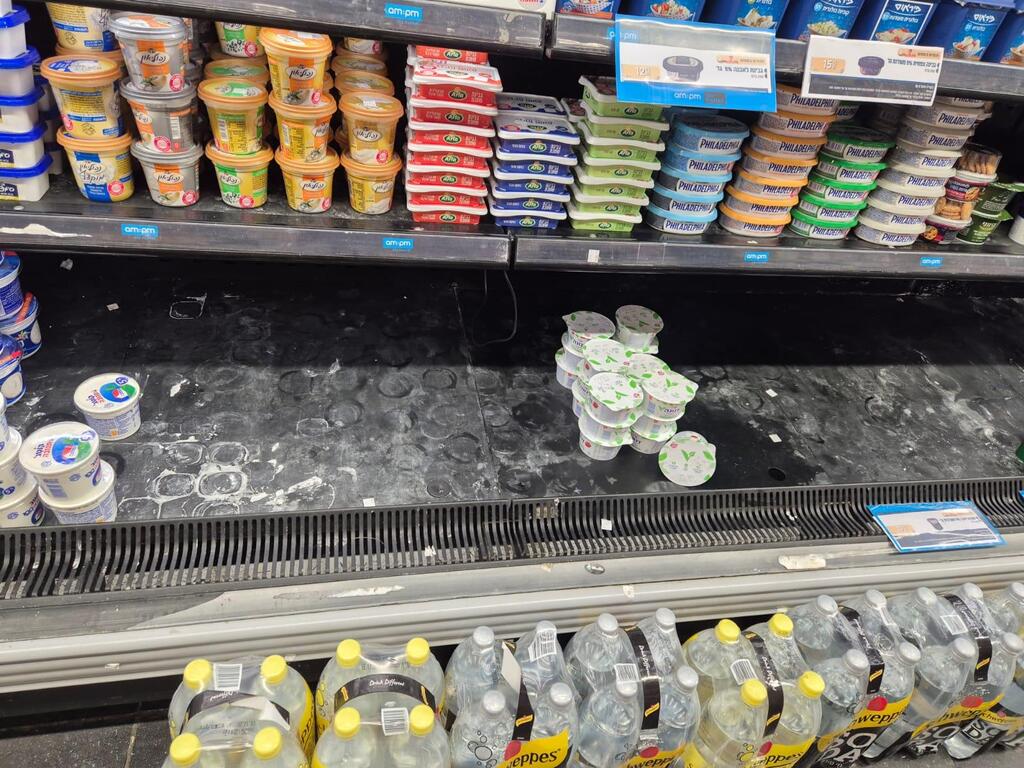
Shortage in cottage cheese
(Photo: Meirav Crystal)
Shmuel Donnerstein, owner of the Rav-Bariach Group, described the crisis as catastrophic. His company is building a new glass-processing plant that requires dozens of technicians to assemble its production lines. “The technicians are supposed to come from Italy, and they are not coming,” Donnerstein said.
“We tried to find technicians from Colombia in South America, but the Population and Immigration Authority would not allow them to enter the country.” The glass plant had been scheduled to begin trial operations in July, but Donnerstein said that would no longer happen.
“After we thought everything had calmed down, we bought production lines from Italy, Austria, Spain and China,” he said. “Here too, the technicians do not come, and when they do, they leave as quickly as possible.”
Rav-Bariach has a door-frame production line that has stood idle for a month because an Italian labor union has refused to approve sending technicians to Israel. “How can you run a production floor when a major fault occurs in the middle of the night?” Donnerstein said.
“Under the contract, they are supposed to fly technicians to us, but that is not happening. We try to make the repairs ourselves, but we are not always successful because this is not our field of expertise. Under these conditions, industry can't operate normally.”
The price of war
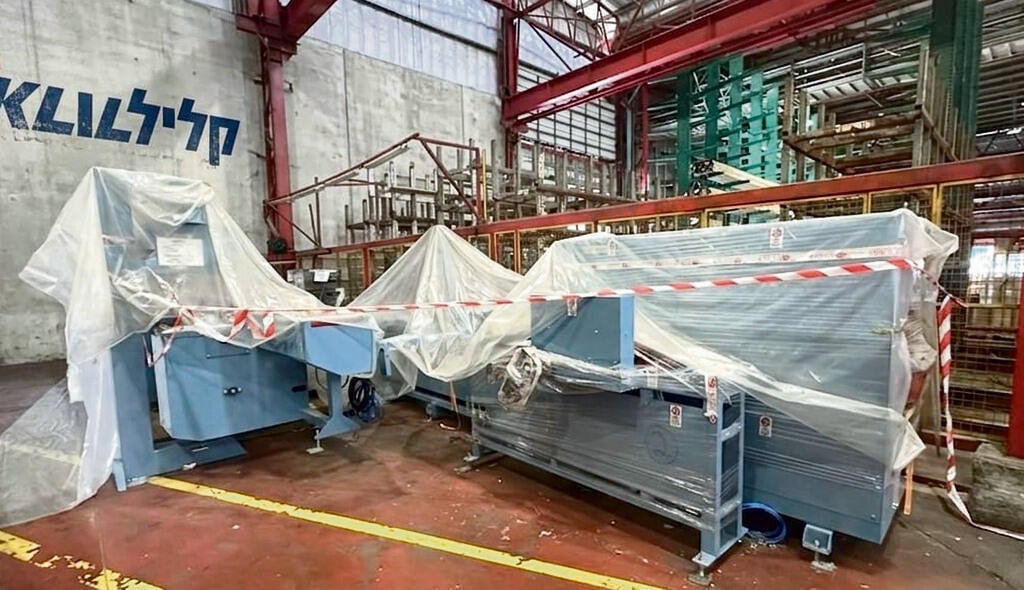
Tzuri Dabush, owner of Klil, which develops and manufactures aluminum systems, said his company had purchased a new packaging line abroad about a year ago. The foreign technicians were supposed to install the unfamiliar system, but the line remains packed in crates.
“The technicians were supposed to install the new line, which we have no experience operating, and to this day it has not been installed because they are waiting for the security situation to calm down,” Dabush said.
“It is a major blow. The line cost millions, and all that money is now sitting in crates.” The official explanation, he added, is that the technicians cannot secure insurance coverage. “But the truth is that they are afraid to come,” he said. “If you were told to fly to Ukraine right now, would you go?”
The cost of war
Dabush said the damage to industry was one of the war’s less visible costs. “Manufacturing has been hit extremely hard, and the country will pay for it in the future,” he said. “Some companies are seeing production disrupted, while others are deciding to build new lines abroad.”
He added that Israeli industry was already suffering from low levels of state investment compared with the United States, which is spending trillions to bring manufacturing home, and Europe, which has launched its own programs to strengthen industry.
Dabush also alleged that some countries were deliberately disrupting Israeli supply chains. “Containers carrying Israeli exports are unloaded at transit ports, supposedly by mistake,” he said. “There are acts of sabotage that no one talks about.”
Avraham “Novo” Novogrotzky, president of the Manufacturers Association of Israel, said he had encountered the problem firsthand during visits to factories across the country. “You see machines that are simply shut down,” he said.
“Israeli teams need to be trained, but for now there is no solution. Manufacturers that cannot find some kind of workaround are left with a machine that simply does not operate.”