

Like his predecessors, Andy Burnham, the Labour Party leader and Britain’s new prime minister, will also be judged by his ability to rebuild the British economy and restore confidence in it. The ailments are well known: a high cost of living, especially since Brexit, the coronavirus pandemic and Russia’s invasion of Ukraine, low growth and productivity compared with high inflation, and a cautious public that for nearly a decade has preferred to save rather than spend its money.
According to the economic team around him, Burnham’s main plan is to reduce centralization and lay the foundations for economic growth by delegating economic powers to local leaders. Burnham, who was elected to two terms as mayor of Greater Manchester, the first just days before the Manchester Arena suicide bombing, is widely seen as the architect of the city and region’s economic comeback, though some argue he merely reaped the fruits of seeds planted by his predecessors.
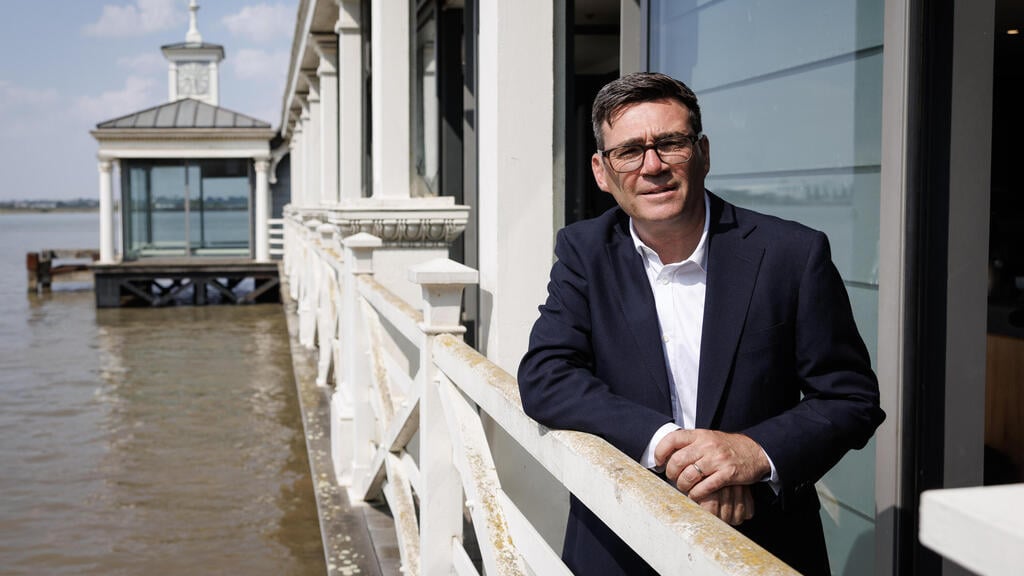
The English economy has been marked not only by centralized decision-making and policy, but also by concentrated areas of growth. In London, above all, but also in other major cities in the country’s southeast, economic indicators have developed in recent decades that bear little connection to the rest of England. Burnham’s success in Manchester during his nine years in office, reflected among other things in the average annual growth of 3.1% in the region he led, more than twice the national average, is likely to lead him to try to apply the same economic model that worked in Greater Manchester to Britain as a whole, this time from his new seat at 10 Downing Street.
'Manchesterism' as an economic model
Part of Manchester’s success is attributed to Burnham’s character and interpersonal skills. He succeeded in bringing foreign investors to the city — Manchester is second only to London as a magnet for overseas investment — nurtured public projects such as public transportation and maintained open communication and excellent relations with business owners in the region, but not at the expense of ordinary citizens and lower-income populations.
In Britain, his economic plan was dubbed “Manchesterism.” Asked in the past to characterize the model, he defined it briefly as “business-friendly socialism.” But while Burnham took office in Manchester when the economic recovery plan had already been conceived and was being implemented, as prime minister he will have to devise a similar national economic recovery plan, even if only his successors will be able to reap its fruits.
One of his main tasks is to bridge the gap between Britain’s former industrial economic power and its current service economy. If banking, accounting, culture and leisure once accounted for only 50% of the British economy, today they make up about 80%, most of it produced in London and other major cities.
Burnham did not return Manchester to its happy 19th-century cotton industry days, but he used the infrastructure and many of the buildings from that industry and others to promote projects involving apartment construction, business centers, shared office spaces and buildings that advanced the arts in the city. Under his leadership, the municipality, in joint ventures with educational institutions and private entrepreneurs from the city, succeeded in bringing many students to Manchester and keeping them there.
If in the 1980s the civilian population of central Manchester shrank to about 500 residents, today that same area has 100,000 residents. Economic incentive packages brought media, banking and marketing companies to establish major headquarters in the city.

Donald Trump and outgoing Prime Minister Keir Starmer: Britain also is dependent on the president's whims overseas
(Photo: Isabel Infantes/Pool/AFP)
Public transportation is an excellent example of how Burnham attracted businesses and large corporations without doing so at the expense of the broader public, especially low-income residents. During his nine years in office, Manchester increased the frequency of public transportation and expanded its reach. The municipality took steps to ensure that service arrived on time and fares remained low, while still transferring the rights to provide service to commercial companies that competed in municipal tenders.
Once again, Burnham succeeded in combining business with private entrepreneurs, under municipal oversight, in a way that benefited the public using the service. His economic team has already declared that this model will also be used to supervise, streamline and reduce the cost of energy, water and housing services, though it remains unclear how that will be done in those areas.
British impatience and pressure for results
Another problem Burnham is expected to encounter is the British public’s lack of patience. Burnham and his economic team can now implement economic plans for the next 10 years, but the British public, especially amid growing support for the right-wing party, does not have 10 years of patience. It needs results now. It wants to see housing, public transportation, water and energy costs go down, and to pay less interest on mortgages.
Burnham’s government may take drastic economic steps early on to satisfy voters, but it must also be remembered that the British economy, more than the economies around it, depends on global events beyond its control. A renewed outbreak of war between the United States and Iran could disrupt all of Burnham’s plans.
To this must be added the British government’s new defense spending, especially given the weakening of the NATO alliance, and the unclear commercial and economic reality created by the whims of the president across the ocean.
The budget, housing and wealth tax
Burnham’s new budget may already include part of his economic reform. He is apparently planning to transfer control over some income tax revenue to the mayors and regional leaders in the areas where the money is collected. His economic plan on housing, especially a construction push worth tens of billions of pounds for public and affordable housing, will face a serious test in light of his declaration that he intends not to deviate from the current government’s investment and debt rules.
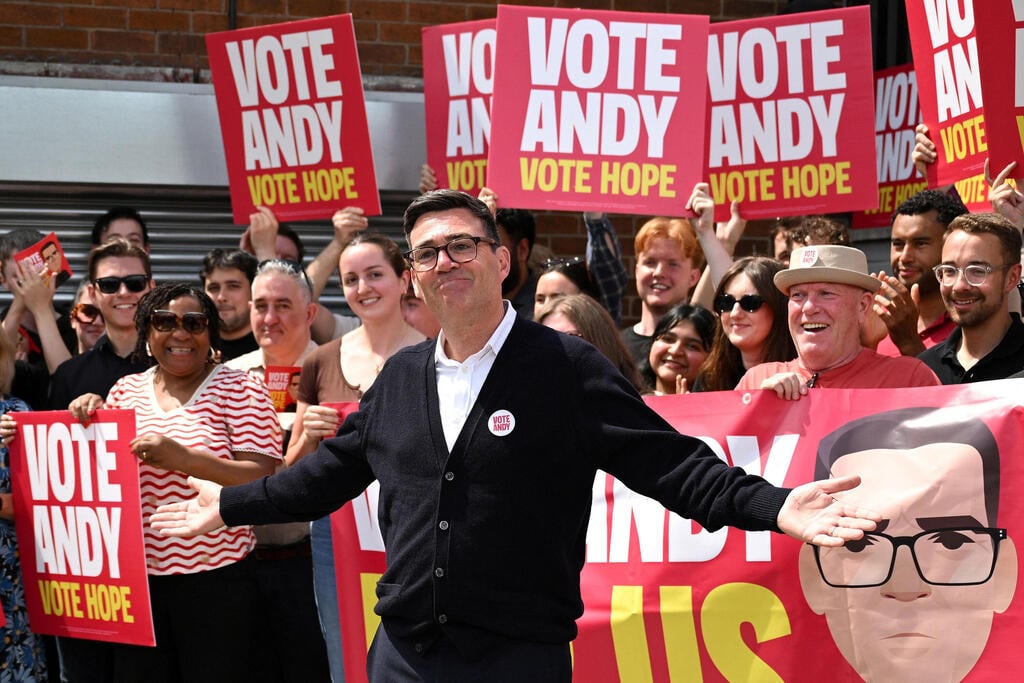
British Prime Minister-designate Andy Burnham
(Photo: Oli Scarff/AFP)
Burnham repeatedly has promised that he will try to narrow the divisions in British society, but his statements on taxes could actually create social tensions. He has hinted that he does not plan to raise tax rates, but has said in the past that Britain taxes work too heavily and taxes additional income, such as stock sales or rental properties, too lightly — a hint that one of his economic moves may be to impose a wealth tax.
Andy Burnham is Britain’s seventh prime minister in the past decade. He, too, is promising a wave of new possibilities for his citizens. He has more charisma, humor and communication skills than his predecessors. His policies put Manchester back on the map, with trendy bakeries opening alongside sophisticated wine shops. Manchester underwent a facelift that prompted many residents who had left to return. In recent years, the city has regularly appeared on lists of must-visit destinations for food tourists. All this happened despite Manchester’s success in maintaining a reasonable cost of living.
Will Burnham be able to translate that local success to the national level? Politically, at least, he has little choice. Britain’s center of gravity may have shifted from industry to the service economy, but the electorate in the industrial cities remains crucial for anyone who wants to be elected. The British right continues to rise in the polls. If Burnham wants to win the election in three years, he will have to restore economic hope to all of Britain.