

Quantum Machines, an Israeli company developing control and orchestration systems for quantum computers, has acquired Dutch startup QHarbor and will open an office in Delft, expanding its quantum software operations in Europe.
The move gives Quantum Machines a local base in the Netherlands and adds to its European presence, which already includes operations in Denmark, Germany and France. The Delft office will serve as a research and development center and a hub for collaboration with universities, startups and research initiatives in the Dutch quantum ecosystem.
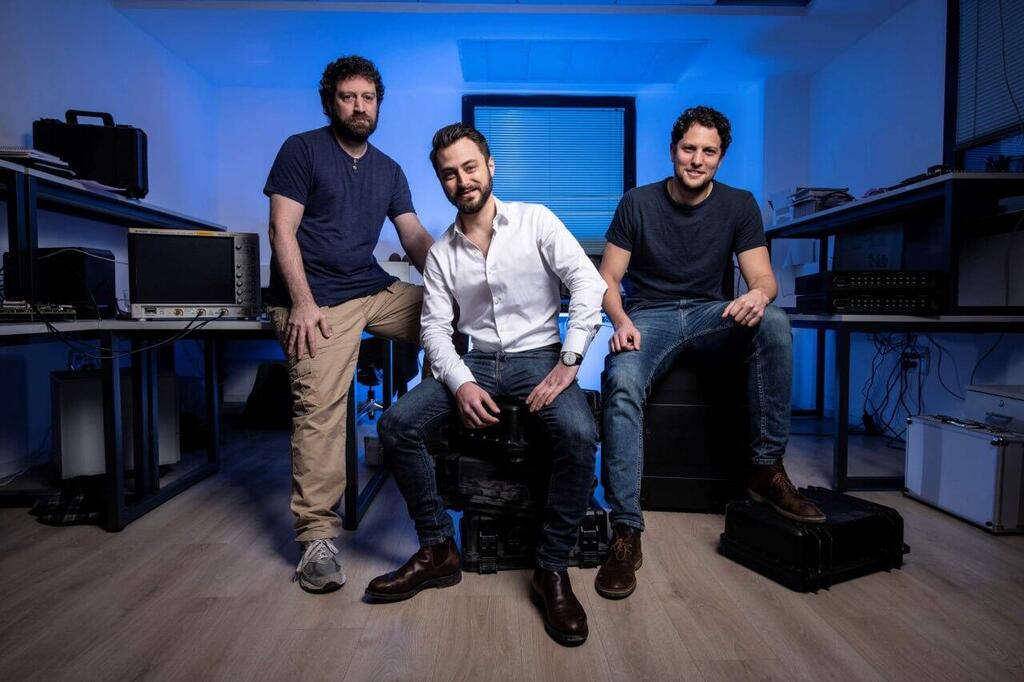
Quantum Machines founders Nissim Ofek, Itamar Sivan and Yonatan Cohen
(Photo: Ilya Melnikov)
QHarbor, founded as a spin-off from TU Delft, develops software infrastructure for quantum experimentation, including tools for workflow orchestration, experiment management and handling the large volumes of data generated by increasingly complex quantum systems.
Quantum computing research has long focused on improving qubit performance, the basic building blocks of quantum processors. But as systems grow larger and more complex, researchers increasingly face operational challenges involving calibration, automation, real-time data processing and coordination between quantum and classical computing systems.
Quantum Machines develops hardware and software designed to allow those systems to work together in real time. Its orchestration platform supports multiple approaches to quantum computing, including superconducting, trapped-ion, neutral-atom and spin-based architectures.
The companies said QHarbor’s software capabilities will be integrated into Quantum Machines’ broader platform, particularly in automated experimentation, data management and system-level coordination. Those capabilities are becoming increasingly important as the industry moves from isolated laboratory demonstrations toward continuously operating quantum systems and large-scale architectures.
The acquisition also reflects a broader shift in the quantum computing industry. Companies that once focused mainly on hardware are increasingly building integrated platforms that combine control electronics, orchestration software, calibration frameworks and data infrastructure into a single operational stack.
Quantum Machines CEO and co-founder Itamar Sivan said the expansion reflects the company’s long-term commitment to Europe’s quantum ecosystem.
“By establishing a home in Delft, we are investing our resources and expertise in one of Europe’s most significant quantum hubs,” he said.
Alberto Tosato, one of QHarbor’s co-founders, who is joining Quantum Machines as part of the acquisition, said the integration would allow the team’s technology to reach a broader range of quantum computing platforms and applications.
The Delft office, located at Hubbz Delft, is expected to collaborate with House of Quantum and other research and industry groups active in the Netherlands’ growing quantum sector.
Quantum Machines was founded in Israel and works with quantum computing researchers and companies worldwide. Its systems are used to control and operate quantum processors across multiple hardware modalities.