

Ondas is set to recruit another senior figure from Israel’s security establishment, just days after appointing former Mossad chief David “Dadi” Barnea to lead its defense operations.
Brig. Gen. (res.) Yehuda Elmakias, who until last November headed the research and development division at the Defense Ministry’s Directorate of Defense Research and Development, known by its Hebrew acronym MAFAT, is expected to join the company in the coming weeks as a vice president, Calcalist has learned.
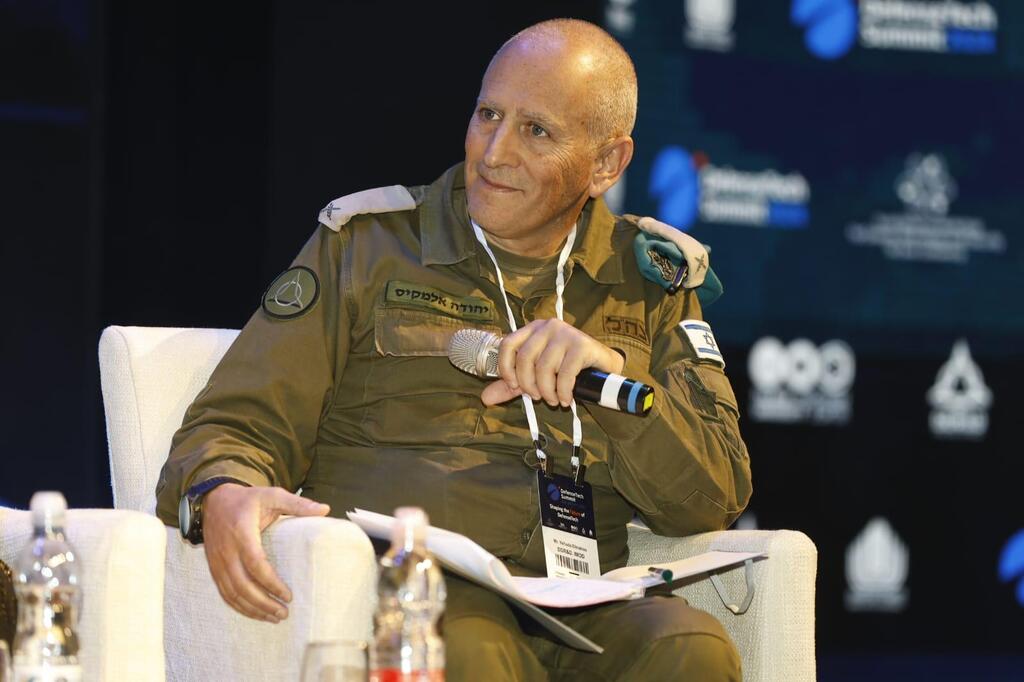
His appointment would come about 10 months after he completed his Defense Ministry role and would further expand a growing group of former senior Israeli defense officials recruited by the U.S.-listed company. The head of MAFAT’s R&D division holds a central position at the intersection of the Defense Ministry, the IDF and Israel’s defense technology industry, with access to the military’s technological capabilities, operational gaps and future development priorities.
Elmakias’ expected move follows Ondas’ appointment earlier this week of Barnea as chairman and president of Ondas Defense. Barnea joined the company only two months after completing three decades in the Mossad, including five years as its director.
Together, the appointments illustrate Ondas’ strategy of rapidly building its defense operations by recruiting senior figures with extensive knowledge of Israel’s military needs, procurement processes and long-term technological programs.
The company is seeking to expand quickly amid the continuing wars in the Middle East and a global arms race. Over the past two years, Ondas has assembled a portfolio of more than 15 small companies, most operating in autonomous systems, ground robotics and drones.
The expansion has been supported by an unidentified investor whose identity Ondas has refused to disclose. Late last year, the investor injected about $1 billion into the company, enabling it to continue an aggressive acquisition campaign while accelerating its recruitment of former senior officials from the Defense Ministry, the IDF and Israel’s defense industries.
Many of those who have joined Ondas previously held senior positions at Rafael Advanced Defense Systems. They include former Rafael CEO Maj. Gen. (res.) Yoav Har-Even; former R&D executives Dr. Irit Idan and Dr. Yehudit Hochman; former vice president Oshri Lugasi, who now manages Ondas’ operations in Israel; and Efrat Lazari, formerly the head of Rafael Chairman Yuval Steinitz’s office, who was appointed Ondas’ vice president of strategy.
Moshe “Miara” Maor, Rafael’s former head of mergers and acquisitions, has also joined Ondas. Maor was involved in advancing Rafael’s acquisition of Aeronautics, a transaction later criticized in a severe Government Companies Authority report over the processes preceding the deal.
Ondas has also recruited former senior Defense Ministry officials. Brig. Gen. (res.) Yaniv Rotem, a former head of defense research and development, was appointed to a senior position at the company, and Elmakias is now expected to follow the same path.
Defense Ministry officials said Elmakias would be permitted to begin working for Ondas at the start of next month. The Jerusalem District Court, sitting as a committee responsible for post-government employment restrictions, reviewed his case and imposed a 10-month cooling-off period. Ondas declined to comment on his expected appointment.
The concentration of former defense officials at Ondas is not merely a matter of executive recruitment. At least some of those joining the company are deeply familiar with the defense establishment, its decision-making processes and long-term projects, including programs that may not become public tenders or formal contracts for years.
Ondas, which trades on Nasdaq at a valuation of about $4.3 billion, has sought to demonstrate that it intends to become a major defense industry player rather than remain a holding company collecting small drone and robotics businesses.

former Mossad chief David Barnea
(Photo: Ido Erez)
Barnea’s appointment reinforced that message. Ondas has not disclosed the scope of his position or his compensation, but the company is believed to view the former Mossad chief as a figure who can help open doors in international markets and engage with foreign defense ministries, military procurement bodies and regulators.
The company’s shares rose 11% on Nasdaq in the two days following the announcement of Barnea’s appointment. The speed of his transition into the private sector, however, raised eyebrows within Israel’s security establishment.
Ondas said Barnea’s appointment received full approval from the Mossad’s legal advisory department. Questions submitted by Calcalist to the Prime Minister’s Office and the Civil Service Commission were not answered.
“At least in the past, the Mossad was much stricter about applying cooling-off periods to its senior officials,” a security source familiar with the matter said.
Defense industry figures said the Mossad and Ondas had not previously cooperated, a factor that reportedly made Barnea’s rapid transition to the company easier.
The Mossad maintains close relations with some Israeli defense companies. Those ties also preceded the September 2024 pager operation against Hezbollah terrorists, conducted while Barnea led the agency. The operation caused thousands of pagers carried by Hezbollah members to explode simultaneously, destabilizing the organization for weeks.
Sensitive Iron Dome deal under review
Ondas’ recruitment of senior defense figures has taken on additional significance because of its effort to acquire control of mPrest, a Rafael subsidiary that develops the command-and-control units used by the Iron Dome air defense system.
The proposed transaction values mPrest at $200 million. Rafael owns 43.25% of the company, while its other shareholders include founder Natan Barak, OurCrowd and several private investors.
Ondas is seeking to acquire shares from mPrest’s owners in a transaction that would leave Rafael as a minority shareholder. The deal requires approval from the Defense Ministry’s security authority, known by its Hebrew acronym MALMAB, because of the highly classified nature of mPrest’s work.
MALMAB’s prolonged examination has effectively frozen the transaction, which involves technology regarded as the “brain” of one of Israel’s principal air defense systems.
Ondas’ rapid expansion, its recruitment of former senior defense officials and the identity of its main investor have all drawn scrutiny inside the Defense Ministry.
Earlier this week, Calcalist submitted questions to the ministry regarding its position on the proposed Ondas-mPrest transaction and the unidentified investor behind Ondas. The ministry declined to provide direct answers.
“The ministry examines each case individually as part of the registration of ministry suppliers and its contractual relations with them, while maintaining equality among suppliers in accordance with the law and fulfilling its duty to protect the state’s security interests,” it said.
“This is also how business moves by Ondas are handled, with the relevant professional bodies in the Defense Ministry reviewing them on an ongoing basis.”
Elmakias’ expected appointment, coming immediately after Barnea’s recruitment, shows that Ondas’ effort to draw talent from the highest levels of Israel’s security establishment is continuing at speed.
The unresolved question is whether the regulations governing such transitions, particularly when they involve officials with intimate knowledge of classified programs and future procurement priorities, are keeping pace.