

Against the backdrop of persistent war threats and a deepening economic crisis, Iranians say they are watching prices climb in real time. Some post photos of their grocery carts on social media, saying they struggle to afford enough basic goods for their families.
“Everybody is under pressure: merchants, civil servants, laborers,” said Ebrahim Momeni, 52, to AP. “The weaker class of people is being crushed.”
Iran has faced years of economic turmoil driven by international sanctions and chronic mismanagement. The country experienced limited relief under the 2015 nuclear agreement, which lifted many sanctions. In 2018, U.S. President Donald Trump unilaterally withdrew from the accord. After returning to the White House for a second term, Trump reinstated and expanded economic pressure on Tehran, targeting the financial sector and energy exports.
On Wednesday, his administration imposed new sanctions on 30 individuals and companies accused of supporting the production of ballistic missiles and drones and facilitating illegal oil sales.
The renewed pressure has accelerated the collapse of Iran’s currency, the rial. In 2015, when the nuclear deal was signed, the rial traded at about 32,000 to the dollar. By late December, it had fallen to 1.3 million to the dollar. On Wednesday, it hit a new low of 1.65 million rials per dollar, a drop many attributed in part to fears of a possible U.S. strike.
Low-income populations cannot withstand the economic pressure
Economists warn that the weakening rial could fuel a vicious cycle of rising prices and reduced purchasing power. They say persistent inflation may inflict long-term damage on an economy already burdened by high youth unemployment. Economic hardship was one of the triggers for protests that began in late December in Tehran’s central bazaar and later spread nationwide.
Momeni said he earns about 700 million rials (about $540) per month. In the past month alone, the price of one kilogram of red meat rose from 13 million rials (about $10), to 22 million rials (about $17). Over the same period, the price of a liter of milk jumped from 520,000 rials to 1.1 million rials, while a package of pasta increased from 340,000 rials to 570,000 rials.
“Those with lower incomes and fixed salaries are suffering because of the price hikes,” said Farhad Panahirad, a 44-year-old taxi driver. Together, he and his wife make about 600 million rials (about $460) a month, he told AP.
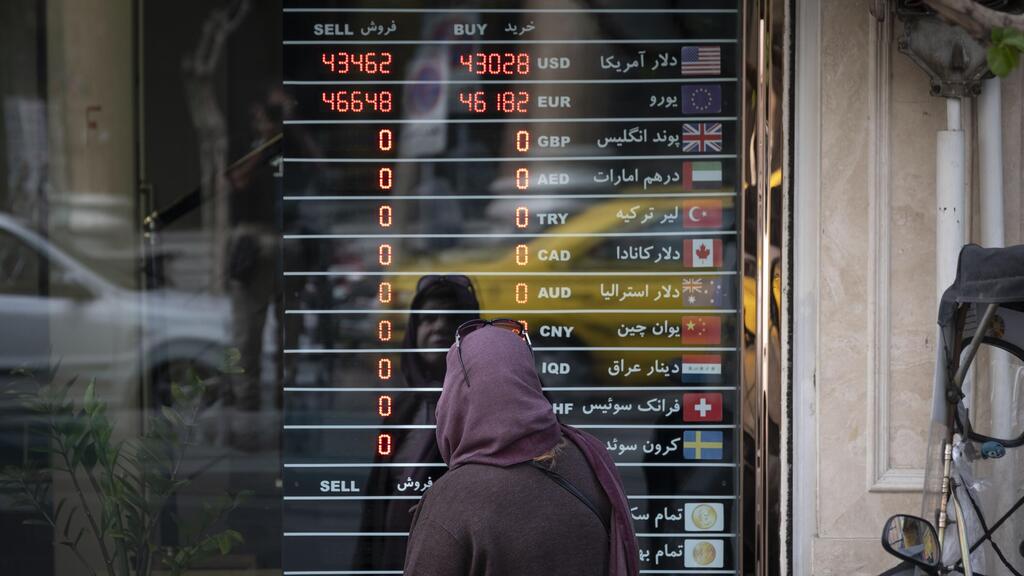
An Iranian woman in front ot an electronic foreign exchange board in Tehran
(Photo: Morteza Nikoubazl, GettyImages)
Some shoppers described how they cope with mounting costs. They check daily price updates on social media or shop late at night, when certain products are reduced to half price to get rid of inventory before it spoils.
Fears that the U.S. could launch an attack at any moment have also prompted many Iranians to purchase emergency supplies. Flashlights, small gas ovens and tape to secure windows against possible blasts are selling quickly, according to a hardware store owner in central Iran who spoke on condition of anonymity for fear of retaliation.
Others are buying large quantities of beans, bread, rice and canned goods despite soaring prices. “I'm not happy to buy this much stuff, but my wife said we had to be prepared for uncertainty in the coming days,” Saeed Ebrahimi, 43, an electrical technician and father of two, told AP. Prices for appliances such as washing machines, vacuum cleaners and refrigerators have also doubled.
The threat of war is adding further strain to an already fragile economy
In the independent newspaper Dona-e Eghtesad, economist Farbod Molavi wrote that prices are rising because of market uncertainty and higher raw material costs. Iran, he said, is grappling with both recession and high unemployment.
The official unemployment rate stood at about 7.8% in October, up from 7.2% during the same period in 2024, and reaches as high as 20% among young people. According to official data, about 24 million Iranians are between the ages of 15 and 34.
The government, acknowledging the hardship, began distributing monthly payments of 10 million rials in January to about 70 million people, roughly 75% of the population, to help cover food costs. Officials have promised to increase the payments if prices continue to rise.
Panahirad, the taxi driver, said he is pessimistic that negotiations will bring relief. “(Trump) is bullying them, to some extent. After all, he is a superpower and says what he wishes must be done,” he told AP. “Wherever you go now people are talking about war. If you go to a bakery to buy bread you see people talking about war,” said Momeni. “This state of limbo is worse than war.”