

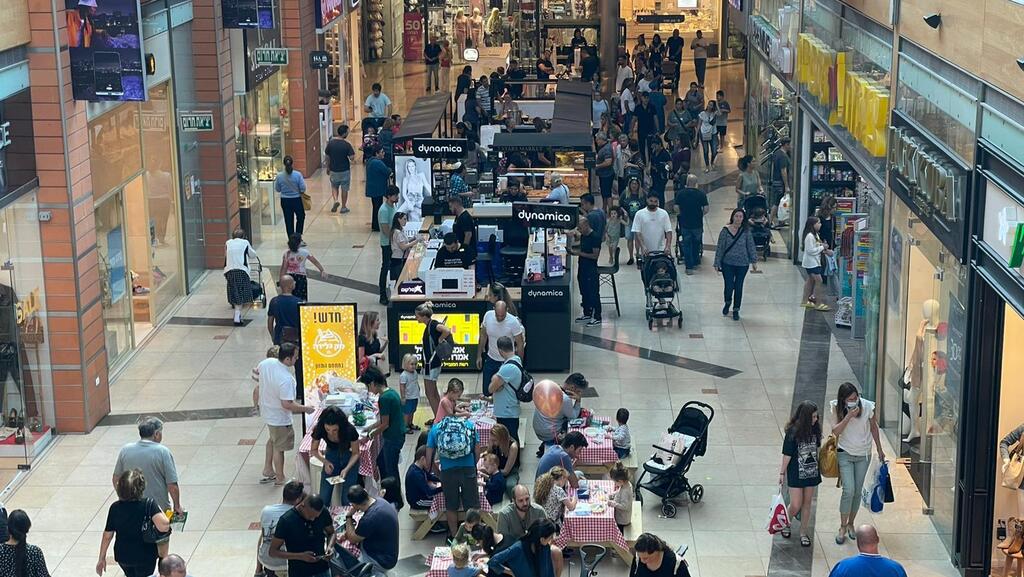
After barely venturing out to shop during the first week of Operation Roaring Lion, Israelis returned to malls and stores in far greater numbers during the second week of the war.
New data shows that Israelis are gradually adapting to the new reality. Credit card spending rose by 33% in the second week compared with the first, according to figures from Shva, the company that processes credit card transactions in Israel.
Total spending reached 9.3 billion shekels, about $2.5 billion, during the second week. The figure remains 14% lower than the average weekly spending recorded since the start of the year.
Retailers and mall operators say the numbers reflect a shift in behavior as people seek a sense of normalcy during wartime.
Clothing and electronics lead spending surge
Analysis of the spending data shows increases across most sectors. Clothing and footwear recorded the sharpest rise, jumping 2.6 times compared with the first week of the war. Spending on electronics increased by 63%.
These figures are fueling optimism among mall operators and retailers ahead of Passover shopping.
Retailers hope that hundreds of thousands of Israelis who will not travel abroad during the holiday will instead spend their money in local shopping centers and stores.
‘People say they feel safer in the mall than at home’
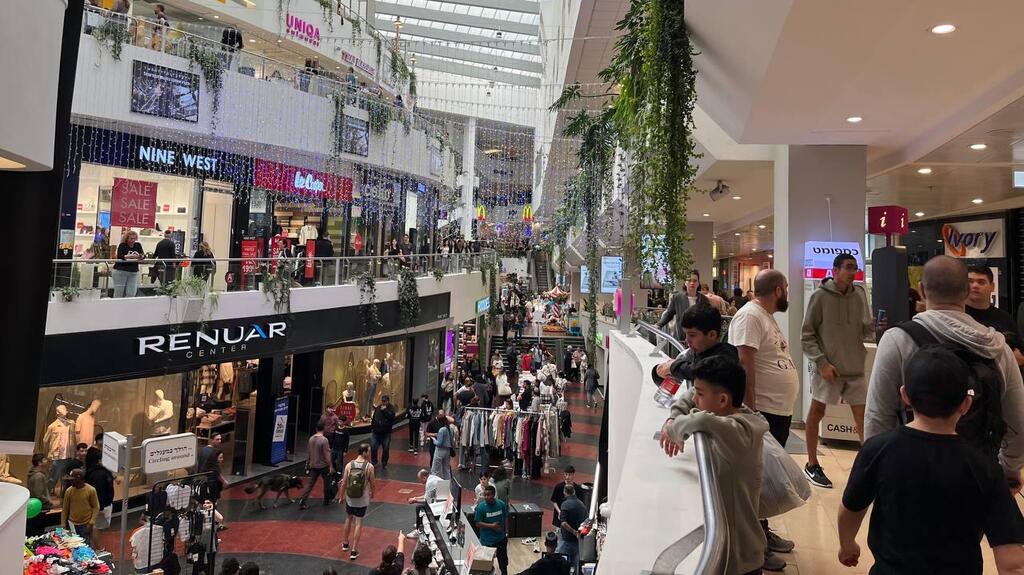
Yaniv Feinschneider, CEO of the Seven Stars Mall in Herzliya, said foot traffic has rebounded quickly.
“People want to feel alive. The public is returning to the malls,” he said. “Some people even told me they feel safer in the mall than at home.”
According to Feinschneider, visitor numbers surged last week. “For many people, the mall has become a kind of community center. Families come for activities with their children. They want to get some fresh air, sit for coffee or pastries, or take the kids to the play areas.”
During the first week of the war, activity in the mall dropped sharply, he said. “Even the cafés were quiet. People came only to buy essentials and quickly went home.”
Within 48 hours of the economy reopening, about 89% of stores had resumed operations, and visitor numbers recovered to roughly 85% of normal levels.
Consumer habits have also changed, Feinschneider said. “Emotional spending right now is more about a sandwich and coffee. As time passes, we’re seeing more traditional shopping returns.”
He expects sales to climb further in the week leading up to Passover. One sign of the war’s impact, however, is that the mall empties earlier in the evening, with visitor numbers dropping significantly after 6 p.m.
(Photo: Yael Ciechanover)
Closed skies push spending at home
Flight cancellations abroad are also benefiting hotels and malls in the southern resort city of Eilat, which are reporting nearly full occupancy.
Retail sales there have jumped by dozens of percentage points compared with the same period last year, and hotel rooms for Passover are already nearly fully booked.
A senior executive at a credit card company said similar trends were seen in past periods when international travel was limited.
“When the skies are closed, domestic consumption rises significantly,” he said.
“If foreign airlines do not return for Passover, that alone removes about 60% of activity at Ben Gurion Airport. Combined with limits on Israeli airlines, we expect more Israelis to stay in the country this year than last Passover.”
As a result, private consumption in Israel is expected to increase.
‘A new normal’ for consumers
Retail executives say Israelis are gradually adapting to life under wartime conditions.
“As strange as it sounds, it reminds me a bit of the coronavirus period,” said Assi Arviv, CEO of Clinton Trading Group, an importer of home appliances.
“People are at home more, they’re not traveling abroad and children are staying home, so they need more stimulation.”
He said the products selling best right now are kitchen appliances such as refrigerators, ovens and stovetops, though consumers are increasingly choosing basic models rather than luxury brands.
Retailers are also launching promotions to encourage purchases, including extended warranties and free delivery.
Consumer behavior researcher Moti Azulai said the trend reflects what he calls a “new normal.”
“The new consumer has developed a kind of resilience,” he said.
“We see growth in categories such as clothing, electronics, restaurants, cafés and fast food. It comes from the need for a moment of sanity.”
Shopping itself can serve as a psychological coping mechanism, he added.
“Many studies show the phenomenon of ‘shopping therapy.’ It gives people a sense of control and reminds them that life continues.”
Azulai said malls also offer a feeling of safety.
“When you’re walking on the street you can feel exposed. In a mall there are safety procedures, protected spaces and trained staff.”
He described it as a form of “engineered normality.”
“The mall answers the need to follow Home Front Command guidelines, and shopping offers people a brief moment of normal life,” he said.
“In a situation where commerce could have completely frozen, the important story is that people are still coming.”
First published: 15:22, 03.16.26