

Moments after The Washington Post, owned by Amazon founder Jeff Bezos, laid off nearly a third of its staff, including its sports, books and photography desks, scaled back foreign coverage and eliminated the reporter covering Amazon itself, dozens of articles appeared across major US outlets asking variations of the same question.
“Is Bezos dismantling The Washington Post?” asked The Guardian. “How Bezos brought down The Washington Post,” wrote The New York Times. Slate went further, declaring flatly: “Bezos killed The Washington Post.”
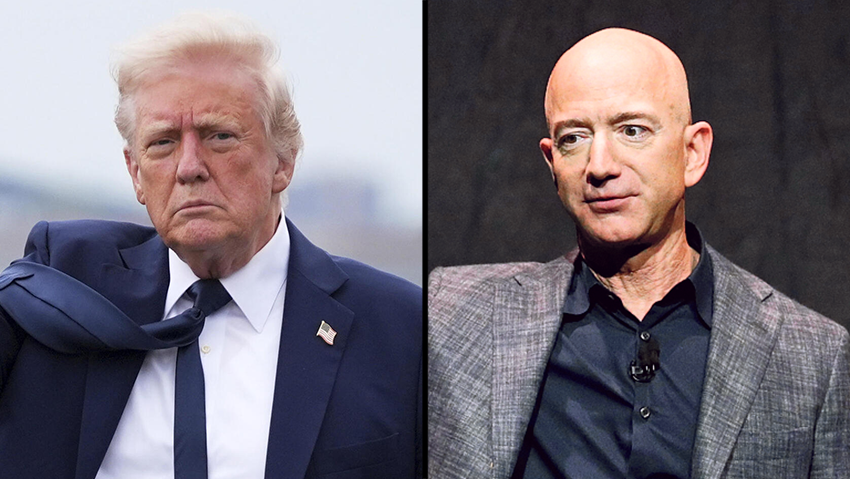
In total, 300 newsroom employees were laid off last week. It was not the first round of cuts. Previous layoffs and buyout offers had already shrunk the staff of one of America’s most important newspapers. As for why Bezos chose this path, multiple explanations have been offered, but the dominant one is political.
Joshua Benton, a leading researcher on the future of journalism and media business models, said Bezos’ moves have little to do with immediate financial pressure and far more to do with broader business interests and a shift in how Bezos views the paper’s role.
“The scale of his wealth means cuts like these are never economically necessary. This is a choice,” Benton said. “He could fund The Washington Post for the rest of his life, his children’s lives and his grandchildren’s lives and still have vast sums left.”
Benton noted Bezos could turn the paper into a nonprofit, reinvest aggressively or continue shrinking it. “Every one of those options is available to him,” he said.
A turning point in the Trump era
When Bezos bought The Washington Post in 2013 for $250 million, the move was widely seen as a lifeline for a struggling historic institution. Bezos cast himself as a steward of democracy, a billionaire with no need to extract profits who could invest in fearless investigative journalism.
The Washington Post
(Photo: Phil Pasquini / Shutterstock)
For several years, that vision appeared to materialize. The newsroom expanded, digital investment paid off and subscriptions surged, particularly during Donald Trump’s first term, when demand for aggressive oversight of government was high.
The turning point came around the 2024 election and Trump’s return to the White House. Bezos made an unusual decision to block the paper from endorsing a presidential candidate, breaking with decades of tradition and against the wishes of the editorial board, which had consistently backed Democrats.
Bezos argued that endorsements undermine objectivity and create perceptions of bias. The fallout was immediate. More than 250,000 subscribers canceled their subscriptions in protest, a severe blow in an industry now dependent primarily on subscription revenue rather than advertising.
For Bezos personally, the financial impact was negligible.
A shift to the right
Following that decision, Bezos began reshaping the Post’s opinion section. He announced that columns would focus on “personal liberties” and “free markets” and that views contradicting those principles would no longer be published. In practice, critics say, this marked a clear rightward shift and a cautious alignment with the new administration.
Bezos attended Trump’s inauguration and, later, Amazon paid $40 million for a documentary about Melania Trump, with an additional $35 million allocated for marketing. The move was widely interpreted as an effort to curry favor with the administration.
The cumulative effect was a collapse in trust. Senior journalists departed, readers left and the paper lost much of its standing as an independent watchdog.
A business calculation
Benton and other analysts argue that curbing the paper’s critical edge fits a broader strategy to minimize risk to Bezos’ other companies. Trump is openly hostile to the press and routinely brands unfavorable coverage as “fake news.” Aggressive reporting on the administration could provoke regulatory retaliation.
Amazon and Blue Origin are both heavily dependent on government regulation and contracts. From that perspective, sharp coverage of Trump and his administration carries potential business costs.
The Washington Post, critics argue, has become more of a liability than an asset. It loses money and creates friction with a government that holds significant power over Bezos’ corporate interests. Cutting back, especially in coverage areas like the Middle East and Ukraine, reduces that risk.
According to The New Yorker, what began as a seemingly generous effort to build a globally influential newspaper has evolved into something far more modest: a smaller, less ambitious and less confrontational publication.
What makes the story so jarring, critics say, is that this was not inevitable. It was a conscious choice to weaken a vital democratic institution in service of personal and commercial interests.