

The next time you make a salad, blend a smoothie or snack on a handful of almonds, it is worth knowing that a quiet drama is unfolding behind every bite. A significant share of the food we eat, especially fruits, vegetables and nuts, depends on pollination by natural pollinators. From home-cooked meals to large-scale commercial farming, pollination directly affects crop yields, quality and availability on store shelves. Crops such as avocados, blueberries and almonds cannot deliver stable yields without a functioning pollination process.
Pollination is not a marginal background process. It is a critical component of global food production, particularly for high-value crops. Yet the system is under growing pressure. The solution modern agriculture has relied on for decades, adding more honeybee hives, no longer provides a complete answer.
Gallery

Pollination directly affects crop yields, quality and availability on store shelves
(Photo: Yair Sagi)
The big mistake of modern agriculture
Honeybees have rightly taken center stage. Domesticated hundreds of years ago, easy to manage and highly social, they have become the backbone of commercial pollination services. As demand has grown, the number of managed hives worldwide has increased by more than 80 percent over the past century.
But nature was never designed to rely on a single species.
There are more than 20,000 species of wild bees globally, each uniquely adapted to specific plants and environmental conditions. These pollinators, from solitary bees that nest in the ground to bumblebees capable of buzz pollination, play a critical role in sustaining food production and biodiversity.
Consider apple orchards. Pollinating about 10 dunams, one hectare, may require tens of thousands of honeybees, while a few hundred wild bees such as Osmia cornuta, which do not live in hives and are naturally adapted to apple blossoms, can often achieve better results. The difference is not only biological but economic, directly affecting yield size, fruit quality and the stability of agricultural production.
The quiet pollinator crisis
At the same time, natural pollinators are in steady decline, a serious problem for ecosystems and agriculture alike. Estimates suggest that about 25 percent of wild bee species have already been lost. The drivers are well known and include habitat loss, widespread pesticide use and climate change. In practice, these pressures accumulate into a complex system that undermines the long-term functioning of agricultural systems.
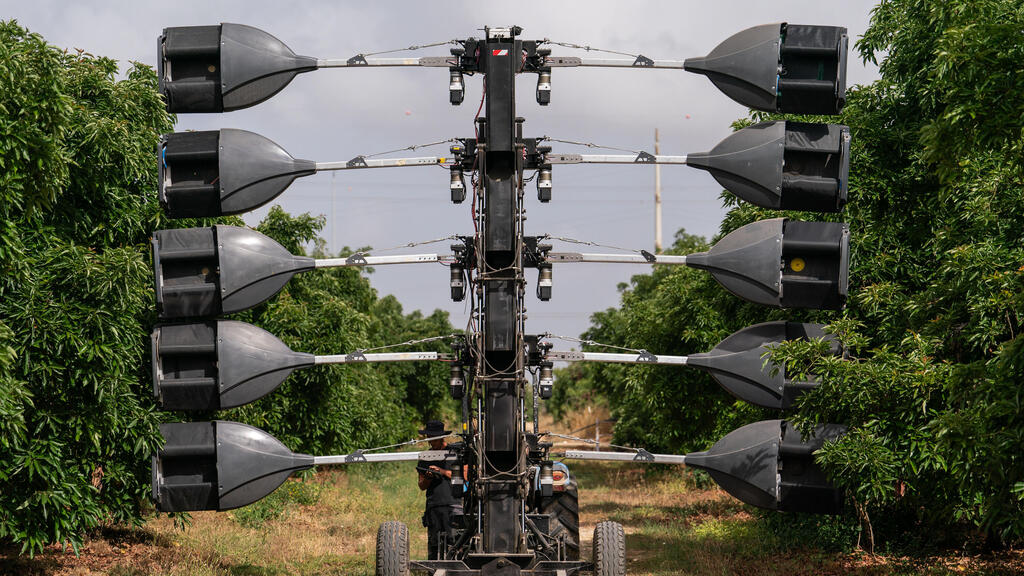
Pollination tech
(Photo: BloomX)
When natural pollinators disappear, the resulting gap is far from theoretical. It translates into lower yields, greater instability and growing dependence on a single solution. In response, many growers have come to rely almost exclusively on honeybees to fill the gap. In the United States, for example, roughly two-thirds of all hives are now used for commercial pollination, primarily in almond orchards.
This strategy has clear limitations. An increasing imbalance has emerged between the expansion of pollination-dependent farmland and the growth rate of honeybee populations. Beyond scale, there is also a biological constraint. Honeybees are generalist pollinators and cannot replace the specialized services provided by wild bees. Not every flower attracts them. They tend to avoid blossoms with low-sugar nectar or high potassium content, and their activity windows do not always align with crop flowering periods. These challenges are intensified by climate change, and their effects are visible in crops such as avocados.
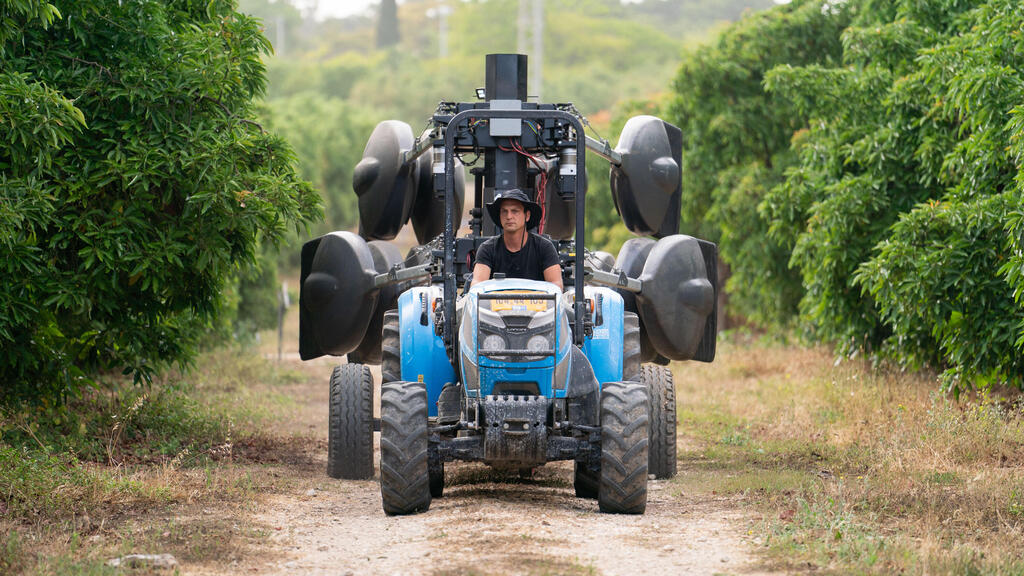
(Photo: BloomX)
Pollination is also more effective when it is diverse. Higher and more consistent yields are achieved when flowers are visited by a variety of pollinators rather than a single species, strengthening the resilience of the entire system.
The path forward: A partnership between nature and technology
Addressing this challenge does not require reengineering nature, but learning from it. A biomimetic approach seeks to replicate the physical and biological principles nature has refined over millions of years and apply them in a precise and controlled way within modern agriculture.
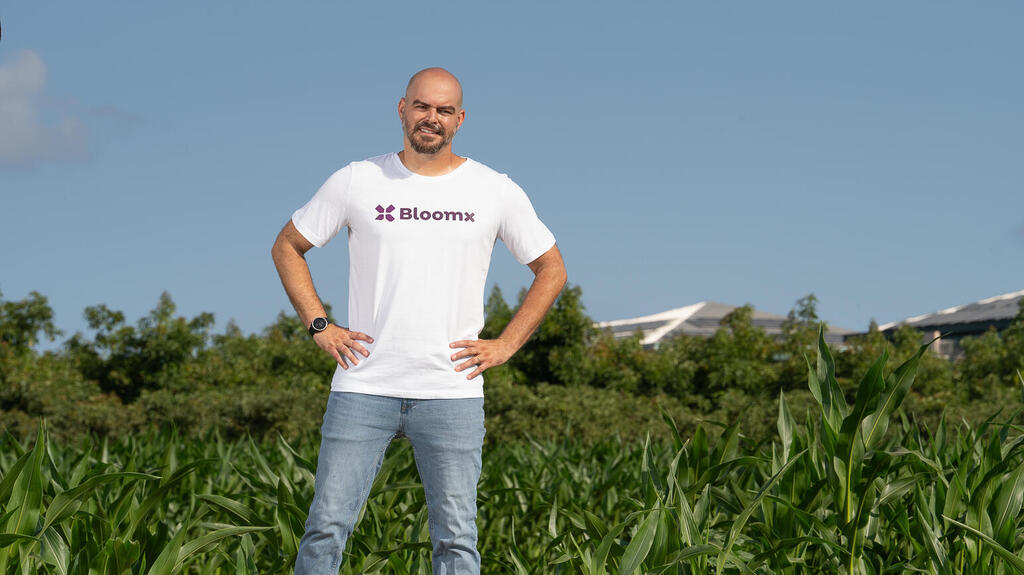
Thai Sade
(Photo: BloomX)
Rather than replacing honeybees, this approach complements their activity where they struggle most: early mornings, cloudy days, flowers they tend to ignore or areas where natural pollinators are scarce. By mimicking the mechanical and electrostatic properties of natural pollinators, it becomes possible to ensure that every flower has a real opportunity for pollination, even under challenging conditions, without harming existing pollinator communities.
The vision is not a world of machines replacing nature, but a partnership. In an era of climate instability and mounting pressure on food systems, relying on a single factor is a risky bet for farmers, consumers and food prices alike. Combining nature’s wisdom with the precision of technology can reduce risk, stabilize yields and help ensure that avocados, almonds and blueberries continue to reach our tables in the years ahead.
The author, Thai Sade, is the founder and CEO of BloomX, an Israeli agtech company that has developed a robotic, AI-based system for managing the pollination process