

It is quieter than demonstrations and less visible than political disputes. I see it in people who have followed Israel for years, built friendships with Israelis and come to regard the country’s existence and security as something worth standing behind. When Israel is under pressure, their instinct is not to distance themselves but to ask what they can do.
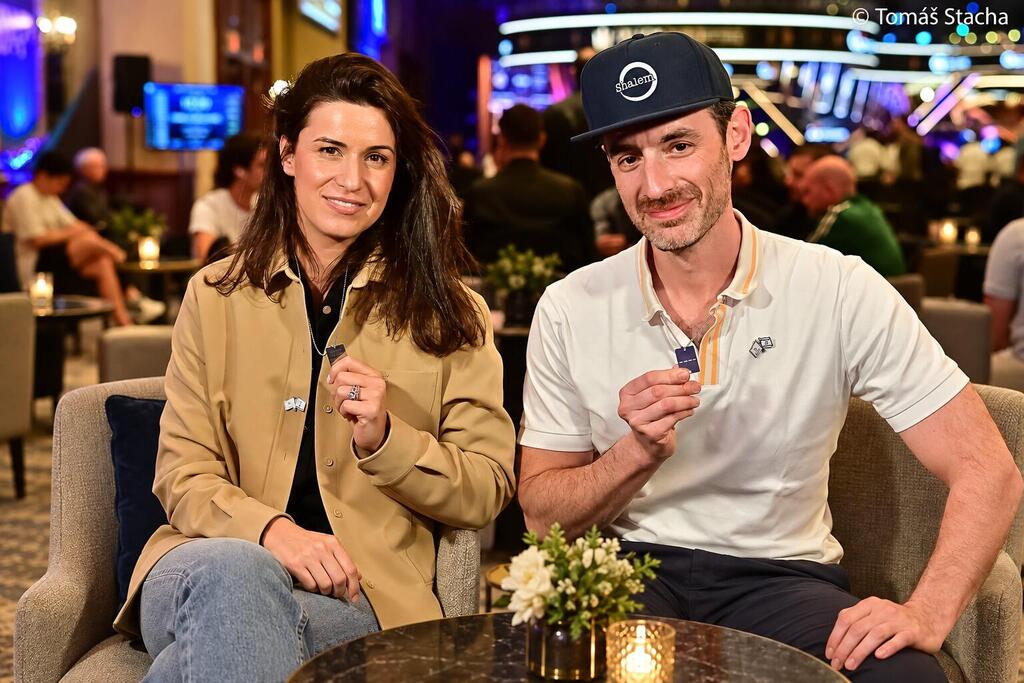
Anna Meissner and Ory Weihs, founders of Czech Fund Shalem
(Photo: Tomas Stacha)
In the Czech Republic, that instinct has unusually deep roots.
What has struck me most through years of philanthropic work is who many of these supporters are. The great majority are neither Israeli nor Jewish. Some are Christian, others secular, and their connection to Israel is not primarily one of religion or identity. What unites them is a longstanding attachment to the country and its people, an understanding of the significance of Israel’s existence and security and, for many, a deeply rooted Zionism.
At a time when support for Israel is not always a popular position in Europe, they choose to turn that conviction into something tangible.
A friendship older than the State of Israel
The roots of the Czech relationship with Israel reach back well before 1948. Tomáš Garrigue Masaryk, Czechoslovakia’s first president, was a prominent voice against antisemitism and a supporter of Zionism. In 1927, he traveled to Mandatory Palestine, becoming the first serving head of state to visit the Jewish community there.
Two decades later, that friendship took a more concrete form at a moment of existential importance. In 1948, Czechoslovakia sold the newly established State of Israel desperately needed arms despite an international arms embargo and helped train Israeli pilots and aircraft technicians in Czechoslovakia. For me, there is also a personal footnote to that history: My 98-year-old great-uncle was among the Czechoslovaks involved in that training.
The relationship was interrupted under communist rule, when Czechoslovakia severed diplomatic ties with Israel after the 1967 Six-Day War. Ties were restored in 1990, and the Czech Republic has since emerged as one of Israel’s closest allies in Europe.
That relationship extends well beyond government. It can be found among ordinary people across the country — of different ages, professions and backgrounds — and in ties built over decades between Czechs and Israelis.
Perhaps history plays a part, too. Czechs carry a particular memory of what can happen when the future of a small country becomes a matter for others to decide. It may help explain why Israel’s insistence on determining its own future and defending itself resonates so strongly here.
But deep roots do not make a friendship immune to the pressures of the present.
The renewed social acceptability of antisemitism, often expressed through hostility toward Israel, is testing bonds that once seemed secure across Europe. The Czech-Israeli relationship remains exceptionally strong, but we should not take it for granted.
Oct. 7 did not create this connection
Oct. 7 did not create this friendship. It tested it.
In the days and weeks that followed, people around us watched a country and people they already cared about suffer and asked what they could do.
It was out of that moment that my husband, Israeli entrepreneur Ory Weihs, and I founded the Czech fund Shalem.
We both bring years of philanthropic experience. My professional life has spanned law, education and charitable work. I studied law at Charles University in Prague and later Jewish education at the Hebrew University of Jerusalem. We wanted to build something direct, personal and transparent: a way to connect people who wanted to join us in supporting carefully selected causes in Israel.
A significant part of Shalem’s work is dedicated to widows and orphans of Israel’s security forces. We also support injured soldiers, reservists, lone soldiers and their families, at-risk youth, mental health initiatives, minority communities and efforts to combat antisemitism and disinformation.
But our mission extends beyond philanthropy. We want to help preserve the Czech-Israeli bond by continuing to bring people together and creating ties strong enough to outlast political fashions and moments of hostility.
Shalem’s operating costs are covered separately, allowing 100% of the funds we raise to go directly to the causes we support.
One answer to that desire to act came in March 2024, when a charity art auction in Prague raised 2 million Czech koruna — approximately 325,000 shekels — in a single evening for orphans supported by the IDF Widows and Orphans Organization.
What stayed with me was not only the amount. Thousands of kilometers from Israel, people who were overwhelmingly neither Israeli nor Jewish had chosen to make the loss of Israeli families their concern. Demonstrations are photographed and confrontation becomes news. A donor in Prague quietly deciding to help the child of a fallen Israeli rarely does.
Sometimes these quieter gestures grow into communities of their own.
I saw that happen in an unlikely place: around a poker table.
In December 2024, 12 players at the World Series of Poker Paradise in the Bahamas raised nearly $140,000 for the IDF Widows and Orphans Organization. The initiative continued in Israel and became UNBROKEN. By May 2026, together with our partners Doron Ziony and Lior Gotessman, it had grown to 235 players and more than 400 guests. Across three events, it has raised more than 1.5 million shekels for IDF widows and orphans.
The numbers matter, but so do the connections they create. Introductions become friendships, donors meet Israeli families and a charitable event becomes a community.
The Europe we don’t always see
Europe’s relationship with Israel is often measured through parliamentary votes, demonstrations and headlines. They tell an important story, but not the whole one.
From Masaryk’s journey to Mandatory Palestine, through Czechoslovakia’s support for the fledgling State of Israel in 1948 and the relationship rebuilt after communism, Czech support for Israel has found different expressions across generations.
That inheritance is valuable. But in the present climate, preserving it requires more than remembering its history. It requires nurturing ties between people — particularly when prevailing political and social currents make those ties less comfortable.
For the donors I have come to know, giving did not create their friendship with Israel. It is what happens when that friendship is given the opportunity to become action.
Sometimes, that is the most meaningful thing friendship can become.
Anna Meissner is co-founder of the Czech Fund Shalem.