

Several lawmakers, primarily from the ultra-Orthodox and Arab parties, along with businesspeople, have in recent days been exerting heavy pressure on members of the Knesset Finance Committee to block approval of a bill that would prohibit large-scale cash conversions at money changers and charitable free-loan funds, and ban the holding of cash amounts exceeding 200,000 shekels, ynet learned on Sunday.
Against this backdrop, and in order to clarify the importance and rationale behind the proposed amendment, a special meeting was held at the Finance Ministry over the weekend. The discussion focused mainly on what officials described as a “loophole inviting abuse” at money changers and charitable free-loan funds in the ultra-Orthodox community known as gemachim, and underscored the need not to yield to pressure from “fixers” operating in this field.
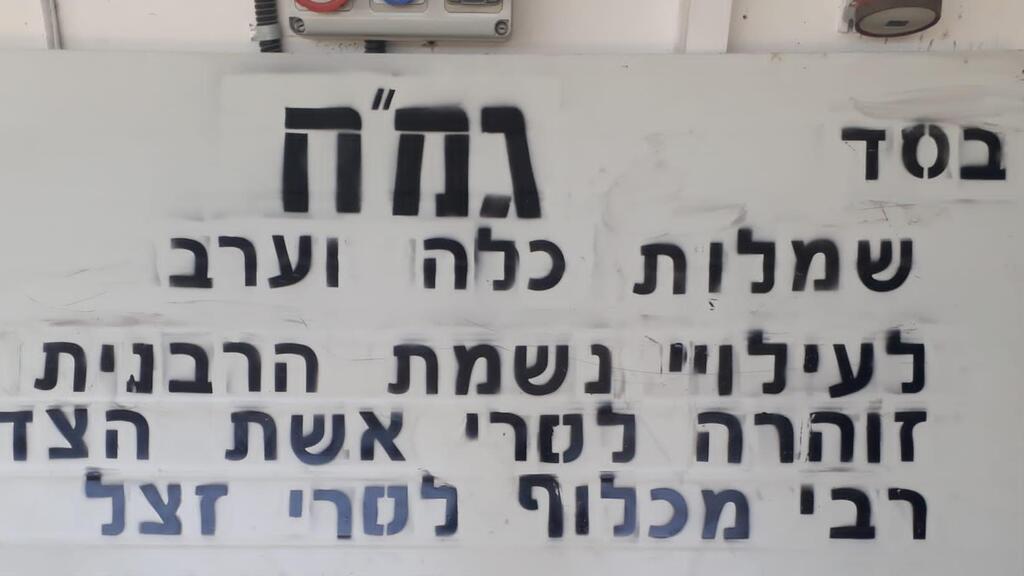
Sign for a charitable free-loan fund known as a gemach
(Photo: Courtesy of the Wedding Reception Center)
The proposed amendment—opposed by interested parties in the business sector and politicians close to them—relates to a section of the Arrangements Law that the Finance Committee is set to debate this week. Under the proposal, the use of cash in transactions would, for the first time, be limited to 6,000 shekels even at money changers and gemachim.
According to senior Finance Ministry officials, the move would substantially reduce the black market economy by closing a “loophole” that makes it easy to circumvent the existing law limiting cash transactions above 6,000 shekels. The estimated loss to the state treasury from transactions conducted through money changers and gemachim alone is estimated at one billion shekels per year.
“Money changers and gemachim are currently not subject to restrictions when it comes to converting checks into cash or issuing loans,” a senior Finance Ministry official said. “For example, a contractor who is not allowed to receive cash above the permitted amount takes a check from the client, goes to a money changer and receives cash, minus a modest commission. In this way, everyone benefits from the transaction except the state, which loses out because of this maneuver. The process is similar with gemachim. If, for instance, there is a wedding for a child, the parent ‘donates’ a respectable sum to the gemach—an act permitted by law—and then receives the money back in cash from the gemach.”