

Most Iranian citizens are no longer preoccupied only with how to make ends meet by the end of the month. For many, the question has become how to get through the day. They face basic concerns such as putting food on the dinner table. Many do not know whether water will run from their taps in the morning or whether electricity will be available.
After navigating those daily hardships and the scrutiny of the Iranian Revolutionary Guard Corps and morality patrols, they often reach the end of the month only to find that currency depreciation and soaring inflation have left them deeper in debt.
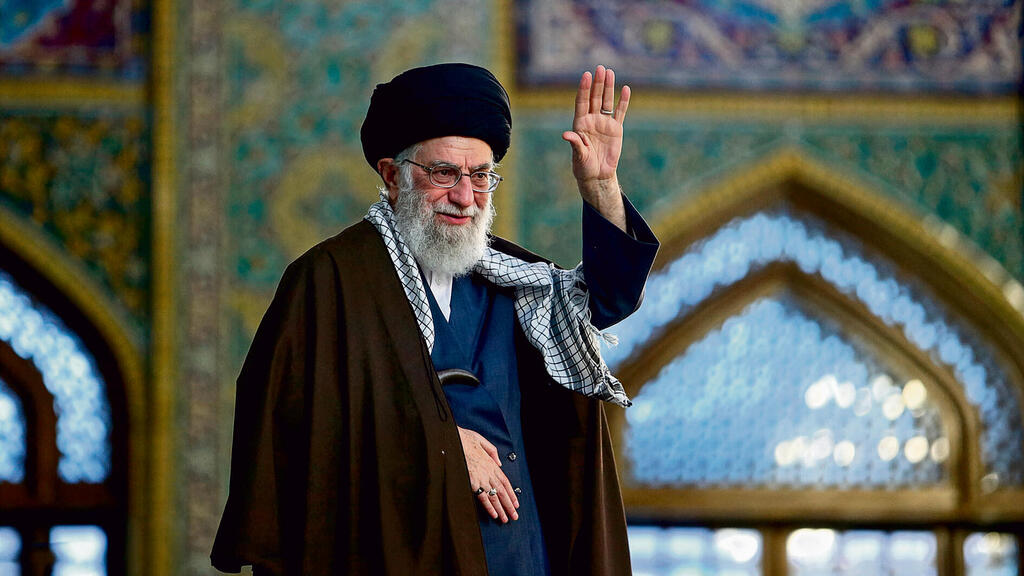
That reality did not prevent Supreme Leader Ali Khamenei, who was killed over the weekend in Israeli airstrikes, from amassing what is estimated to be a vast private and family fortune of between $100 billion and $200 billion.
According to various assessments over the years, funds linked to Khamenei have been held in bank accounts in Venezuela, the United Arab Emirates, Syria, France, Britain and several African countries. Much of the wealth was reportedly accumulated through state-controlled entities overseeing infrastructure, property and real estate in Iran. By comparison, the estimated family fortune is more than double Iran’s total oil exports in 2025.
Significant wealth was also reportedly generated through investments worth hundreds of millions of dollars in gold and diamonds, controlling stakes in telecommunications and oil companies, venture capital funds and the establishment of dozens of organizations that operated ostensibly as charities.
While those organizations provided assistance to widows, orphans and war wounded, and invested in infrastructure, education and health systems, companies indirectly linked to Khamenei were said to have profited from those activities. Additional sources of wealth allegedly included percentages from Iran’s oil sales and the takeover of vacant land later converted into income-producing assets.
Much of the fortune is associated with Setad, formally known as the Execution of Imam Khomeini’s Order, an economic conglomerate operating under the authority of the supreme leader. Originally established to manage abandoned properties, Setad evolved into a vast enterprise accused by critics of systematically confiscating real estate.
Reports over the years alleged that properties belonging to minorities and expatriate Iranians deemed abandoned were transferred to the organization. Critics also claimed that residents unable to immediately prove legal ownership risked eviction, after which properties were absorbed into the conglomerate’s portfolio.
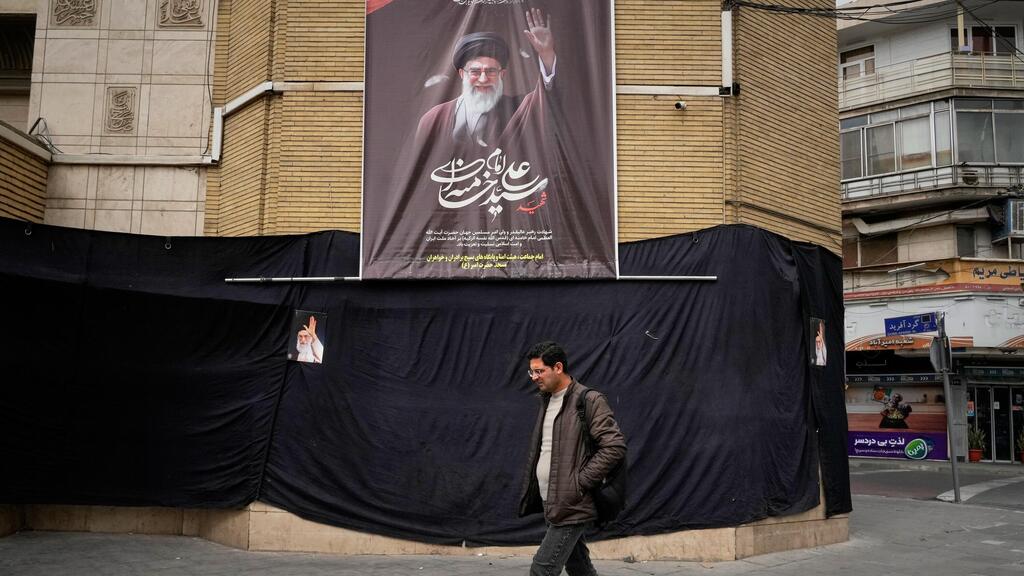
Tehran
(Photo: Vahid Salemi\AP)
Khamenei, who often portrayed himself as living modestly, wielded sweeping political, military and economic authority. His office had the power to seize property, influence economic policy and regulate transactions in ways that, according to critics, benefited entities under his control.
Business activity across multiple sectors, including energy, media, health and education, was frequently linked to companies said to be affiliated, directly or indirectly, with his network.
Publicly, Khamenei emphasized a frugal upbringing, describing a childhood in a 60-square-meter home and a simple lifestyle after marriage. Supporters cited that image as evidence of humility. Critics argued that it contrasted sharply with allegations that his family accumulated assets including private jets, helicopters, luxury apartments, yachts and a fleet of high-end vehicles.
In the past decade, particularly following the large-scale protests of 2022, reports suggested that investments connected to his family increasingly flowed abroad. Funds were allegedly transferred through intermediaries and shell companies established by regime supporters living overseas. Banks in countries such as Liechtenstein and Switzerland were cited in media reports as destinations for some of the capital.
Unverified allegations also surfaced in recent years concerning money laundering and other financial misconduct linked to individuals associated with the family. None of those claims were independently confirmed.
Questions now center on who will inherit the fortune and how it will be divided among family members. Another open question is what would become of the assets should Iran’s ruling system collapse.
Khamenei was born in 1939, the second of eight children. His father was a senior cleric, and he began religious studies at age 4. As a young man he aligned with Shiite clerics, including Ayatollah Ruhollah Khomeini, and was imprisoned and reportedly tortured for his role in opposing the shah.
After Khomeini’s death in 1989, Khamenei was appointed supreme leader, a position he held for more than three decades. His tenure was marked by repeated confrontations with reformist movements and waves of street protests, which he survived politically while consolidating authority.
In 2013, a Reuters investigation examined the scale of Setad’s holdings. That same year, Iranian estimates indicated that more than 50% of the population was suffering from malnutrition, including high percentages of children and infants.
Sadeq Mahsouli, a former senior Revolutionary Guards commander and later a government minister, was once questioned in parliament about his wealth. He replied that while the supreme leader spoke against ostentatious palaces, he never spoke against living inside one. Mahsouli himself was nicknamed “the billionaire general.”
Years earlier, a European journalist who profiled Khamenei described his modest lifestyle and devotion to religion. Asked about his favorite book, Khamenei replied without hesitation: “Les Miserables” by Victor Hugo.