

The countdown to the 2026 World Cup - which will take place this summer in cities in Canada, Mexico and the United States - has officially moved beyond the logistics of ticket sales and stadium capacities into the high-stakes realm of national security.
A few days ago, the U.S. agency FEMA (Federal Emergency Management Agency) issued a historic announcement that marks a definitive turning point for the global security industry: an initial $250 million allocation specifically dedicated to securing U.S. airspace ahead of the tournament. This is not merely a precautionary budget for a sporting event; it is a clear-eyed recognition that the threats of the 21st century have arrived, and the time for theoretical preparation is over.
Gallery
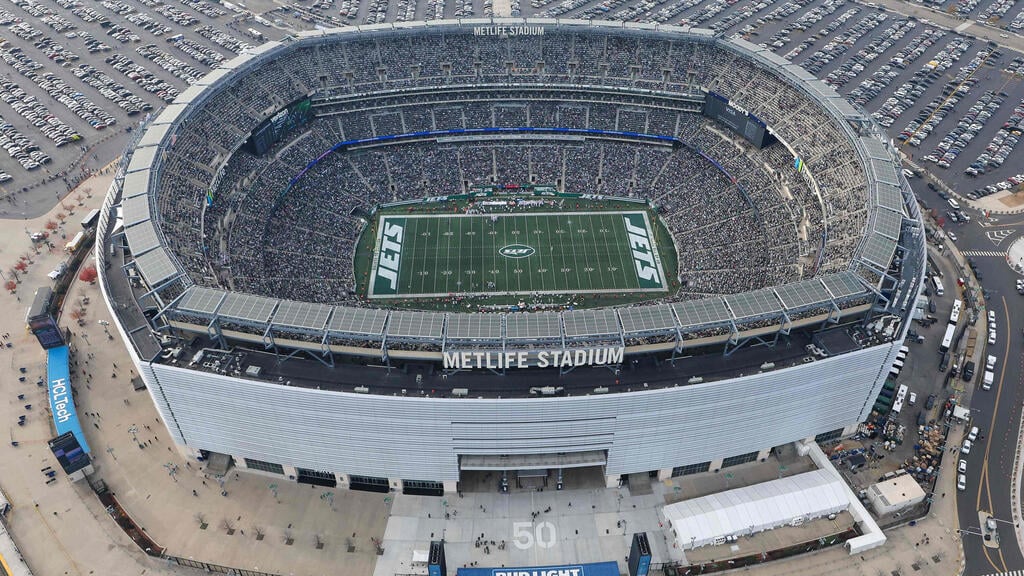
You cannot protect millions of fans across dozens of cities with traditional checkpoints and human observers alone
(Photo: Al Bello/Getty Images North America / AFP)
For years, the Homeland Security (HLS) market now rapidly surging toward a staggering $800 billion valuation was characterized by "future-leaning" visions. We spoke of autonomous surveillance and AI-driven aerial defense as concepts that would one day define our safety. FEMA’s massive, rapid capital injection proves that the "future" is already our current reality. We are witnessing the precise moment where the market transitions from the laboratory to the field, moving from conceptual pilots to a massive, operational and mission-critical application on a continental scale.
What has fundamentally changed is the understanding that the sky is no longer a passive space. Recent global conflicts have served as a brutal classroom, demonstrating that the control of lower-tier airspace is the most critical pillar of modern domestic security. The lessons from modern battlefields, where drones and remotely piloted systems have redefined warfare, are now being directly applied to protect the American homeland. This investment clarifies that the demand for real-time observation and the ability to neutralize asymmetric threats is not a futuristic luxury, but an immediate and urgent necessity.

Iranian striker Mehdi Taremi may be barred from US and miss World Cup over ties to the Revolutionary Guards
(Photo: Atta Kenare / AFP)
Securing an event as vast and geographically dispersed as the World Cup presents a logistical challenge that 20th-century tools simply cannot meet. You cannot protect millions of fans across dozens of cities with traditional checkpoints and human observers alone. The complexity of the modern threat landscape requires a persistent, intelligent and autonomous aerial shield. FEMA’s quarter-billion-dollar "down payment" is a proactive and necessary step to ensure that the U.S. remains ahead of a rapidly evolving curve, moving from a reactive posture to a state of total aerial readiness.
The investment in airspace security is an appropriate and necessary step, but it addresses only part of the challenge. Contemporary threats require an integrated HLS solution that spans aerial, ground, cyber and electronic domains, covering both system-level technologies and the human factor/operational dimension. Accordingly, funding the aerial defense layer must be accompanied by complementary investment across the other threat arenas in order to ensure a coherent and effective security posture.
As the industry looks toward this $800 billion horizon, the FEMA announcement serves as a bellwether. It signals that we have entered an era where the ability to take elite technology and transform it into a reliable, available, and operational edge solution is the only way to guarantee public safety. The World Cup is the immediate catalyst, but the infrastructure being built today will define the security landscape for decades to come. The skies are the new frontline, and this historic investment ensures that the U.S. is not just watching the horizon but actively securing it.
Roei Bargil is CEO of Aquarius Engines
First published: 15:02, 01.14.26