


All successful cyber companies share certain similarities, but Remedio's path differs from most in many respects. Nevertheless, last week it announced a $65 million fundraising round, with a valuation of $300 million.
On paper, this is a Series A round — an initial round — but Remedio has already been operating for six years. Until now, it simply did not need funding. But there’s another major difference: Remedio is one of the few cyber companies run by a female CEO. In the male-dominated world of cybersecurity, this is not a given.
The technology developed by the company allows it to identify misconfigurations in information systems in large organizations — vulnerabilities that, as it turns out, attract hackers. Many major cyberattacks worldwide stem from poor configurations on company computers or employees' laptops, which could have been easily prevented.
Remedio managed to sell this idea to companies like Amazon, Coca-Cola, Colgate-Palmolive, Kraft-Heinz, Clal Insurance, Bank Mizrahi and even Israeli cybersecurity company Check Point. And when you have paying customers, you don’t need to raise capital.
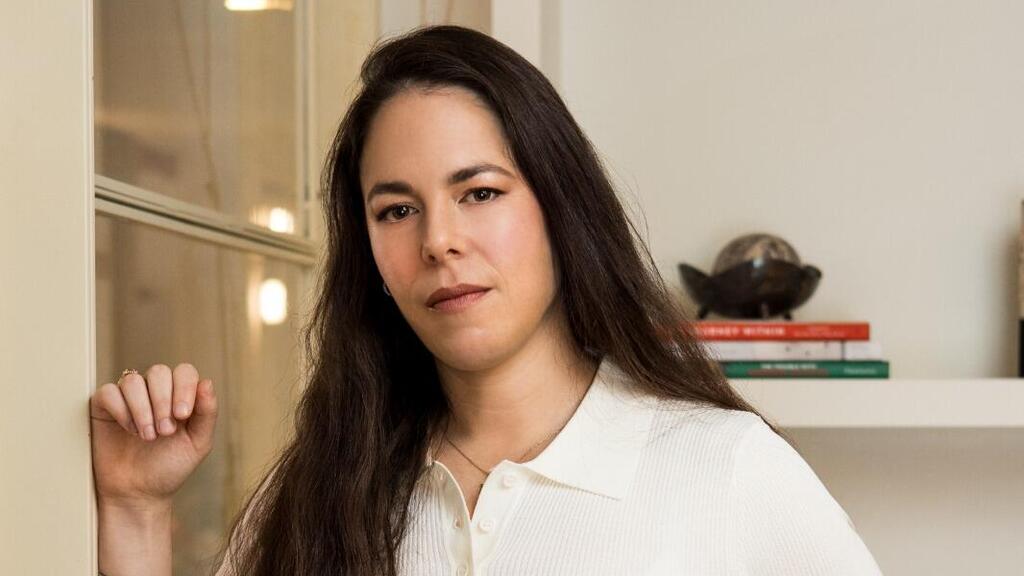
"We’ve been profitable from day one and have never raised money," says CEO Tal Kollender. "People need to understand — in the cyber market, this doesn’t exist. The first thing you do when you wake up in the morning, before even preparing a presentation, is raise money."
According to her, the company has Annual Recurring Revenue (ARR) in the tens of millions of dollars while employing only 40 people. "We are very lean for a company with hundreds of clients. We’ve never run at a loss, and we never considered raising capital."
So what has changed now?
"It changed over time, and what opened our eyes… people have to admit mistakes, okay? Our first product came in addition to existing products, and we wanted to do something more and replace existing products. For that, investment is required. To grow quickly before someone else comes and takes the idea and crushes us. And it’s not easy as a lean company without venture capital backing."
Over the years, the company rejected many venture capital proposals, but now the timing seems right. It accepted an offer from Bessemer Venture Partners to lead a major $65 million funding round, joined by TLV Partners and Picture Capital.
An idea sketched on a napkin
The company was founded in 2019 under the name GYTPOL, a combination of the founders’ names: Gilad Raz (CTO), previously founder of Digital Fuel (acquired by VMware); Yaakov Kogan (VP R&D), Raz’s partner in the company; Tal Kollender (CEO), a former Military Intelligence Unit 8200 cyber expert, who had been an enthusiastic hacker before army service and brought the idea that became the foundational core of the company.
The two veteran entrepreneurs believed the CEO role fit her perfectly. Kollender met Raz through a startup accelerator. She sketched the idea for the new company on a napkin, which was enough to bring her, Raz and Kogan to a meeting with Israel Aerospace Industries, Israel's largest defense contractor, which became their first customer. Other clients joined one after another, and with revenue already coming in, the founders saw no immediate reason to raise capital.
"We wanted to take money, but at the right time. We didn’t intend to raise now, but at the end of the year, thinking it would be good timing with the new product. But what happened was amazing — Bessemer contacted us and things moved very fast," says Kollender.
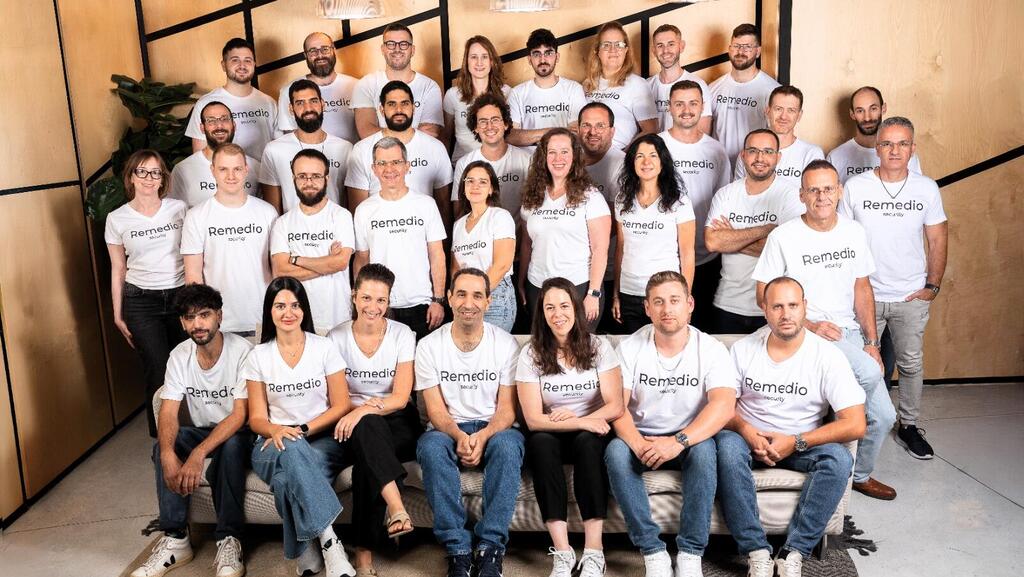
Remedio team
(Photo: Rotem Rozman Yefet)
One of the advantages of bootstrapping (without investors or funding) is that there are no partner shareholders. How does it feel to introduce partners to the cap table?
"Look, we’re still the majority, and that’s important. We gave up some control for the good of the company, and this step will help us grow much higher. Bessemer is a well-known fund that people want to work with. We understand we’re taking on risk — it’s a venture capital fund, after all — but it’s a very calculated risk. We want to grow much faster.”
Rebranding and scaling
Now, with a major funding round and the reorganization of the company and its technology, it’s also time to rebrand to something catchier. Remedio is intended to reflect "healing computers” (remedy) — both repair and automated problem fixing.
So far, the small team of 40 employees has supported hundreds of clients in Israel and worldwide, including large, complex organizations. The company will now expand its team, focusing on marketing and sales. According to Kollender, the change began last year during a company reorganization.
"We said 'no' many times, but then I learned to say 'not now'. People who joined the company, who had done this before, convinced us we could accelerate tenfold, but not if we continued as usual. For example, if tomorrow morning I want to pour $20 million into the U.S. market, how would I pay salaries for 40 employees without a cash ceiling? So if Bessemer comes and says, 'To other companies we say be more cautious, but for you, start spending because we understand the insane potential you have'… they literally told us that."
'For every hire, you have to pay $100,000'
There’s no doubt Remedio is beginning to spend money, aiming to grow rapidly, capture new markets and perhaps — for the first time in its history — reach a state of non-profitability. Expenses are already mounting — for example, for hiring senior staff.
"They told me to contact professional recruiters, and I got a contract — I went crazy," says Kollender. "For every hire, you pay them $100,000. That’s how it works. So you have to change your mindset and get used to it, and that’s also what Bessemer wants. We want to run."
What are the plans for next year?
"I’m not waiting. For us, 2026 should have started a few months back; otherwise, it’s lost. So even before shaking hands with Bessemer, we had already started, with the level of spending and the hiring of the right people, and I’m confident things will grow in order volume, demand and sales. Most of the money doesn’t go to high-quality R&D — we do that with 20 people supporting hundreds of clients — but to go-to-market. We know what we’re doing is so unique, and it's up to us to prove it."
"Remedio has succeeded in building trust with some of the largest organizations in the world thanks to its ability to detect and fix critical vulnerabilities not identified by other systems," said Adam Fisher, partner at Bessemer. "It’s not every day that we hear clients speak so enthusiastically about a security solution, especially in a market flooded with new security tools constantly."
"Remedio autonomously fixes endpoint failures, turning a previously reactive and cumbersome process into a fast and proactive action — technology we already use as part of Amazon’s cybersecurity protection," said Carl (CJ) Moses, VP of Security Engineering at Amazon.
Alex Shuchman, VP of Information Security at Colgate-Palmolive, adds: "Remedio provided us with a new level of transparency across our entire IT infrastructure and allowed us to improve the organization’s security without adding personnel. The company continues to launch new features rapidly, and today it is a core part of our cybersecurity strategy."