

When Avi Urban moved from Herzliya to Silicon Valley, California, in 1985, the Israeli community there was small. The region, located in the southern San Francisco Bay Area, had only begun establishing itself as the United States’ leading technology hub a few years earlier. Anyone involved in high tech and startups wanted to be there.
Over the years, New York has emerged as the country’s primary tech center, yet Silicon Valley remains home to giants such as Google, Apple, Facebook (Meta), Intel, Nvidia and Netflix, and retains its status as a global symbol of innovation and entrepreneurship.
Urban, now in his 70s, spent his first 25 years in the area working in high tech. He later changed careers and moved into real estate, a field where earnings can rival tech salaries, given local housing prices.
Silicon Valley is considered one of the most expensive places to live in the United States. High demand for housing near tech companies, combined with limited land and strict building regulations, has driven prices to extreme levels. Homes in Palo Alto and Mountain View typically cost between $2.5 million and $3 million, while in San Jose — the largest city in the region — median home prices range from about $1.5 million to $2 million. These are not luxury villas, but relatively modest homes. A 135-square-meter (about 1,450-square-foot) house in Sunnyvale, a popular area among Israelis, can cost around $2.2 million. Even apartments and townhouses, once considered more affordable options, now typically exceed $1 million. As a result, living in Silicon Valley is widely seen as an expensive privilege.
Urban and his wife Yael, like many Israelis who arrived in the area, initially planned to stay only a few years. Today, they are marking their 42nd year there. Since moving, they have had two children and now have four grandchildren. One child still lives in Silicon Valley, married with two children, while the other has relocated to Puerto Rico.
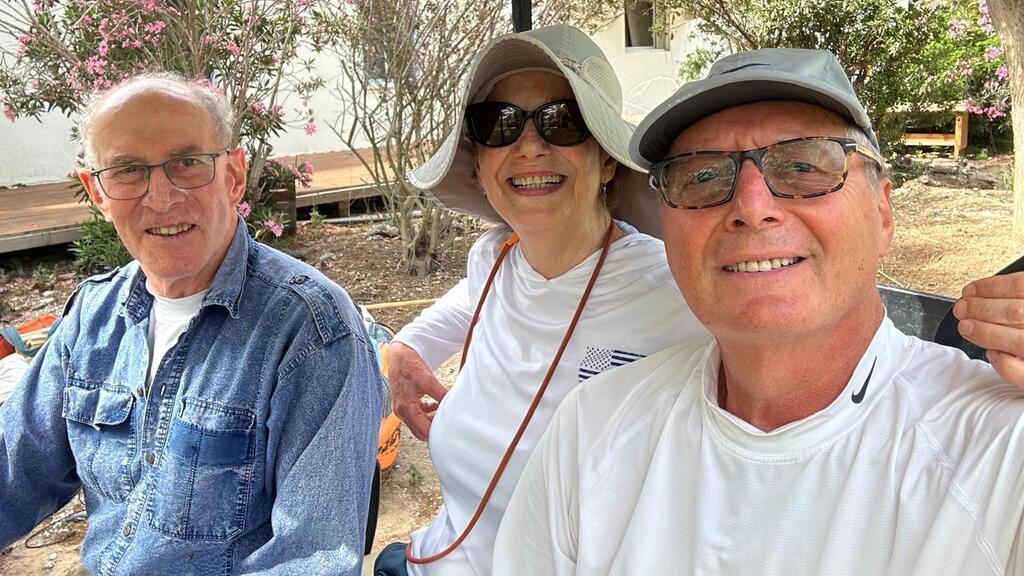
Avi and Yael Urban volunteering near the Gaza border
(Photo: Courtesy of the family)
“Most of our longtime friends’ children live in the United States, but I have one close friend whose three children moved to Israel, and another whose son did the same,” Urban said in a phone interview from Berlin, where he and his wife are studying German.
When the couple first arrived, there were no Israeli restaurants or cafés, no informal Friday gatherings at coffee shops, no Israeli Scouts (Tzofim, a youth movement), no Garin Tzabar (a program supporting lone soldiers), no lectures in Hebrew or performances by Israeli artists.
Today, says Alon Matas, a 15-year resident, it is possible to attend Israeli community events every day of the week and still not keep up. These include singalongs, lectures, performances, holiday parties, volleyball groups, a motorcycle club and more.
Matas moved to Silicon Valley from Givat Shmuel with his wife Hila and their two daughters, then aged five and one; their youngest was born in the United States. A tech entrepreneur and founder of the startup Strawberry.me, he raised his daughters — like many Israelis in the area — with a strong connection to Israel, including visits, Hebrew at home and participation in the Scouts. It is perhaps no surprise that his eldest daughter, now 20, chose to study in Israel.
“I was just speaking with her, and she said she was heading into a shelter,” he said. “She’s used to it and not alarmed. She was supposed to start college here, but at the last minute flew to Israel in August 2023 for a gap year. It was supposed to be about fun and travel, and then everything changed. She volunteered at Kibbutz Nirim picking avocados, came back here, and at the last minute decided an American college wasn’t right for her. She enrolled in the international program at Reichman University. She’s already in her second year,” he said proudly.
Born in the US, enlisting in the IDF
An interesting trend is emerging among the children of Israelis in Silicon Valley. Many, Matas says, choose to move to Israel to study or enlist in the Israel Defense Forces, even though a large number were born in the United States or moved there at a young age and are not obligated to serve. This phenomenon has become more noticeable in recent years.
Why? It is likely a combination of factors: the Israeli Scouts movement, which many children join at a young age, and what some describe as the increasingly progressive nature of the local education system. As hostility toward Israel rises, so too does the sense of Israeli identity and patriotism among these children.
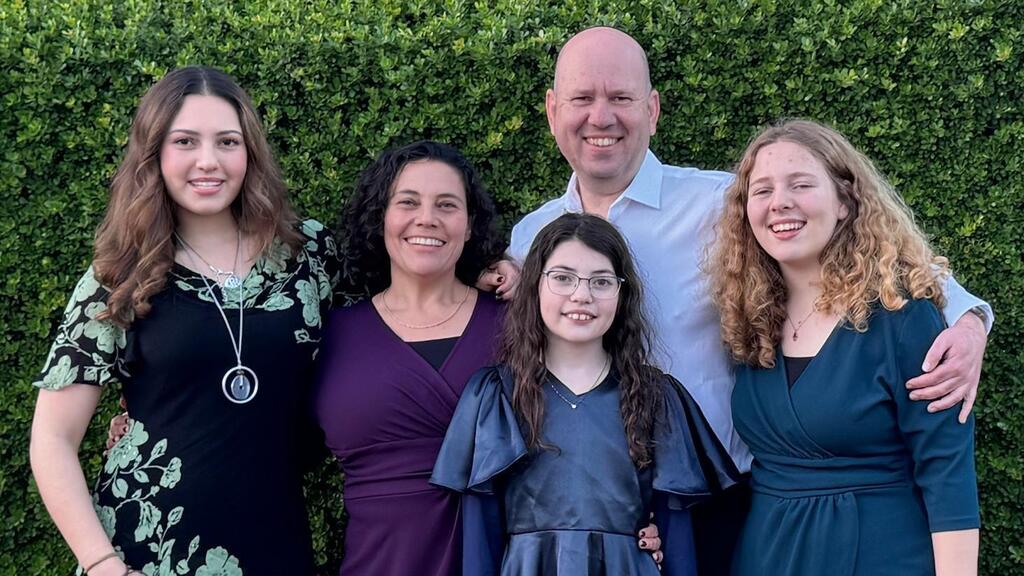
Alon and Hila Matas and their children
(Photo: Courtesy of the family)
Matas says the influence of media and progressive education on the broader Jewish community is significant. “We are starting to lose the Jewish community, and that worries me,” he said. “But Israeli kids are reacting in the opposite way. They push back and become less progressive as a result. Some took part in Black Lives Matter protests and later became disillusioned when they saw what was happening. Suddenly, their friends began distancing themselves and sharing things on social media that were hard to accept. I’ve seen many kids lose friends over this.”
Matas emphasized that he and his children have not personally experienced antisemitism in the city. No one has removed mezuzahs (a small case affixed to Jewish doorposts) or snatched Star of David necklaces, and people speak Hebrew freely in public. An incident in San Jose in which two Israelis were attacked after speaking Hebrew, he said, was an exception.
Antisemitism may not be visible on the streets, but, according to some parents, it is making its way into classrooms — subtly and with the backing of local education authorities. It began with ethnic studies programs, in which some teachers present what they describe as “genocide” in Gaza, display maps labeled “Palestine,” and, critics say, present distorted narratives as fact.
“The teachers’ union is very strong and openly anti-Israel,” Matas said. “It issues shocking statements against Israel. The ethnic studies curriculum opened the door for teachers to teach whatever they want. It’s a Trojan horse through which anti-Israel messages are introduced. We were caught off guard. CAIR (the Council on American-Islamic Relations) pushed this curriculum and its own agenda, and it took us time to understand what was happening.”
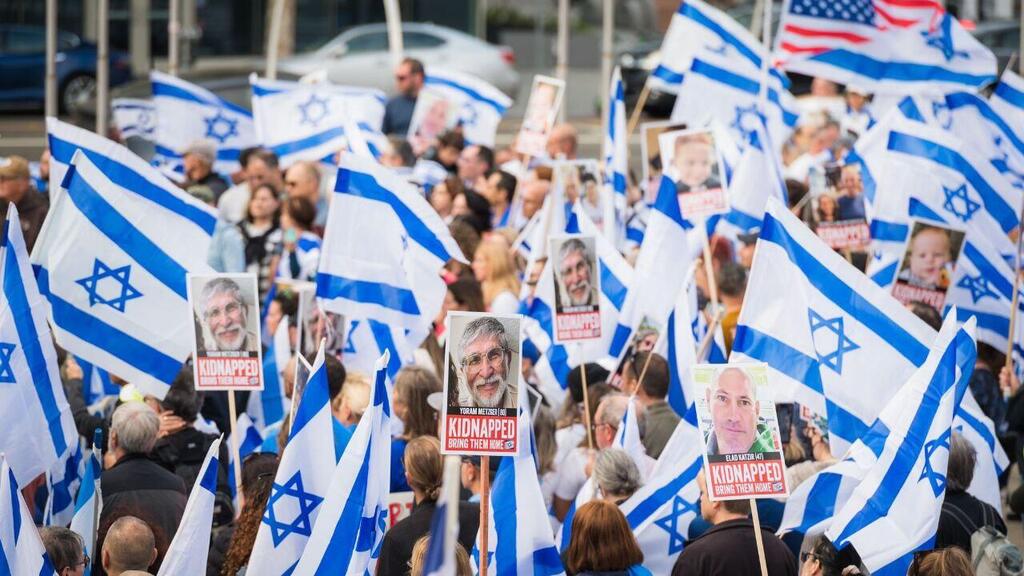
Rally for the return of the hostages and a memorial ceremony for those killed and murdered in Silicon Valley in 2023
The Israeli community, along with a broader Jewish coalition in the Bay Area formed in response, has tried to fight the curriculum. They have organized buses to Sacramento, California’s capital, the main arena of this struggle, in an effort to halt the program, which they fear could shape the next generation’s views of Israel. So far, these efforts have had limited success.
Concerns over anti-Israel sentiment extend beyond classrooms. After the October 7 attacks, the Sunnyvale City Council — in a city with one of the largest concentrations of Israelis on the West Coast — convened to call for a ceasefire and condemn what it described as “genocide in Gaza.” Residents were stunned, Matas said.
“We were unprepared. It felt like an ambush,” he said. According to him, CAIR had become deeply involved locally and succeeded, after sustained effort, in placing Muslim representatives on the school board.
Given concerns about school curricula, why don’t Israeli families simply send their children to private Jewish schools? The answer is largely financial. Even with high incomes, tuition ranging from $40,000 to $60,000 per year per child — rising further in high school — is a heavy burden. Some families do choose Jewish schools, but many children transfer to public schools by high school.
Ido Segev, a father of three aged 18, 17 and 14, takes some comfort in the fact that his youngest child’s school has not yet implemented the ethnic studies program.
“Fortunately, the older two were spared,” he said. “Ethnic studies are tied to how Americans understand the world — through race and identity. The problem is that we are not on what is seen as the right side of power and morality.”
Before moving to Silicon Valley, Segev lived in China with his family for six years, where he worked for Intel until 2017. “We lived in a small city of 7 million people,” he said. “The kids spoke Chinese but have already forgotten it.”
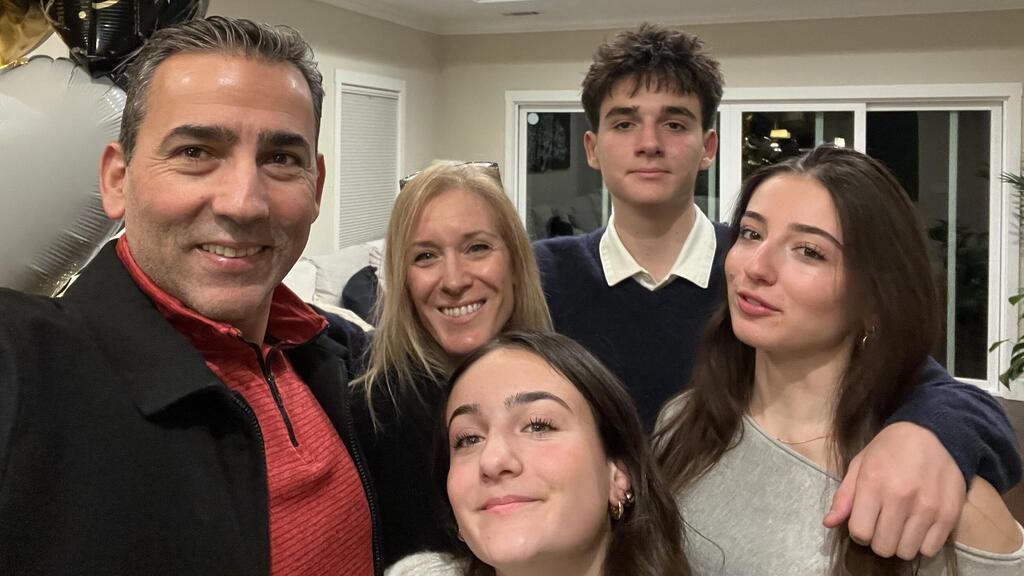
The Segev family
(Photo: Courtesy of the family)
His eldest daughter is now waiting for college admissions decisions. “She’s debating whether to serve in the military first and will need to decide by April 1,” he said. “She didn’t grow up here but was raised American, and still, like many Israeli kids, wants to serve. I don’t have exact numbers, but enlistment among children of Israelis is at a peak.”
Despite concerns over what some describe as “woke” messaging in schools, Segev says Silicon Valley remains an attractive place to live. “The weather is good, there’s nature, culture, sports — America at its best. There are job opportunities, you’re at the forefront of technology and startups. It’s essentially an Israeli city, with a motorcycle club, volleyball groups and a rich social life. I even host weekly poker games at my house.”
Israeli contractors arrive from Los Angeles
Every Friday, tech workers gather at cafés to discuss developments in Israel. Soon, they may move these conversations to the local Jewish Community Center (JCC), where Matas and a partner plan to open an Israeli-style café after Passover.
Many local Israelis — along with others — frequent one of six branches of “Oren’s Hummus,” a chain founded by entrepreneur Oren Dobronsky that serves Israeli cuisine. It is also where the area’s three main Israeli groups intersect: tech workers, academics (including postdoctoral researchers and students), and contractors — known locally as construction professionals.
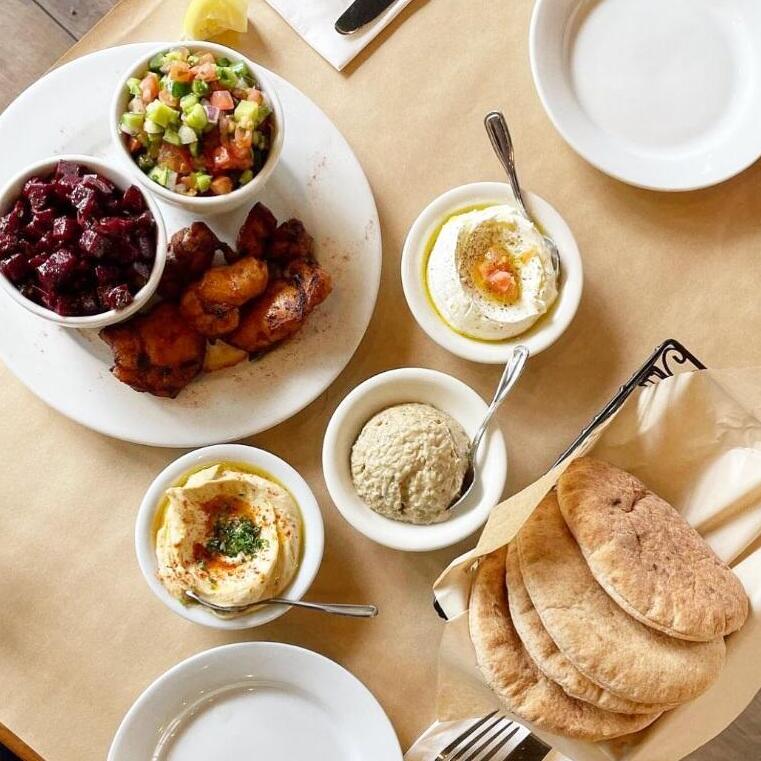
Oren’s Hummus in Silicon Valley
(Photo: Instagram)
The contractor group is the most recent to arrive, largely relocating from Los Angeles after that market became saturated. In Silicon Valley, they found they could earn well without competing against dozens of others for the same clients.
Unlike other Israeli communities in the United States, many Silicon Valley Israelis arrive with a defined timeframe, especially academics and some tech workers. As a result, there is constant movement in both directions — arrivals and departures.
As for ties between the Israeli and Jewish American communities, they remain limited. “Most Israelis in Silicon Valley keep to themselves,” Urban said. “My wife Yael worked as a teacher in Palo Alto, so she had some connection with the American community, but there aren’t enough of those ties.”
The relatively affluent Israeli community in Silicon Valley contributes financially to organizations in Israel — and beyond. Shortly after October 7, the Urbans heard about volunteers aged 60 and over helping rehabilitate kibbutzim near the Gaza border and decided to join.
“We were supposed to travel in Europe for a month, but we canceled and went to volunteer in Nirim for four weeks,” Urban said. “Yael worked in gardening, and I helped repair damaged homes.”
Last November, they were approached by Kibbutz Nir Oz, where younger members had decided not to return. A group of recent university graduates was recruited to form a new generation there, but $200,000 was needed to complete construction.
“We immediately organized to help and raised nearly $140,000,” Urban said. “We’re now trying to close the gap.”