

Senior officials in Israel’s Defense Ministry and the Prime Minister’s Office were surprised about three weeks ago by an unusual visitor — a rare sight in the dry corridors of the Israeli government: long-haired, sporting a goatee, wearing a Hawaiian shirt, shorts and flip-flops. The guest met, among others, with Prime Minister Benjamin Netanyahu and held a series of intensive meetings with leaders of defense-tech companies and startups.
The visitor was Palmer Luckey, 33 — an avid gamer and artificial intelligence enthusiast, developer of the Oculus virtual reality headset and founder of Anduril, currently one of the most prominent defense startups in the world. A billionaire, Forbes estimated his fortune at $3.5 billion just last month.
Anduril focuses, among other things, on developing autonomous weapons systems, aircraft, missiles and AI technologies. It is unclear whether Luckey and his interlocutors were already aware of the anticipated U.S.-Israeli strike on Iran, but there is little doubt that Anduril’s products played a significant — mostly covert — role in it.
Like its founder, Anduril — named after the sword in The Lord of the Rings — is an outsider in Silicon Valley. In less than a decade it has become one of the Pentagon’s most significant suppliers. Its list of AI-based products fires the imagination, even in Israel, and seems almost tailor-made for a campaign against Iran: a pilotless fighter jet; a system that collects data from thousands of sensors — radars, cameras and drones — and presents a single battlefield picture; a backpack-carried “suicide drone”; an autonomous aircraft capable of vertical takeoff and landing (VTOL); a particularly low-cost autonomous cruise missile; and a communications-jamming system designed to defend against swarms of drones.
Luckey told The New York Times that his goal is to develop weapons capable of deterring the United States’ most dangerous enemies without driving the country into financial ruin.
In the heated debate currently taking place between the AI company Anthropic and the U.S. government over AI “red lines,” Luckey — who does not hide his hawkish views and has previously expressed support for Israel, even describing himself as a “radical Zionist” — sides with the administration. In his view, if the United States imposes strict limitations on itself while China develops autonomous systems 100 times faster, the U.S. could lose the race. “If we’re not there with lethal AI, our enemies will be.”
Meanwhile, Anduril is fully capitalizing on the growing investment in defense technology across the West. The company is negotiating with investors for a new funding round that could value it at more than $60 billion. Along the way, a bit of tailwind, publicity and praise from government officials certainly helps. Defense Secretary Pete Hegseth recently celebrated a high-profile visit to the company’s headquarters in Costa Mesa, California, while Donald Trump — who allocated at least $1 trillion to modernize the U.S. military — hosted Luckey at his Mar-a-Lago residence.
According to several sources, Luckey also suggested to the president — even before his inauguration last year — that the Department of Defense should be renamed the Department of War. The relationship between the two goes back further: in October 2020, Luckey hosted a fundraising event for Donald Trump at his home in Newport Beach, attended by the president.
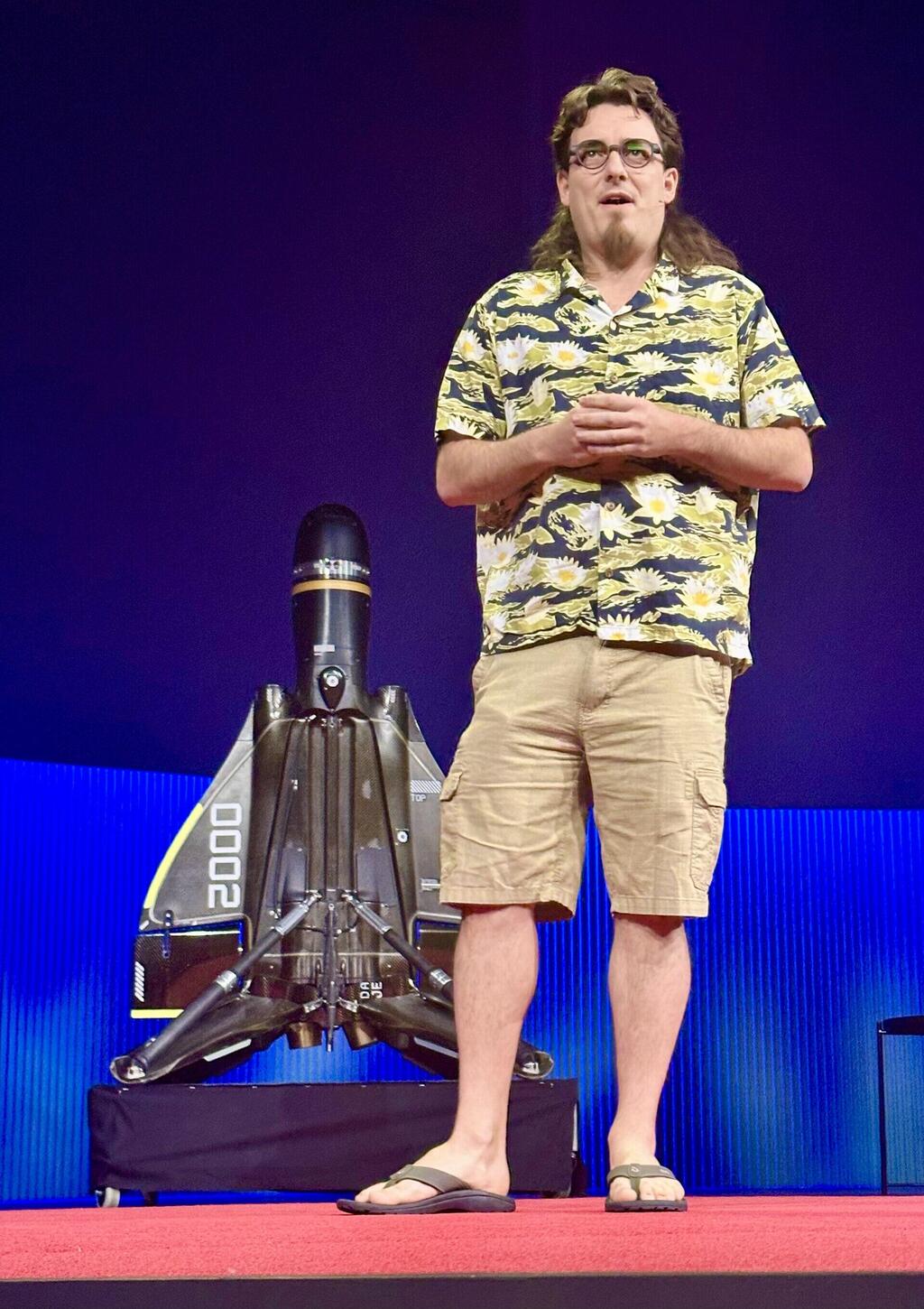
Palmer Luckey at TED, April 2025
(Photo: Steve Jurvetson, Wikipedia)
Owner of two submarines
War or not, Luckey is currently busy with something entirely different: raising major funding for his gaming venture, ModRetro, which develops updated versions of classic 1990s gaming consoles. The company plans to produce both games — including remasters that improve the quality of original titles — and entirely new releases. “I,” he promises investors, “will bring back interest in the Game Boy, Nintendo 64 and more.”
ModRetro was also the name of Luckey’s first business — an internet forum and online community he founded as a teenager for enthusiasts focused on modifying older devices, such as vintage consoles, by integrating modern technology.
Two years ago, the company launched its first device, the Chromatic, styled after Nintendo’s Game Boy. It runs original games developed for the classic handheld console and comes with the popular puzzle game Tetris. Luckey said he has spent nearly two decades working intermittently on what he sees as the ultimate Game Boy–inspired device, describing it as his tribute to the console’s design, technical innovation and cultural influence.
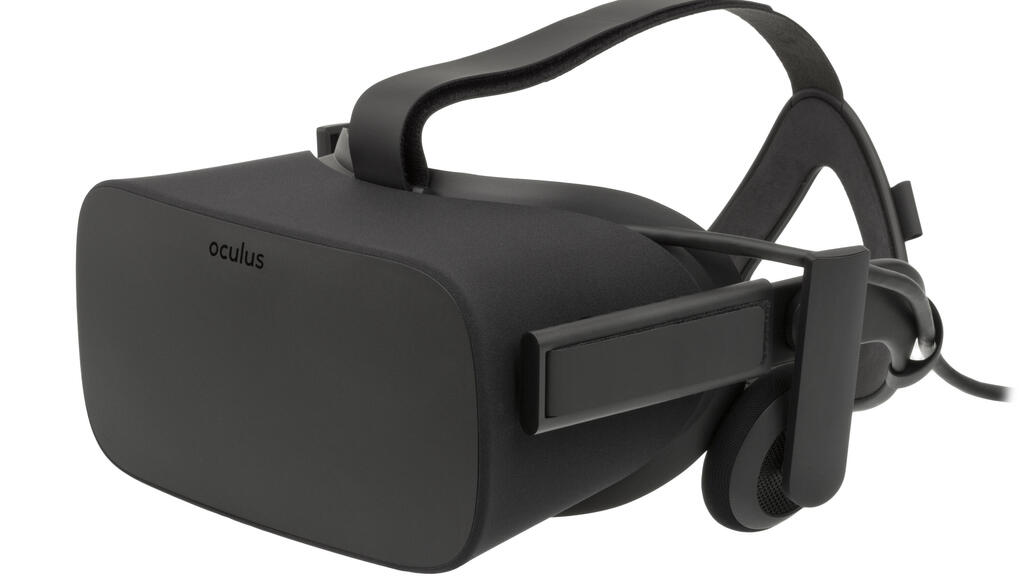
The first Oculus Rift headset developed by Palmer Luckey
(Photo: Oculus)
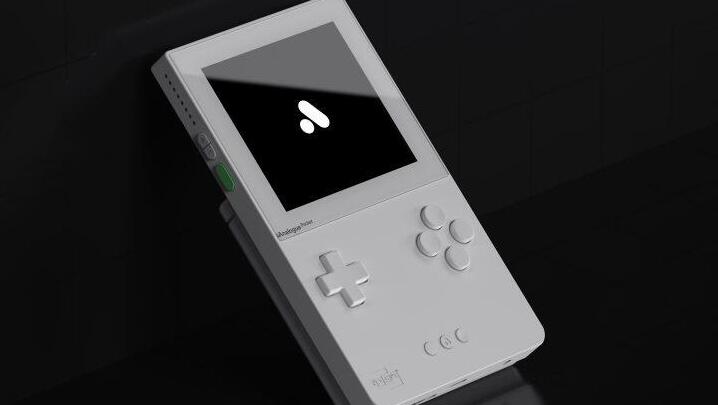
Game Boy; the inspiration for Luckey’s gaming venture
(Photo: PR)
Luckey, who has three sisters, grew up in Long Beach, California. In the tech industry, many insist that the character Keenan Feldspar, who appeared in several episodes of the TV series Silicon Valley in 2017, was based on him. As a child he enjoyed building complex electronic projects. At 16 he developed a prototype virtual reality headset in his parents’ garage. His big breakthrough came with Oculus, the VR startup he founded at age 19.
Just two years later, Meta — then Facebook — acquired the startup for $2 billion, and Luckey became a company employee.
Mark Zuckerberg initially showed great enthusiasm for the technology, but Luckey soon found himself in internal conflicts with other employees — both over the direction of virtual reality and other issues. During the 2016 presidential election he was accused by Facebook employees of donating money to fund a particularly crude billboard attacking the Democratic candidate, Hillary Clinton. In March 2017, he was fired.
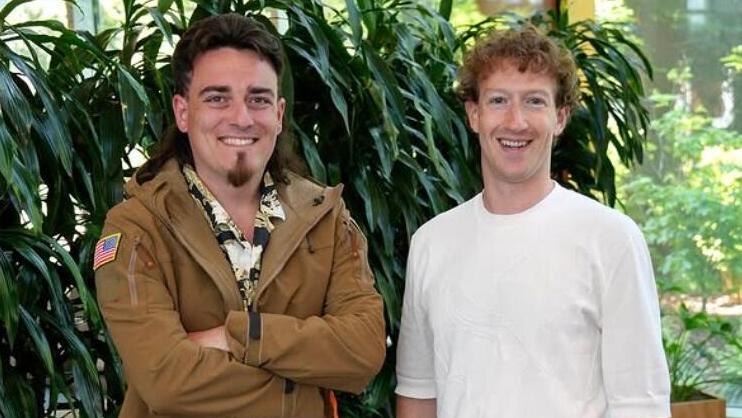
Mark Zuckerberg and Palmer Luckey; they reconciled after his firing
(Photo: Anduril website)
After returning from a vacation, Luckey began to take interest in military hardware — a field that was not popular in Silicon Valley. He started purchasing retired military vehicles and aircraft, including a UH-1 Huey helicopter, which he later used to arrive at his wedding. He owns six of them.
To establish Anduril, Luckey returned to Southern California, where he purchased a $12.5 million home in Newport Beach. In another building he bought across the road, he stores his collection of military vehicles. In addition, he owns special operations boats of the Mark V class purchased from the U.S. Navy, as well as two small submarines.
Initially, Luckey planned to develop Oculus-style military VR headsets at Anduril, but investors steered him away from the idea. “Focus on the things where you’ll have the biggest impact,” they advised him. “Not the things you can use to settle your scores.” To avoid day-to-day management and focus on building products, he hired a professional executive, Brian Schimpf, as CEO.
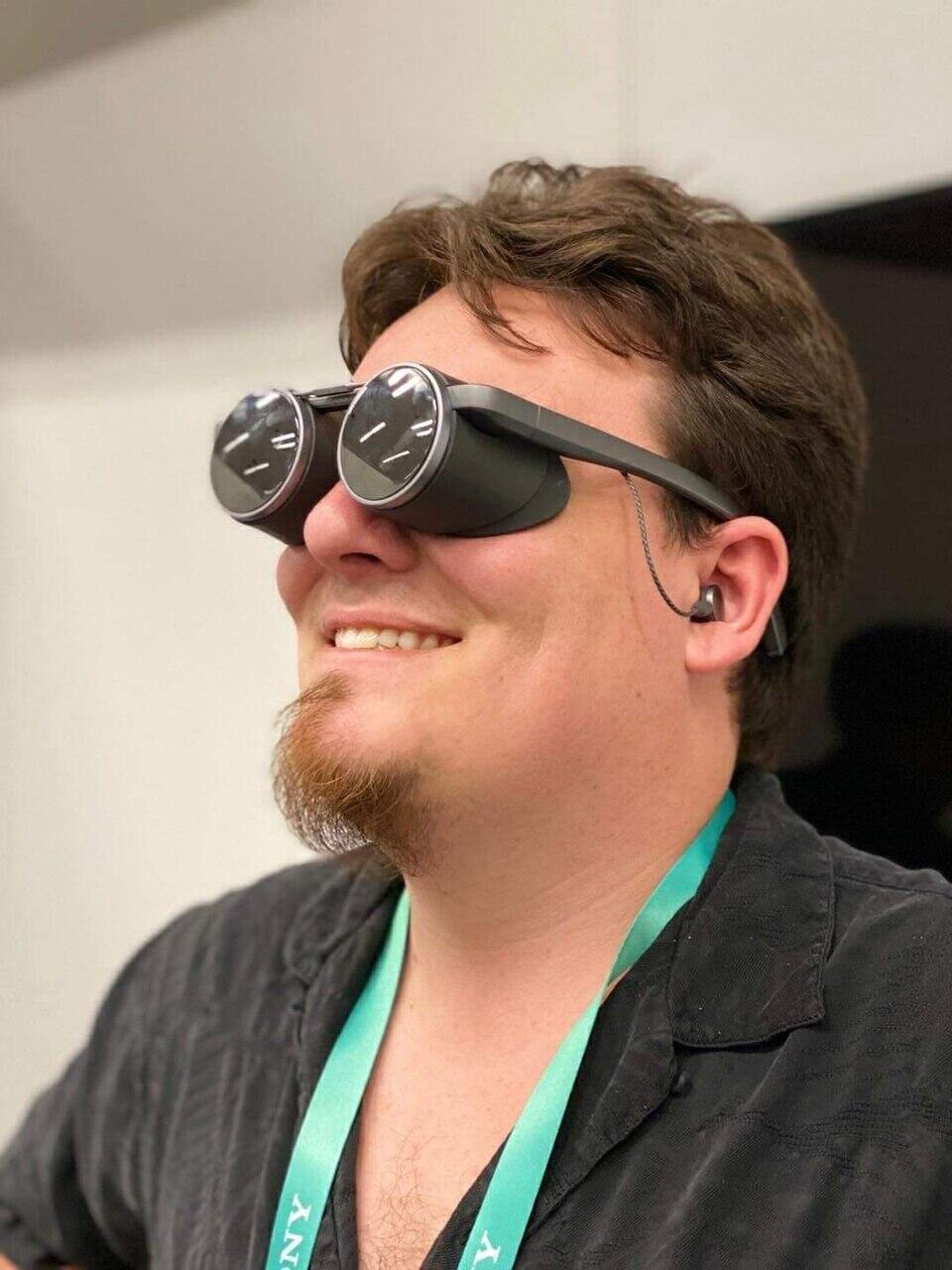
Palmer Luckey with a virtual reality headset
(Photo: Wikipedia)
The company’s first product was a border-defense system using laser sensors, reflecting the priorities of Trump’s first term, which emphasized building a border wall between the United States and Mexico. By late 2017 the company’s technology was selected for testing along the San Diego–Mexico border. At the same time, Anduril began working on drones and warheads.
Russia’s invasion of Ukraine in 2022 provided an opportunity to test prototypes in the field. Luckey traveled to Ukraine and saw firsthand how simple drones were transforming warfare: Ukrainian soldiers operated off-the-shelf Chinese drones costing about $3,000 — half the price of an artillery shell. At the same time, he carefully cultivated relationships with senior Defense Department officials and senators, bringing them on tours of the California factory and showing them his vehicle collection. Sometimes he would take them for short rides in his special operations boat.
In April 2024, Anduril scored a major surprise by defeating aerospace giants Boeing, Lockheed Martin and Northrop Grumman in a competition to build a fleet of autonomous fighter jets.
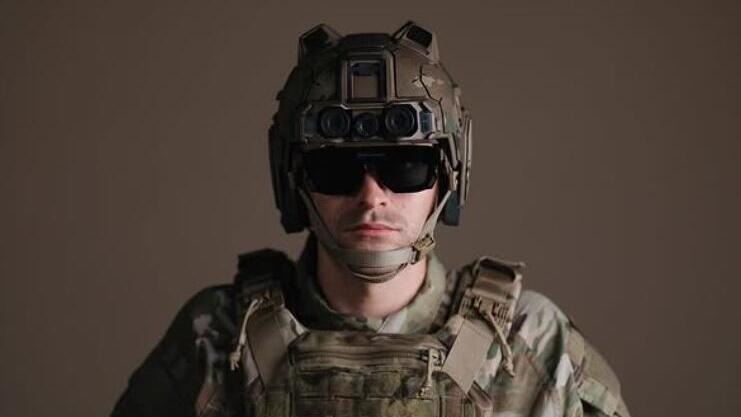
AI helmet and equipment for soldiers in the field produced by Anduril
(Photo: Anduril website)
The company’s vision centers on a single idea: autonomy. If fighter jets, drones, submarines, warships and combat vehicles powered by artificial intelligence can operate independently on the front lines, the technology could save many lives — and help the United States win future conflicts.
Luckey said that unlike traditional fighter jets, submarines or tanks — which require complex production lines and large crews — autonomous weapons can remain idle until needed, then be activated instantly, much like long-lasting packaged goods.
Today Anduril holds global contracts worth more than $6 billion and reported about $2 billion in revenue last year. The company is valued at nearly $31 billion and continues to raise funds. It employs more than 7,000 workers and plans to open another $1 billion factory near Columbus, Ohio, which will employ an additional 4,000 people.
Alongside the celebrations, however, there are critics. In anonymous conversations with The New York Times, officials within the U.S. defense establishment warned that the country is taking a risk by betting on Anduril’s weapons. A startup, they said, will always have less experience and infrastructure than long-established defense companies such as Lockheed Martin and Raytheon.
The Ship of Theseus
Luckey hates being bored. Last July, together with his friend, investor Peter Thiel, he launched an initiative to establish a new bank in the United States. Even before it fully took shape, it already had a name: Erebor — “the Lonely Mountain,” beneath which lies the dwarves’ kingdom in The Lord of the Rings.
The bank aims to become an alternative to Silicon Valley Bank, once known as the “bank of startups” before its collapse and restructuring, filling the gap it left behind. Erebor has become one of the most talked-about financial ventures of the past year and is now in advanced stages of launch after clearing key regulatory hurdles in the United States. It is considered a potential new financial home for the “innovation economy,” with direct influence on Israeli startups operating in the U.S. market.
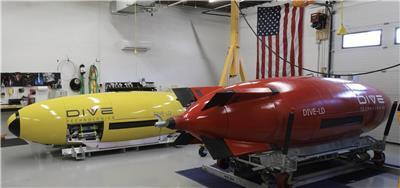
A small submarine; Luckey owns one personally
(Photo: Awakened Films)
Luckey and Anduril’s meteoric rise also produced a full-circle moment. Last May, Luckey announced that Anduril had begun working with Meta — the company that fired him and with which he had long-standing tensions — on virtual reality technologies for the battlefield. The deal allowed him renewed access to Meta’s patent portfolio, many of which he originally developed.
In September 2024, he was invited to the company’s headquarters, where he quickly photographed himself wearing its new advanced augmented-reality headset. A few days later, Meta’s chief technology officer Andrew Bosworth apologized to him for several harsh social media posts he had written about Luckey in the past regarding his 2017 dismissal.
Luckey later acknowledged that he is known for holding grudges, but said Meta has changed significantly over the past eight years — to the point that it no longer feels like the same company.
Luckey was referring to the ancient philosophical story of the ship in which the Greek hero Theseus returned to Athens. The Athenians preserved it for centuries, replacing its wooden planks one by one as they rotted. The process raised a fundamental question: after every part has been replaced, is it still the same ship — or a new one?