

Israel is moving closer to rejecting the proposed $4.2 billion sale of ZIM to German shipping giant Hapag-Lloyd and private equity fund FIMI, with government officials currently expected to oppose the transaction.
A meeting of eight government bodies that must provide their positions on the deal was postponed by a month and is now scheduled for September 9. According to reports, a majority of those bodies are expected to recommend against approving the acquisition.
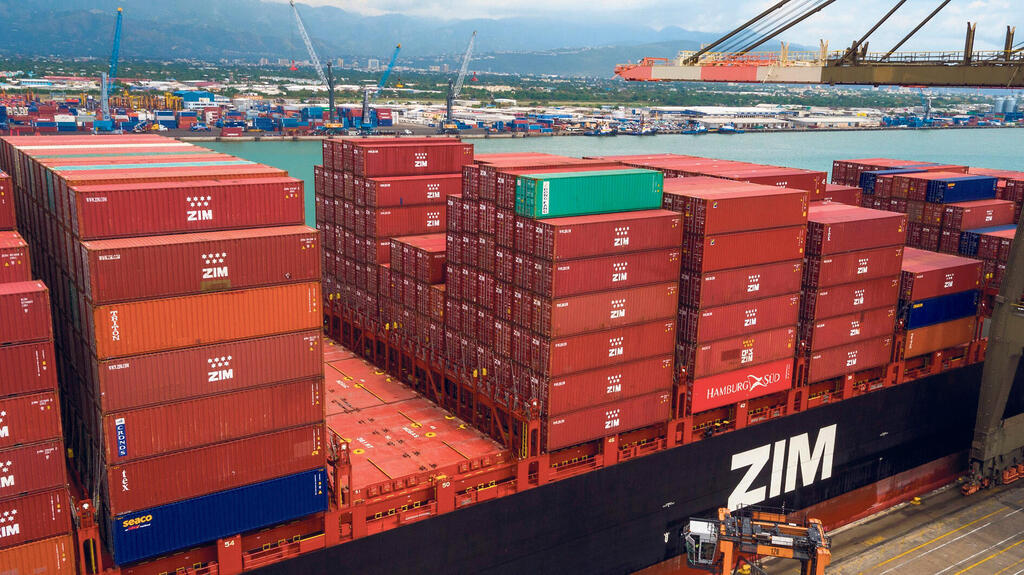
(Photo: ZIM)
Only after that meeting will Hapag-Lloyd and FIMI receive a final hearing before the Government Companies Authority, where they will be able to present their arguments in an attempt to change the emerging decision.
The head of Israel’s Shipping and Ports Authority, Tzachi Radker, recently submitted a second review of the deal, again recommending that it not be approved. The authority is considered the main professional body guiding most government agencies involved in the approval process.
The proposed transaction, signed in February, would see Hapag-Lloyd and FIMI acquire ZIM for $4.2 billion.
The buyers have argued that the deal would strengthen Israel’s maritime sector by creating a new Israeli ZIM subsidiary focused entirely on the domestic market. They said the new company would operate 16 vessels, compared with 11 required under the current “golden share” arrangement, and would employ around 200 workers while establishing a technology center with 250 to 300 full-time employees.
They also pledged to maintain Israeli third-party shipping agents, provide regional services to other countries and guarantee job security for employees for 10 years.
The buyers presented the future ZIM Israel as a stronger company with no debt, compared with ZIM’s current debt burden of $2.9 billion, while gaining access to Hapag-Lloyd’s global shipping network.
Hapag-Lloyd and FIMI submitted supporting opinions from Ernst & Young, consulting firm BCG and former Shipping and Ports Authority director Yigal Maor. They also responded to 120 of 174 questions submitted by government bodies and provided around 600 pages of supporting documents.
However, Radker argued that the additional information did not address the core concerns raised by regulators.
“The cumulative weight of the positive data presented is limited compared with the fundamental issues regarding effective control, economic and operational independence, the company’s long-term sustainability and preservation of the national interests behind the golden share,” Radker wrote.
He acknowledged several positive elements in the buyers’ proposal, including continued employment for Israeli sailors, plans to train additional Israeli maritime workers and commitments regarding independent agreements with suppliers and ports.
But he argued that ZIM Israel would still remain dependent on a foreign entity.
“Control over capacity, access to the international shipping network, access to key markets, production means, operating infrastructure and commercial centers of power remains with Hapag-Lloyd,” Radker wrote.
“Even if a separate Israeli company is established, it is difficult to view it as having full strategic, business and operational independence.”
According to the authority, the main concern is that ZIM Israel would be separated from ZIM’s existing international network, which would remain under Hapag-Lloyd’s control.
The authority also argued that transforming ZIM from a major global shipping company into a smaller Israeli-focused company could make it harder to meet the requirements of the state’s golden share, despite the buyers’ commitment to maintain a larger fleet.
Buyers accuse regulators of unfair process
Hapag-Lloyd and FIMI have strongly rejected the criticism, arguing that the decision process has been based largely on the Shipping and Ports Authority’s position without giving them a meaningful opportunity to present their case.
The buyers said that, apart from three short meetings with representatives of the Finance Ministry, Defense Ministry and Shipping and Ports Authority, they were not given a real opportunity to explain the benefits of the transaction.
They also accused opponents of the deal, including former company executives who submitted a rival acquisition bid and members of the workers’ committee, of attempting to block the transaction through government channels.
Currently, the Defense Ministry, Economy Ministry, Agriculture Ministry and especially the Transportation Ministry, which relies on the Shipping and Ports Authority, oppose the deal.
The Finance Ministry and National Security Council have not yet formally presented their positions, although opposition from the Finance Ministry’s Accountant General division is reportedly known.
The final government decision is expected next month after the Government Companies Authority receives the official positions of the various agencies.
FIMI said in response that the Shipping and Ports Authority’s position was based on “fundamentally incorrect factual assumptions.”
The fund argued that ZIM Israel would become an independent Israeli company without foreign dependence and said the new company would control its core operations, strategy and future growth.
“The concern is heightened by the fact that the authority’s director expressed his position already on February 15, before the deal was published and without knowing its details,” FIMI said.
The fund added that a professional review of the full transaction would show that the new ZIM would represent a significant improvement for Israel’s national interests.
FIMI is not expected to petition against the state if the deal is rejected, but Hapag-Lloyd may pursue legal action, hoping that a future government after elections would reconsider the transaction.