

Burger King has tried just about everything in Israel. It arrived 32 years ago with a touch of American glamour, changed owners, struggled, accumulated debt, entered court-supervised restructuring and disappeared from the market. It later returned under a French Jewish investor, who also failed to turn its fortunes around. Now, decades later, and with millions of shekels injected by controlling shareholder Delek Israel to rescue it from another crisis, the chain is making yet another comeback attempt.
The task was entrusted a year ago to attorney Dana Tuchner, founder of the Burgerim restaurant chain, which was later sold to BBB, and a member of a family of restaurateurs. Tuchner, who closed her law practice to "return to her roots," aims to expand Burger King from its current 19 locations to 100 and take on its biggest rival, McDonald's. With Delek Israel's financial backing, she is determined to take Burger King in a new direction and says she is undaunted by the competition.
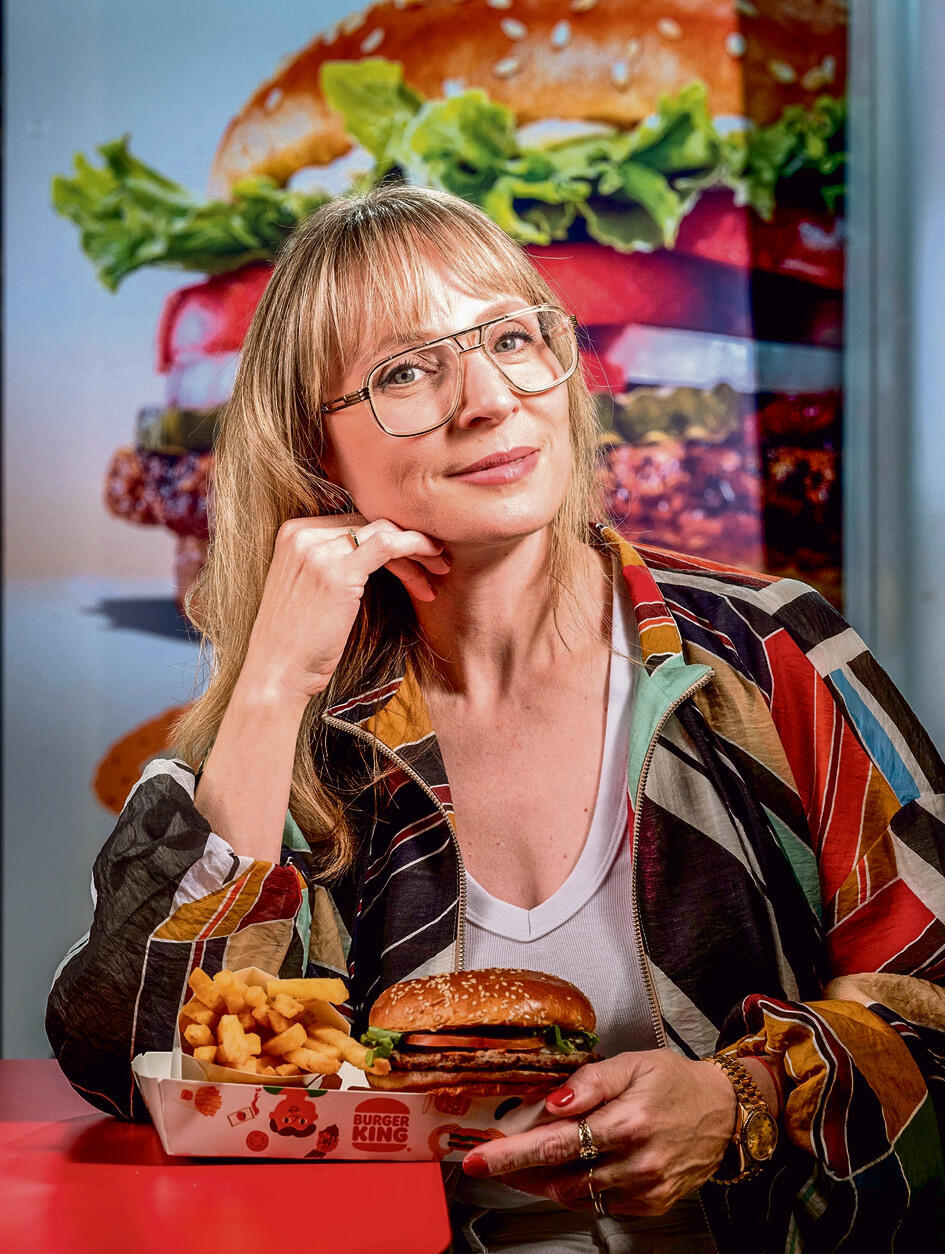
Beating McDonald's in Israel will be no easy feat, and Tuchner undoubtedly faces a formidable challenge. Only time will tell whether her optimism is justified and whether Burger King can replicate its international success on its third attempt in Israel.
"When it comes to Burger King's taste and quality, McDonald's can't hold a candle to us," she says in an interview with ynet and its sister publication Mamon. "I'm a star in my own right."
In 2022, Delek Israel, owned by Avi Levy, Eli Lahav and Uri Mansour, acquired control of Burger King's Israeli operations. Two years later, in 2024, the chain was still losing money, posting a loss of 15 million shekels ($4 million), while the group injected more than 30 million shekels to keep it afloat. Delek now says the chain has returned to profitability.
Israel is one of the few countries where Burger King has struggled so badly that it has failed to mount a serious challenge to McDonald's, despite its signature Whopper being considered comparable in quality, and by some even superior, to its rival's burgers.
Burger King's early days in Israel were far more glamorous. The late Meshulam Riklis, one of the most successful Israeli businessmen in the United States during the 1980s, brought the chain to Israel with his partner Yair Hasson.
Riklis, who was also Burger King's largest franchisee in the Las Vegas area, arrived for the Israeli launch aboard his private jet and held a news conference at the Hilton Hotel. The spectacle, combined with the American brand's considerable reputation, made an impression, and Burger King initially enjoyed success despite entering the Israeli market a year after McDonald's.
Until 1998, the chain was managed by another partner, Kobi Hayoun, while Hasson served as chairman of Burger King's Israeli operations.
But Riklis' businesses in the United States later ran into financial difficulties, and his relationship with Hasson deteriorated. In 2001, Riklis sold his stake. The chain went through several CEOs in just a few years, allowing competitors to capitalize on its instability and gain ground.
Burger King's first chapter in Israel ended in 2003, when it entered court-supervised restructuring with debts totaling 98 million shekels. That same year, brothers Eli and Yuval Orgad, owners of the Israeli Burger Ranch chain, acquired Burger King for 30 million shekels.
The brothers initially operated the two chains separately but later clashed with Burger King's international management over royalty payments. In 2010, they decided to abandon the American brand and retain only Burger Ranch, arguing that the Israeli chain was strong enough to stand on its own and that the savings from no longer paying royalties would justify the decision.
Before relinquishing the franchise, they converted all Burger King locations into Burger Ranch restaurants, bringing Burger King's 17-year presence in Israel to an end.
In 2016, French Jewish investor Pierre Besnainou decided to bring Burger King back to Israel. He opened the first restaurant opposite Rabin Square in Tel Aviv, effectively starting the chain's Israeli operations from scratch. But the business struggled under his leadership as well.
On opening day, Besnainou predicted that "within a decade, Burger King will be a serious competitor to McDonald's." So far, that prediction has not materialized.
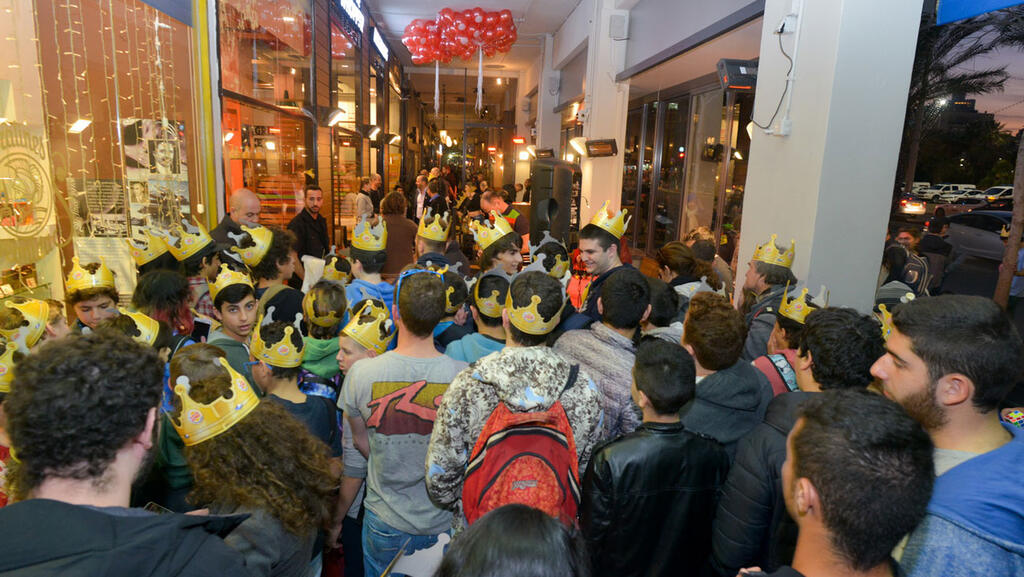
The opening of a Burger King location opposite Rabin Square in 2016
(Photo: Shahar Shadrin)
Weren't you afraid to take on a brand that had already failed several times in Israel and compete against McDonald's and its 250 locations?
Tuchner: "I'm not intimidated by my competitors. Burger King succeeds around the world, and there's no reason it shouldn't succeed here. I was happy to take over the brand because, at a certain point, I felt the urge to get back into business.
"People who knew me at Delek Israel offered me the CEO position. When I arrived, there were 17 locations, most of them successful. The problem was that the chain's geographic reach, support and brand promotion weren't where they needed to be. With so few restaurants, not all Israelis were even aware that Burger King was operating here.
"We now have 19 locations, which is still far too few, but our goal is to reach 100, including at gas stations."
Have you managed to understand why Burger King, considered the second-largest burger chain in the United States after McDonald's, has failed to gain traction in Israel?
"We don't dwell on the past or why it didn't succeed. We focus on where we want to take it. Right now, as I said, the goal is 100 locations, including at gas stations owned by our parent company. Once we're accessible to the entire public and have a proper presence, success will follow."
This week, I visited the well-regarded hamburger restaurant Diner — A Place of Meat. I sat in a stylish restaurant with waiters and was served a 200-gram burger with a side dish for 86 shekels. Your Whopper weighs 114 grams, which works out to 66 shekels for 200 grams. That's a 20-shekel difference in your favor, but to me, that's not much compared with the difference in the dining experience.
"That's not entirely accurate. Remember, at a restaurant you also leave a 15% tip. At Burger King, a Whopper meal costs 57 shekels, including a drink. Yes, the Whopper weighs 114 grams. If you want to compare by weight, you can get a Double Whopper for just 12 shekels more, bringing the price to 69 shekels.
"But that's not the point. Not everyone wants to sit down in a restaurant and spend time waiting for a waiter to come over and then for the kitchen to prepare the food. They're two different worlds.
"My 13-year-old daughter wouldn't feel comfortable walking into a restaurant like that. She prefers a digital ordering kiosk.
"And it's not just young people. Yesterday, I was at our Azrieli location conducting tastings for a new product, and there were four customers over 70 who absolutely love French fries.
"People have become accustomed to walking up to a screen and ordering whatever they want. When I started Burgerim, 90% of my energy went into teaching employees to smile. I kept telling them, 'Leave your troubles at home. Smile at the customers.'
"Digital ordering kiosks are convenient. You don't have to depend on anyone.
"Since joining the chain, I've focused on identifying the right locations along major thoroughfares. That's why we opened a restaurant in Terminal 1 at Ben Gurion Airport, as part of our strategy to increase public exposure to the brand. A new location will also open soon in Kiryat Ono."
Why did you decide to close the iconic locations on Ibn Gabirol Street and at Dizengoff Center?
"Reality is changing. Shopping malls attract heavy foot traffic, but rents are astronomical.
"Having traveled all over Israel this year, I can tell you that new neighborhoods and urban expansions are springing up everywhere. They're practically building a new Dimona next to the existing Dimona. The same is happening in Yavne, Beersheba and Sderot. There's demand for services among people moving to these areas.
"My goal is to have locations close to customers, in neighborhoods throughout the country.
"At first, I wondered who would want to come to these places. But they're filling up quickly, and residents want fast food close to home.
"My daughter is 13 and wants to eat out once or twice a week. She tells me, 'Mom, but everyone goes out.' So am I supposed to say no?
"The world has changed. Fast food is better quality now. It's not the junk food we used to eat. The major chains have improved their nutritional standards. Eating out is no longer just an occasional treat. It's become part of everyday life."
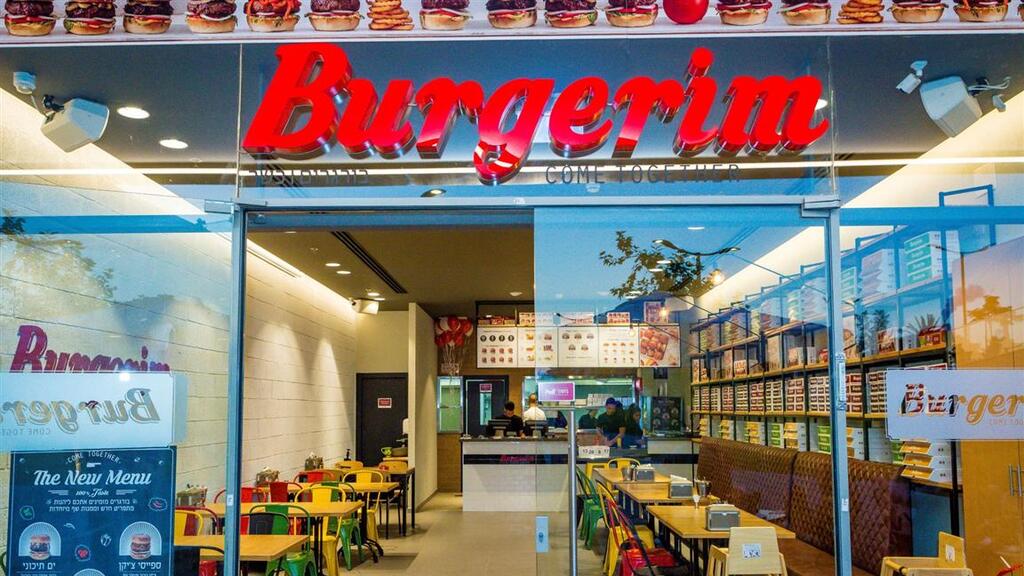
Burgerim restaurant chain
(Photo: Anatoly Mikhailov)
Daddy's girl
Tuchner, 48, was born in Haifa. She is married with two children and now lives in Tel Aviv.
The food business is familiar territory. Her father owns the well-known Cowboy Steakhouse in Haifa.
"When I was born, my father owned Falafel Erez in the Neve Sha'anan neighborhood. Later, he opened Pizza Napoli," she recalls.
"My father was born with a magic touch. He's one of those people who can throw two things into a pot and somehow produce the most delicious food in the world.
"He also opened Cafe Amadeus and Mozart in the Krayot area. Throughout his life, he ran dozens of restaurants simultaneously.
"Today he's 73. He bought a house by the sea in Greece, about an hour and a half from Athens, and spends most of his time there, sitting at a taverna with his friends."
After completing her military service, Tuchner flew to the United States to study law.
"Two weeks before classes were supposed to begin, my father called me and said, 'Dana, I'm sitting here with Avi Steinitz, the chef for the Dan Hotels chain. He says there's a culinary school in New York called the CIA that he highly recommends. Go take a look.'
"I got on a train and arrived at what looked like a castle straight out of a movie. It was one of the best culinary schools in the world.
"I came back and told my father, 'Forget the law school plan. We're going to study cooking.'"
After two years of intensive study at the Culinary Institute of America, she earned her chef's diploma.
"I lived in the dormitories for two years. Every three weeks, we moved on to a new field of study. I stuffed sausage casings, butchered pigs, specialized in sausages and shrimp and studied pastry-making.
"Those were the best two years my father ever gave me as a gift.
"I did my internship at the Four Seasons in New York and later worked in gourmet kitchens around the city.
"But my father begged me to leave. He said, 'You're lifting heavy pots and working with all those Mexicans, and you don't care. Nothing intimidates you.'"
By the time she turned 30, Tuchner felt she had had enough of that chapter.
"I wanted a family, and I made a conscious decision to return to Israel and find a husband.
"Within four months of coming back, I founded Burgerim. One night, in some out-of-the-way place in the United States, I had discovered the concept of small hamburgers in different flavors and decided to bring it to Israel.
"That same year, I also met my husband, who teaches maritime studies for the Education Ministry."
What happened with Burgerim?
"I absolutely loved running Burgerim, but at a certain point it became too much for me. I wanted to spend more time with my children, so we sold the chain to the BBB Group.
"Then I went off to fulfill an old dream. I studied law and completed my legal internship in real estate at the Yigal Arnon law firm. After that, I opened my own practice."
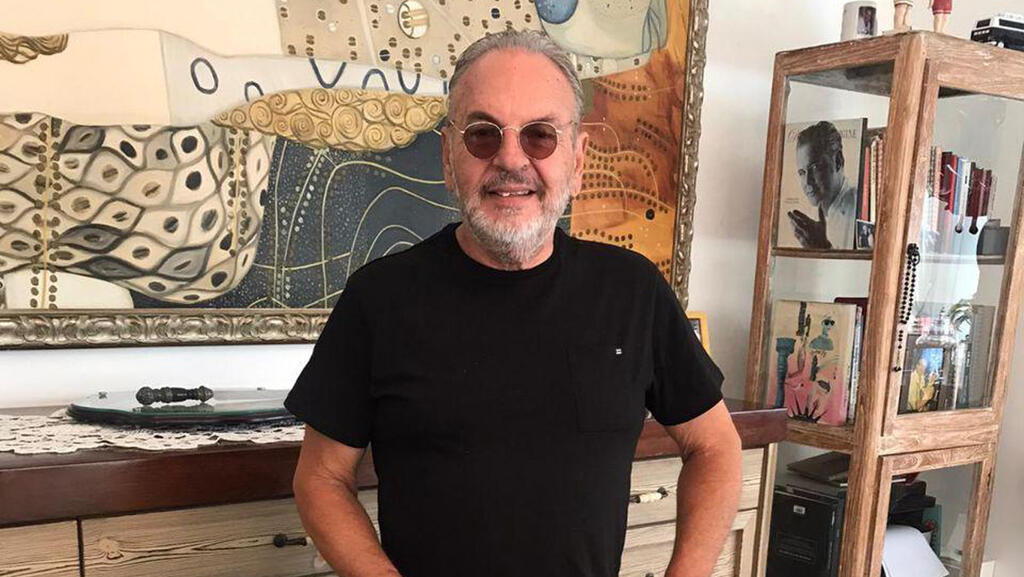
Yossi Tuchner, Dana's father
Israeli tastes and pricing
You said Burger King's global management dictates everything and doesn't allow you to add even a gram of salt or pepper to the food. So where does the flavor come from?
"During my first week on the job, I asked to visit the factory that makes our hamburgers, operated by Neto M.Z. I wanted to see with my own eyes how they're produced.
"I also had this image in my head that they were putting 30% of one thing and 20% of another into the patties.
"The reality is that the patty is made from 100% meat. There's also a certain fat content that adds flavor.
"And remember, you're not eating a steak. You're eating a hamburger in a bun with sauces, lettuce, tomato and onion. All those ingredients together create the flavor.
"Burger King's global management even dictates how thickly we slice the onions and tomatoes. It's a nightmare. Even the mayonnaise has to be spread in precisely measured quantities."
Have you made any adjustments for the Israeli market?
"We've just introduced chicken wings. People in Europe don't like wings nearly as much as Israelis do.
"Then there's spicy food, which Israelis love. We import four times as many jalapeños as an average European Burger King location.
"We've also introduced tortillas with smoked, spicy turkey schnitzel.
"And of course, Israel is unique when it comes to kosher requirements. Twelve of our 19 locations are kosher.
"We're working to expand the range of kosher products and are currently developing a pareve dessert, meaning one that contains neither meat nor dairy.
"There are so many different consumer groups today and so many sensitivities. I don't bring peanuts into the restaurants because practically every household has someone with some kind of allergy.
"We're constantly trying to adapt to the Israeli market, but ultimately, most people come for the Whopper and the nuggets.
"Soon we'll bring back a product that has been unavailable here for a year: Crispy Chicken.
"We couldn't import the cornflake coating from the global supplier because of kosher certification issues. That's now been resolved.
"It's one of our flagship products worldwide: chicken breast coated in cornflakes. Israelis are big consumers of chicken."
McDonald's raised prices in 2026. What's happening at Burger King?
"We didn't raise prices last year. We fought hard to absorb the additional costs.
"I have a meeting this week with one of our major suppliers, who told me, 'I'm sorry, but I have to raise prices by 20%.'
"At the moment, we're not planning any price increases in the near future, but I assume there will eventually be an adjustment."