


Everyone has a pair of jeans in their closet, but behind the denim industry's enormous popularity lies a dark secret: It is one of the most polluting, wasteful and demanding sectors in global manufacturing. Someone who knows this reality from the inside is Ricardo Steinbruch, president of Brazilian textile giant Vicunha, one of the world's largest denim manufacturers.
Now, Steinbruch is betting that a small Israeli cleantech company, Sonovia, can solve the industry's complex environmental challenges. Vicunha acquired a 20% stake in the Israeli company with the aim of integrating its revolutionary dyeing technology into its factories, believing that combining Israeli science with the textile giant's industrial expertise could fundamentally change the way our jeans are made.
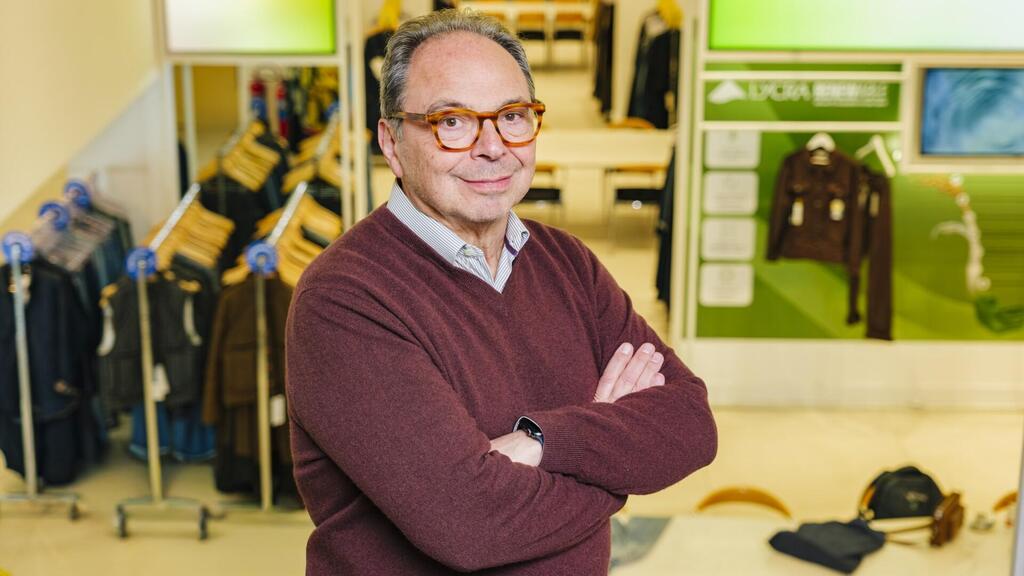
'They have the science, we have the factories'
The deal between the Brazilian textile giant and the small startup came about through an Israeli connection. Vicunha was already familiar with Sonovia through its industry network, but the turning point came through a local intermediary.
"We have a partnership with a local company in Israel," Steinbruch says. "Our contact came to me and said, 'Ricardo, you have to take a look at this.' He was looking for a strategic partner from the textile industry for them."
The process, it turns out, began with considerable skepticism. In the early stages, Vicunha's executives were far from convinced that the Israeli technology was ready for mass production. Steinbruch decided to send his industrial director, a respected expert in the field, to Israel to examine the claims firsthand.
"He went there, came back and told me, 'Listen, I think I can make this work.'"
According to Steinbruch, the gap stems from the nature of many startups. "They have the scientific and technological principles, but they don't have the practical experience in textiles."
The combination of Israeli innovation and Brazilian manufacturing capacity led to an agreement under which Vicunha acquired 20% of Sonovia, intending to bring the core of the Israeli machine directly into the company's massive factories.
"We realized that together, we could easily make this process cheaper and faster and move forward."
Under the agreement, Vicunha purchased a 20% stake in Sonovia in a transaction valuing the Israeli company at $4 million. Alongside the investment, Sonovia is granting Vicunha a license to assemble an industrial pilot machine for dyeing denim yarn at its factories, as well as regional exclusivity in Latin America for two years. In return, Vicunha has committed to financing the development stages required to complete and commercialize the product.
Sonovia, which developed antibacterial fabrics, once reached a peak market valuation of 450 million shekels during the COVID-19 pandemic. But as the pandemic subsided, the company went through a difficult period with almost no revenue. Its share price plunged and its cash reserves dwindled. The Vicunha deal provided a much-needed lifeline for the Israeli startup as it sought to reinvent itself.
The hypocrisy of fashion giants
To understand why an empire like Vicunha needs a small Israeli company, it is worth examining the alarming figures associated with the traditional textile industry. Steinbruch cites dramatic potential benefits from Sonovia's technology at the dyeing stage: an 85% reduction in water consumption, 60% savings in energy use, an 80% reduction in carbon dioxide emissions and the complete elimination of toxic chemicals and industrial waste, all while doubling production speed.
These figures are based on technology developed by Sonovia that uses ultrasonic waves to embed substances and dyes directly into fabric fibers without the need for polluting chemicals.
"The global textile market is very tough today, and you have to create advantages for yourself," Steinbruch says, explaining the economic motivation behind the investment and rejecting any suggestion that his motives are purely altruistic. "Ultimately, a company always wants to make more money, sell more and reduce costs. There's nothing wrong with that."
Vicunha manufactures fabrics and denim products for major fashion brands including American Eagle, Calvin Klein, Zara and Diesel. Industry reports consistently rank the company among the world's three largest and leading fabric manufacturers.
But when the conversation turns to consumers' and major international fashion chains' commitment to sustainability and environmental responsibility, part of the environmental, social and governance (ESG) trend, Steinbruch pulls no punches.
"Let's tell the truth. There's a lot of hypocrisy in the world," he says bluntly. "The buyer always wants the lowest possible price. The big retail chains and retailers care about the environment only until cost enters the picture. They understand that genuinely green, environmentally friendly production costs more money, and that's where everything falls apart. There's no middle ground."
Steinbruch describes how many factories in developing countries that fail to comply with environmental regulations find ways around the problem.
"They simply buy stamps and certificates showing that they're supposedly 'OK.' Everyone in the industry knows exactly how it works."
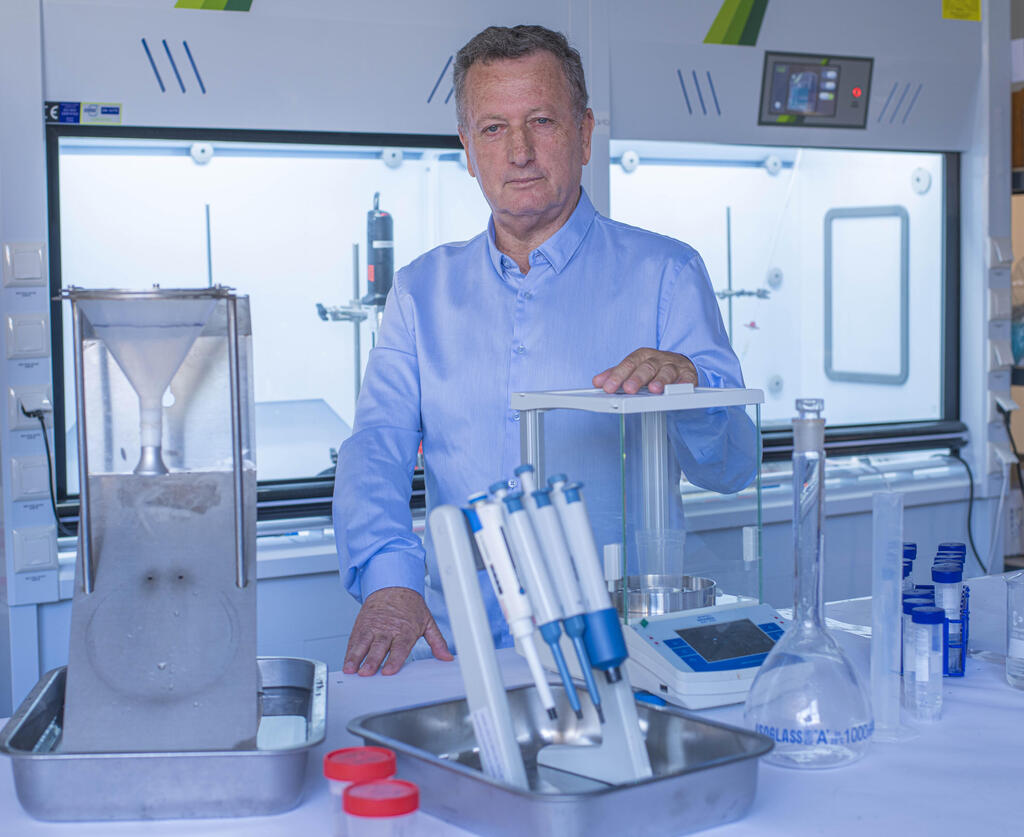
Shuki Hershkovitz, CEO of Sonovia
(Photo: Yuval Chen)
Beyond environmental concerns, Steinbruch is steering Vicunha through a complex geopolitical landscape in which Asia dominates 90% of the global textile market, across a region stretching from Turkey to Japan.
"We in Brazil are a relic of the past, but we're surviving because we have an important market."
Current geopolitical tensions are forcing the industry to rethink its strategy and diversify global production.
"The world is changing, and we have to change with it. Otherwise, we'll turn into stones," he warns.
That transformation could be more radical than it appears. Steinbruch says jeans, which have remained essentially unchanged for 100 years, are on the verge of remarkable technological advances.
"We're now studying another startup that can produce pants directly from yarn. The machine makes the fabric as part of the process. You feed in yarn and get finished pants, without needing a fabric mill first."
He also points to the return of sustainable fibers such as hemp as a potential alternative to resource-intensive cotton.
"Everything is a balance between price, comfort and innovation," Steinbruch explains. "That's why we invested in Sonovia. They needed a factory on an enormous scale, and we're probably the largest denim-dyeing operation in the world today."
Investing amid conflict: 'I'm Jewish, so why should I care?'
In the current geopolitical climate, investment in Israel by international companies is far from a given. For many investors, the complicated situation raises concerns, but Steinbruch makes it clear that, for him, there was never any hesitation.
"For me, it was never a problem," he says simply. "Everybody knows I'm Jewish, so why should I care? The technology in Israel is fantastic. What they're doing there with startups is just amazing."
Steinbruch closely follows Israel's high-tech industry. Although this marks the first time the Vicunha Group has invested in an Israeli venture, he is certainly not ruling out further opportunities, provided they serve the core needs of his industrial business.
"As my father used to say, there are a lot of smart Jewish people in Israel, so you always have to pay attention, because it can turn into a very important business that can help in many areas."
Alongside his business optimism, Steinbruch carries deep concerns about the situation facing Jewish communities in Brazil and around the world since October 7.
"For the Jewish community outside Israel, the situation is very difficult," he says. "The rise in antisemitism is enormous, and it's a little crazy to see it being embraced so enthusiastically by left-wing parties in general. In the past, the community was closer to the left, and today it's the right that supports us."
Geographic distance has done little to diminish the pain or the sense of shared destiny with events in Israel.
"October 7 was an absolute disaster. We lost lives, and it's very difficult for us. Every young man killed in the army is like your own son. We're suffering a great deal, and we fully support whatever we can."
In this new reality, Steinbruch believes Diaspora Jews have an active role to play in explaining Israel's position and defending what he sees as the truth.
"The other side is trying to change history. The Jewish people have been there for 3,200 years, and you have to stand your ground and explain our reality in a normal way. Jewish communities abroad are suffering terribly."
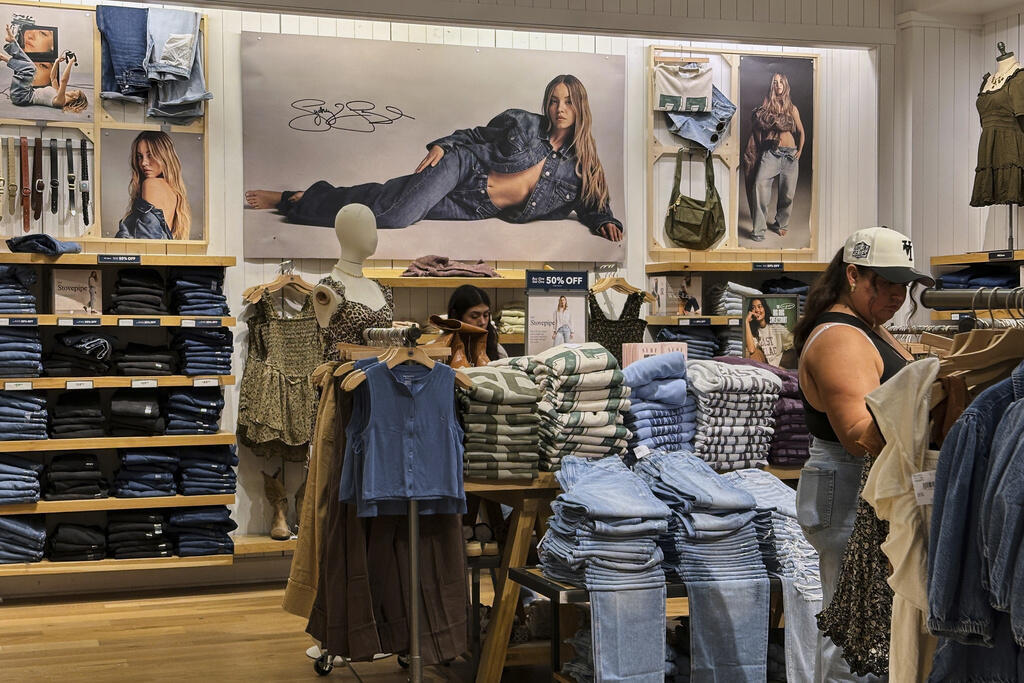
American Eagle; Vicunha supplies fabrics to most of the industry's leading companies
(Photo: Lindsey Wasson / AP)
Steinbruch's deep connection to Judaism is also reflected in his extensive public activities in Brazil, where he is known as a prominent philanthropist.
"Philanthropy has always been part of our family history," he explains. "We try to help as much as we can, and we particularly support many Jewish causes and institutions here in Brazil. It's our responsibility to do that."
That commitment to his community and country is closely connected to his broader economic and social outlook on Brazil itself, a country experiencing persistent political turmoil.
As a businessman, Steinbruch tries to maintain an officially neutral position. "I have to work with whoever is in power," he says. Yet he does not hesitate to point to what he sees as an urgent need for a change in economic direction, expressing support for the model presented by Flávio Bolsonaro as an alternative to President Luiz Inácio Lula da Silva's administration.
"Lula's model hasn't worked for 20 years. We haven't improved. If you compare our situation with other countries, like Korea, which had the same GDP per capita as us 30 years ago and is now among the world's leaders, we've stayed almost in the same place. I don't like it when people stay in power for too long. Change is always good."
Steinbruch chooses to end the interview with a symbolic family story, one that reminds him why the present should never be taken for granted.
"In our living room, right where we're sitting, there's a small suitcase. That's everything our family had when they arrived in Brazil more than 100 years ago. Everything fit inside it. Back then, when my grandfather and the family arrived, they had no choice. Today, we have a choice."