

Over the past two years, Europe appeared to celebrate what many saw as an energy miracle. After Russia’s invasion of Ukraine in 2022, the continent carried out an unprecedented geopolitical shift: it largely weaned itself off dependence on Gazprom pipelines, built liquefied natural gas (LNG) terminals at record speed, and relied on an open global market and new alliances.
But over the past week, reality has struck again with force. The war in the Gulf, which began as a regional event, has within days turned into Europe’s energy nightmare — precisely where it believed the risk had already passed.
Gallery
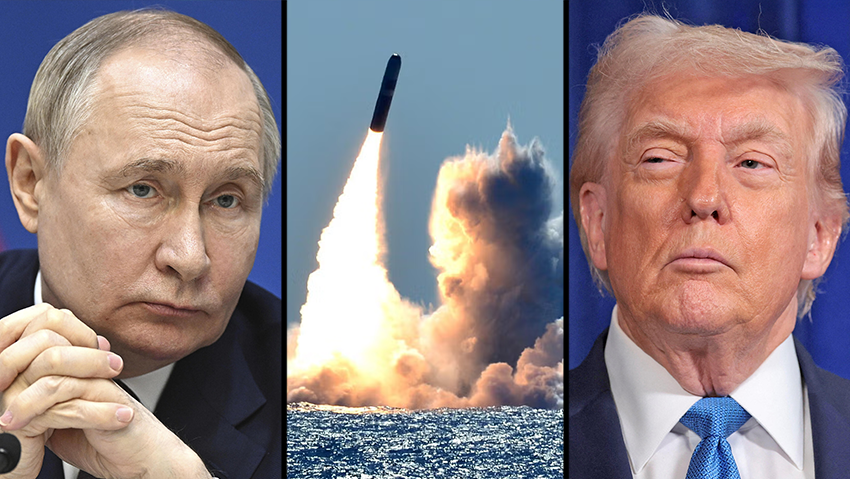
Donald Trump and Vladimir Putin
(Photo: US Navy, Sergei Bobylev, Sputnik, Kremlin Pool Photo/ AP, REUTERS/Jonathan Ernst)
The first week of the campaign against Iran served as a painful reminder of the sensitivity of the European gas market. Anxiety peaked last Tuesday, when the TTF index — the Dutch benchmark for European gas prices — surged to about 66 euros per megawatt hour, more than double the 31.95 euros recorded the day before the fighting began.
The following day the market appeared to calm slightly, as prices dropped to 48 euros and a sigh of relief was heard in the corridors of the European Union. But the relief proved premature. By Thursday the trend reversed, and by the weekend prices had climbed again above 53 euros.
The volatility is not random. It reflects a nervous market now pricing in a structural supply crisis. Global competition for every available LNG cargo is intensifying, and traders understand that this is not a technical malfunction in a pipeline but a disruption to a major global energy artery.
Fueling the surge in energy markets is a dramatic announcement by QatarEnergy, which said it had halted production and exports due to “force majeure.” The legal and economic implications of such a move are significant, sharply raising the risk premium across the global LNG market.
Europe has been caught at its worst possible moment — precisely when it should be beginning to refill storage facilities ahead of next winter. Qatar’s warning that even in the event of an immediate ceasefire it could take “weeks to months” to return to normal supply cycles casts a heavy shadow over the continent’s ability to prepare for the next cold season.
Europe’s problem is a potentially deadly combination of timing and low reserves. The continent is starting the current race to refill storage from an especially weak position. Updated market estimates for March 2026 indicate storage levels will not exceed about 27%, compared with a multi-year average of roughly 41% for the same period.

Snowstorm in Germany; Europe has begun filling its gas reserves for next winter
(Photo: Reuters)
To close that gap before next winter, Europe desperately needs about 700 LNG cargoes — equivalent to roughly 67 billion cubic meters of gas. The financial dimension is equally daunting: the cost of the replenishment program is now estimated at around $40 billion, a sharp jump from $26 billion before the war broke out.
But the price is only the first layer of the problem. To ensure that cargoes arrive at ports such as Rotterdam or Wilhelmshaven in Germany, Europe will have to outbid rapidly growing Asian economies. In practice, this means offering premium prices to divert LNG shipments from their planned routes to East Asia toward the continent instead.
It amounts to a global bidding war in which the European consumer is likely to be the main loser. Gas forms the backbone of the European economy. Beyond electricity generation, it is used for heating and heavy industry.
Britain provides one of the most striking and worrying examples. About 30% of the country’s electricity is generated from gas, and more than 70% of homes rely on gas for heating.
The United Kingdom also has a unique vulnerability: extremely limited storage capacity. While countries such as Germany maintain vast underground reserves, Britain has storage capacity sufficient for only about 12 days of demand. In such circumstances, any global price spike quickly translates into higher electricity and heating bills for consumers and raises the risk of supply disruptions if shipments are delayed.
Across Western Europe, gas is also a critical raw material for the chemicals and fertilizer industries. When energy prices surge, the competitiveness of European industry against the United States and China erodes — precisely the scenario the Kremlin is counting on.
This is where Russian President Vladimir Putin enters the picture. Russia, which has been pushed to the margins of Europe’s energy market, still supplies about 12% of the continent’s consumption through a combination of remaining pipeline flows and LNG shipments.
Amid the Gulf crisis, Russian Deputy Prime Minister Alexander Novak has already begun psychological pressure tactics, saying Moscow may soon consider a complete halt to gas exports to Europe.
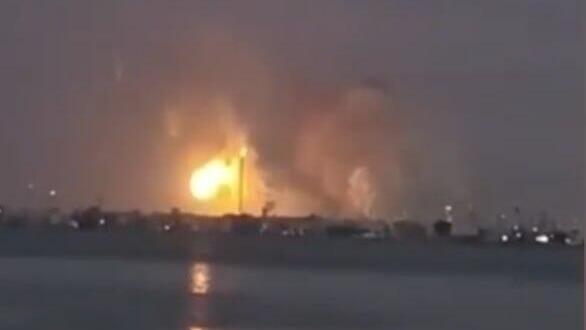
Damage to refineries in Bahrain; severe hit to Gulf oil exports
The situation carries a painful irony. The European Union had already set a timetable to fully phase out Russian gas. Under regulations adopted on Jan. 26, imports of Russian LNG will be banned starting Jan. 1, 2027, while pipeline gas imports will be prohibited beginning next autumn.
In the Kremlin, the crisis triggered by the war with Iran has been viewed as an opportunity to turn the tables. The Russian message to Europe is simple: if the continent intends to block Russian gas in 2027, Moscow may block Europe first — at the moment it needs the supply most.
Russia is considering redirecting all of its LNG exports to the Asia-Pacific region and signing long-term contracts with “friendly countries.” Such a move would leave Europe facing another 12% supply gap just as Qatari exports disappear from the market.
At the same time, the United States has emerged as Europe’s main LNG supplier. Tightening market conditions improve the bargaining position of American energy companies, but Washington’s ability to help has limits. U.S. liquefaction facilities are already operating near full capacity, exporting about 19 billion cubic feet of gas per day.
In the most optimistic scenario, the United States could increase supply by about 2 billion cubic feet per day — far short of replacing the roughly 10 billion cubic feet per day previously supplied by Qatar. Australia, another major LNG exporter, also faces short-term limits on increasing output.
In other words, the United States benefits from higher prices but cannot significantly reduce them for European consumers.
Amid the turmoil, Washington has taken an unusual step. Over the weekend it authorized India to import Russian oil and petroleum products already loaded onto ships for one month, a move intended to stabilize global markets.
India is a refining powerhouse. Continued access to Russian crude would allow it to supply diesel and jet fuel to global markets, helping moderate price increases.
But the decision is a double-edged sword. It ensures Russia retains a strong source of demand and foreign currency revenues just as energy markets tighten. Over the past week, the price of Russian oil has jumped sharply, strengthening Moscow’s negotiating position despite Western sanctions.
Still, the broader data paint a more complex picture. According to Russia’s Finance Ministry, oil and gas revenues in the first two months of 2026 totaled about $10.56 billion — a drop of roughly 47% compared with the same period last year. As a result, Moscow has been forced to cover budget gaps by selling gold and yuan from its sovereign wealth fund.
High energy prices fuel Russia’s war machine in Ukraine. That means only a prolonged conflict in the Gulf — one that keeps prices elevated for months — could truly provide a lifeline to Russia’s struggling economy.
Europe now finds itself at a critical juncture. The post-Russian model it built, based on LNG imports, has proved highly vulnerable to geopolitical shocks. Every disruption in the Gulf immediately translates into higher living costs and weaker industrial competitiveness across the continent.
In the ongoing battle of nerves between Brussels and Moscow, Putin has received an unexpected gift from the Gulf crisis: a strained energy market willing to pay more — and greater room than ever to profit from Europe’s fears.