

The Tel Aviv Stock Exchange returned from the Purim holiday and opened Wednesday on a negative trend. Within a short time, the leading indexes moved to gains of about 1%, but those increases were later erased. Trading closed with mixed results: the TA-35 index fell about 0.2%, the TA-125 slipped about 0.02%, and the TA-90 rose 0.52%.
The moves followed a negative evening on Wall Street, where the Dow Jones Industrial Average fell 0.8%, the S&P 500 dropped 0.9%, and the Nasdaq weakened 1%.
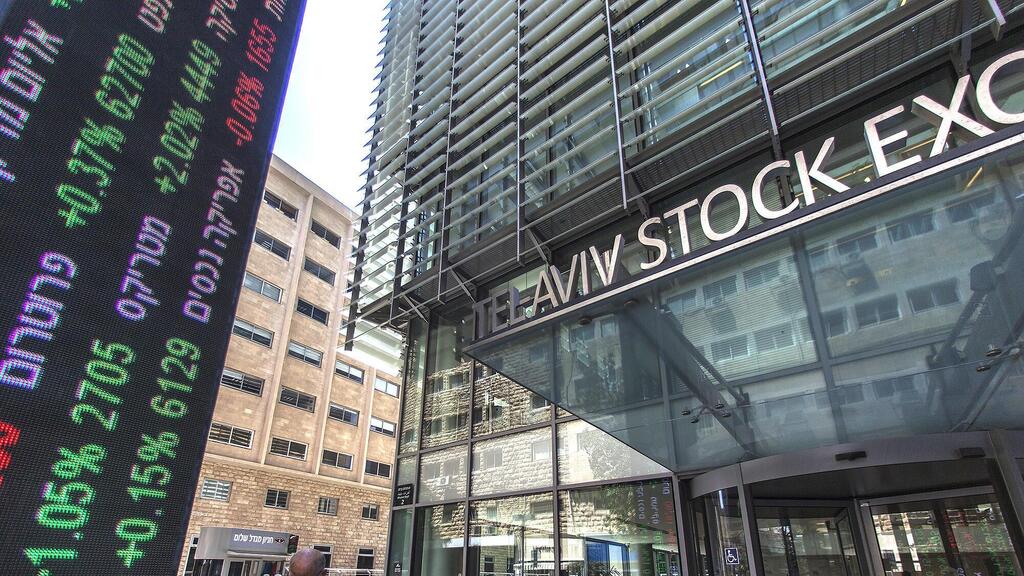
Tel Aviv Stock Exchange
(Photo: Rina Castelnuovo/Bloomberg)
Among sector indexes in Tel Aviv: the TA Banks index fell 1.72%, the TA Real Estate index rose 0.39%, the TA Insurance index climbed about 3.7%, the TA Oil and Gas index gained 0.56%, and the TA Defense index rose about 0.5%.
Shares of Elbit Systems jumped about 4.5% on the exchange, buoyed by the war, making it the Israeli company with the highest market value at 122 billion shekels (about $33 billion). Teva Pharmaceutical Industries ranked second with a market value of 119 billion shekels, followed by Bank Leumi at 116 billion shekels.
On Monday, before Purim, the local exchange closed with its biggest daily gains since April 19, 2020, during the coronavirus pandemic. The TA-35 index surged 4.6%, the TA-90 rose 5.1%, and the TA-125 advanced 4.8%.
Meanwhile, Asian markets closed sharply lower, including another steep drop in Seoul, where the Kospi index fell 12.1%. Japan’s Nikkei declined 3.6%, Hong Kong’s Hang Seng dropped 2%, and Shanghai’s main index fell 1%.
European markets opened slightly higher after two days of declines: Germany’s DAX rose 0.7%, France’s CAC 40 gained 0.3%, and Britain’s FTSE 100 edged up 0.1%. In New York, futures for the Dow Jones and the S&P 500 were down about 0.3%.
Oil prices edge up, gas declines
After the sharp surge in oil and gas prices in recent days, a statement Tuesday by former U.S. President Donald Trump that American warships would escort shipping tankers in the Strait of Hormuz to prevent Iranian attacks is reversing the trend.
U.S. benchmark WTI crude fell 0.8% to $73.9 per barrel, while Brent crude also slipped 0.8% to $80.8 per barrel. Prices for the European gas benchmark, Dutch TTF, also fell sharply. After reaching 63 euros in recent days, they were trading Wednesday at 47 euros.
Yossi Barak, chairman of the Barak Finance Group, said global markets are reacting cautiously to the war dubbed “Roar of the Lion.”
“Markets are retreating to defensive assets, with rising oil and gold prices and flows into U.S. government bonds,” Barak said. “The concern is that disruption to energy supplies could create renewed inflationary pressure and delay interest-rate cuts. As a result, investment managers worldwide are reducing risk and rebalancing portfolios.
“In Israel, the picture is different. The shekel and the stock market are signaling cautious optimism, reflecting the possibility of removing the Iranian threat as a realistic scenario. If a significant security shift does occur, the economic meaning would be a decline in Israel’s risk premium and an increase in the value of local assets. The market is already pricing in the potential expansion of the Abraham Accords and the opening of regional trade routes.
“The gap between global caution and Israeli optimism reflects an assessment that the situation will not return to what it was before the war. While global investors are hedging risks, the local market is focused on the possibility of a positive structural change. The faster the strategic objectives are achieved, the faster the gap will close between current prices and long-term economic value — at a time when the world is still searching for safe haven assets.”