

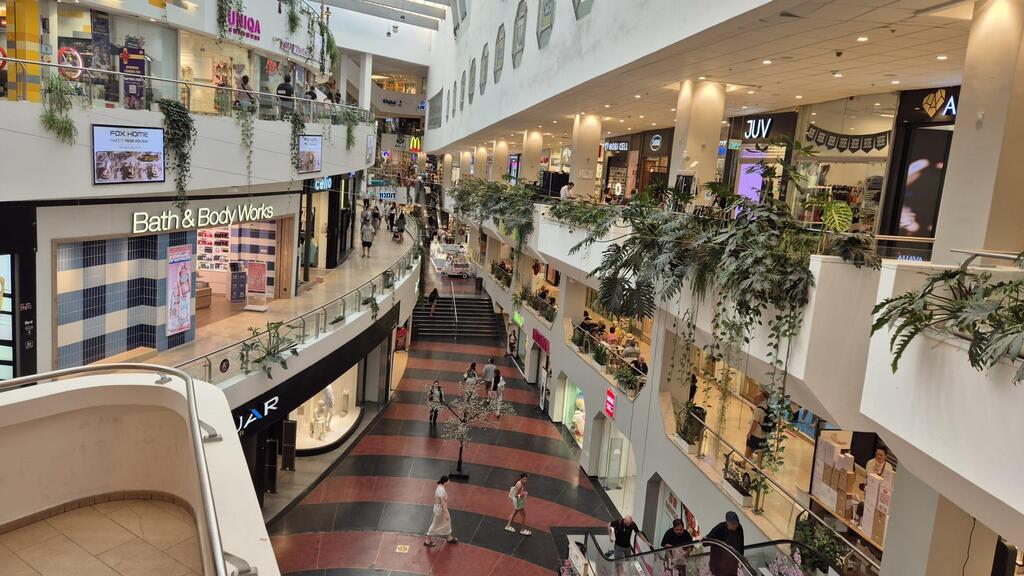
“Is it real? It looks like plastic!” That’s the reaction Alex Kaplan, Dizengoff Center’s marketing director for the past seven years, often hears when visitors learn that all the greenery inside the mall is completely real. “We invest a lot in the plants and landscaping,” he says. “It’s not just aesthetic, it cools the building and has environmental benefits. That’s just one of the many unusual things about Dizengoff Center.”
Here’s another: only in this mall can you find a one-man magic shop like Tipat Shemen. “When he gets tired around 7:30 p.m., he just closes and goes home,” Kaplan says with a smile. “It doesn’t make financial sense for him to hire someone for just a few hours. So sometimes the store shuts early, even though the rest of the mall stays open late.”
Bats in the basement, bees on the roof
Kaplan recently stepped down from his post to become CEO of the Man and the Living Museum in Ramat Gan. Looking back, he calls Dizengoff Center “the most fascinating and bizarre mall in Israel.” Beyond its lush greenery, the mall’s basements are home to bats, and its roof hosts beehives, eco-farming and waste recycling projects.
Even the managers have no private bathrooms, they use the public ones to stay “connected to visitors.” The mall’s corridors are open 24 hours a day, and dogs and bicycles are welcome. It houses a mix of stores: secondhand boutique Reals, which pays discounted rent to promote sustainability, pop-up fantasy shops like The Fairy Forest and Lyra, alongside mainstream chains like Foot Locker, Delta and Renuar.
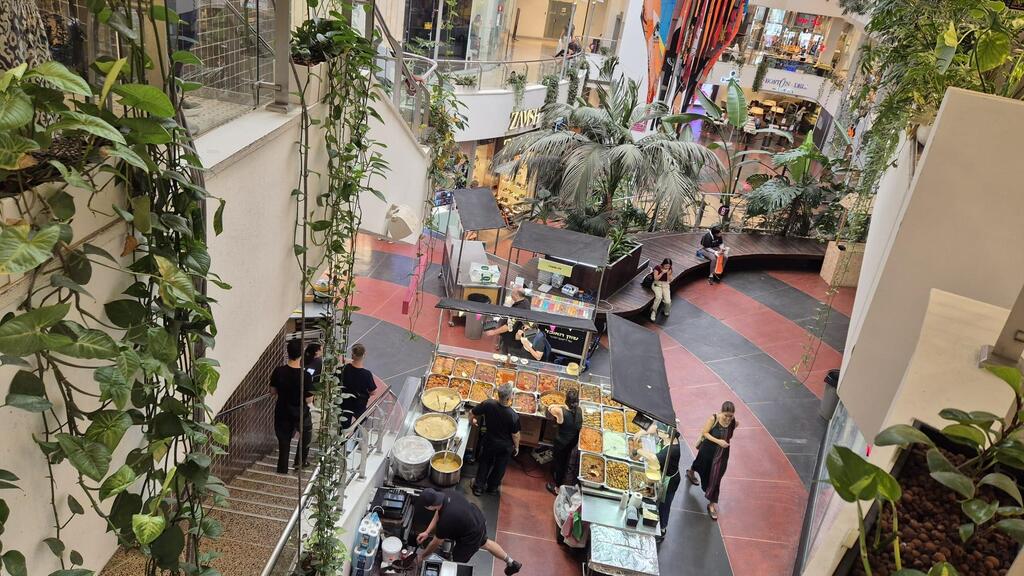
The plants are all real
(Photo: Meirav Crystal)
Unlike other enclosed malls, Dizengoff Center also operates street-facing stores. Across from Roladin, Sacara, Adidas and Nike, there’s a ping-pong space open for rent via an app, where people play until 2 a.m. “It used to be a bank,” Kaplan says. “Now it’s a private venture paying tens of thousands of shekels in rent.” Nearby, a 7-Eleven branch that turned into 7 Express after the chain left Israel has closed, and a new tenant hasn’t been found.
The mall’s biggest moneymaker: the parking lot
Inside, the center is a labyrinth of corridors leading to open plazas or tucked-away indie shops. A major rooftop renovation is planned to add more commercial space for larger chains. “It’s not the newest or biggest mall, and definitely not the most profitable,” Kaplan admits. “But it has a charm you can’t replicate. It fits Tel Aviv’s spirit perfectly.”
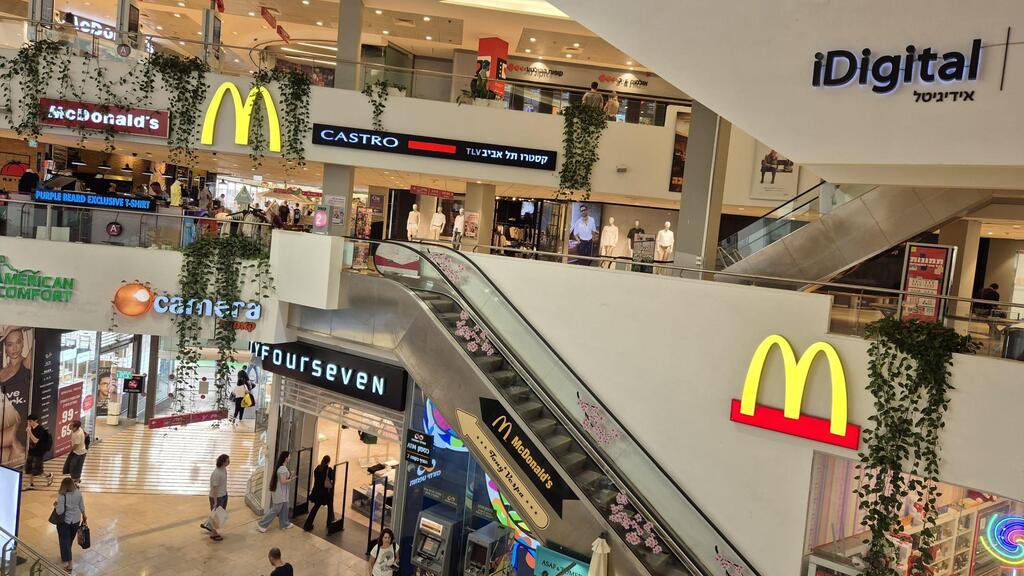
Major retail chains also have stores in the center
(Photo: Meirav Crystal)
So what’s the most profitable asset?
“The parking lot,” Kaplan laughs. “Most of it belongs to the Shani family, owners of Cinema Lev. Parking costs 19 shekels per hour during the day and 28 at night—and for central Tel Aviv, that’s not bad.”
One hundred owners and one chaotic mall
Kaplan began his career as a parliamentary aide to MK Dalia Itzik when she chaired the Knesset’s Science and Technology Committee. “It was a school for life,” he says.
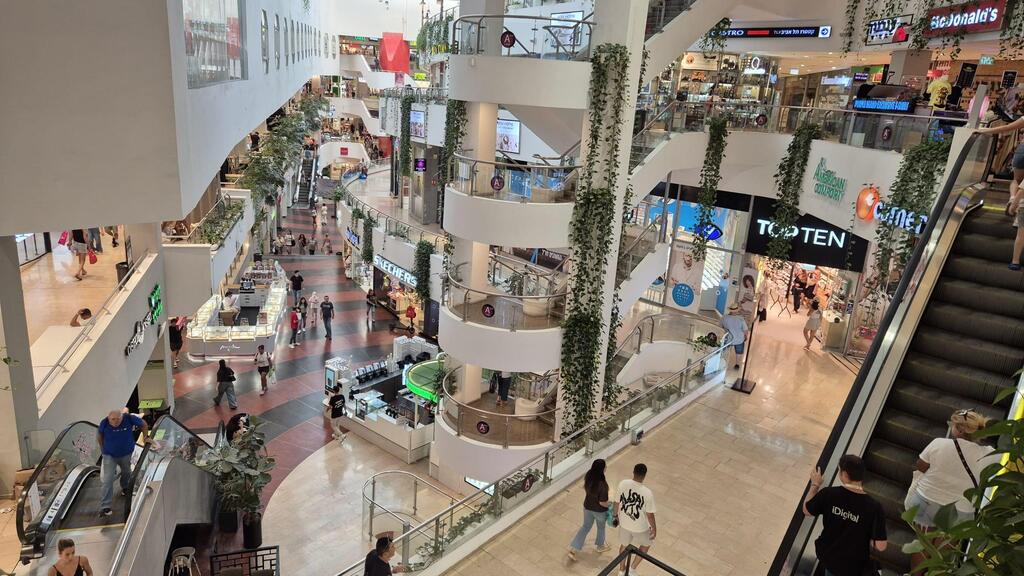
The twists and turns of the mall, not the easiest place to find your way around
(Photo: Meirav Crystal)
He later joined her at the Environmental Protection Ministry, where he created the Minister’s Award for Environmental Excellence and launched the Green House government initiative. From there, he moved to the marketing team of Ariel Sharon Park, where he helped develop the Sky Line performances and the visitors’ center. After two and a half years, he joined the Israeli Opera, where he founded concert series such as The Opera Sings at Tzavta. He later moved on to Dizengoff Center.
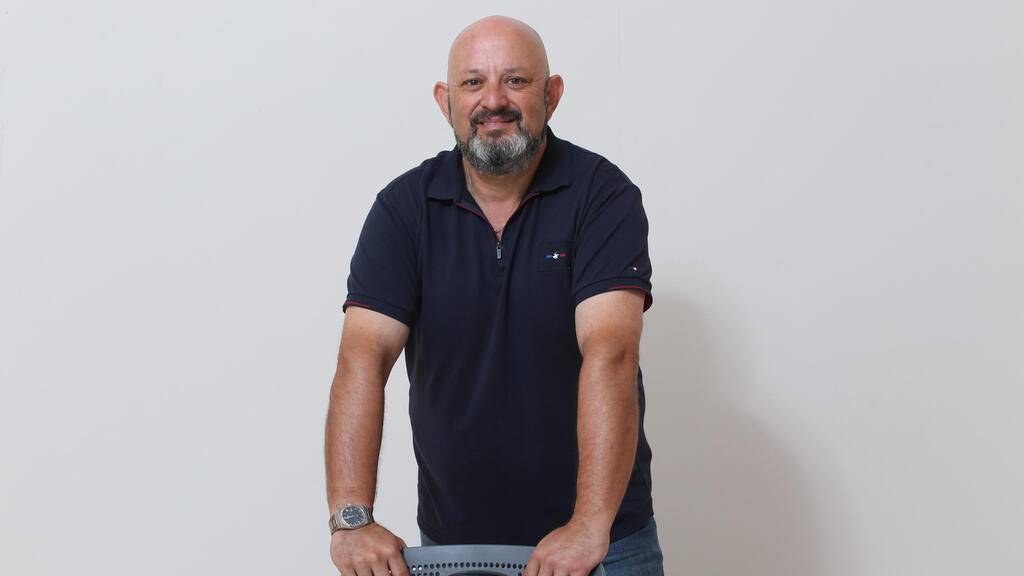
Alex Kaplan, stepping down as Dizengoff Center’s VP of marketing
(Photo: Ryan Frois)
“I came here and met with Dan Pilz (co-owner and co-CEO of the mall) several times before they decided to hire me,” Kaplan recalls. “At our first meeting, Dan told me: ‘Listen, we’re a different kind of creature. We’re not just a mall, and money isn’t our god. We’re here to do good—for our visitors and for the businesses renting stores in Dizengoff Center.’”
Dizengoff Center was built in the late 1970s by architects Aliza Toledo and Yitzhak Yashar. Today, it’s owned mainly by the Pilz and Flatto-Sharon families, who hold 100% of the public spaces and about 30% of the retail space. The rest belongs to more than 100 private owners.
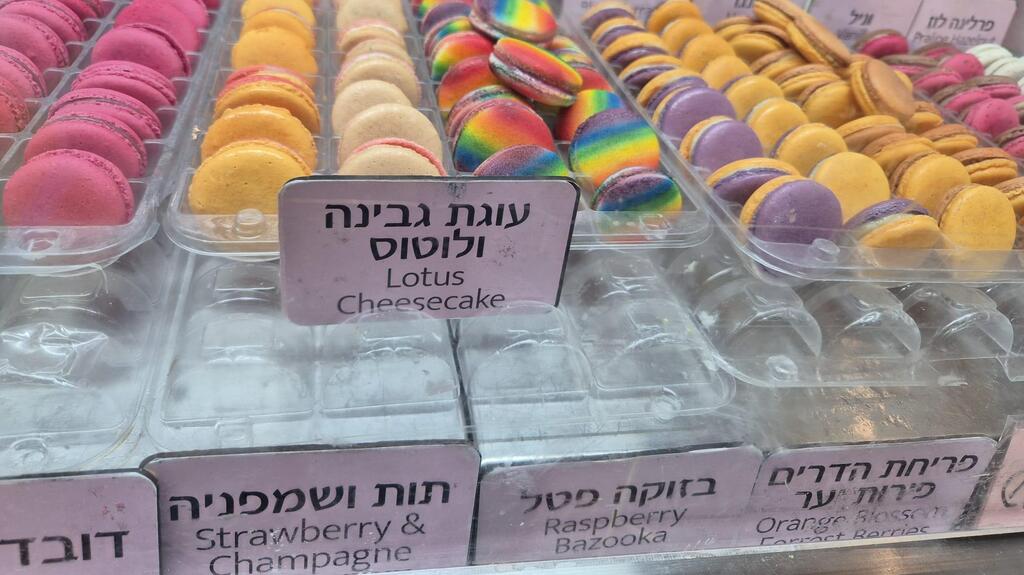
The food market
(Photo: Meirav Crystal)
“When it was built, developers couldn’t just go to the bank and ask for a billion-shekel loan,” Kaplan explains. “So they sold individual stores. That’s why each unit often has its own landlord.”
Some stores, like Castro or Kley Zemer, own multi-level properties. The Adidas and Nike shops are owned by the Papo Group, which controls nearly a third of the mall. To open a large store, management often needs to negotiate with multiple owners. “When we opened the Lego store, we had to unite seven separate spaces, meaning seven different landlords,” Kaplan says.
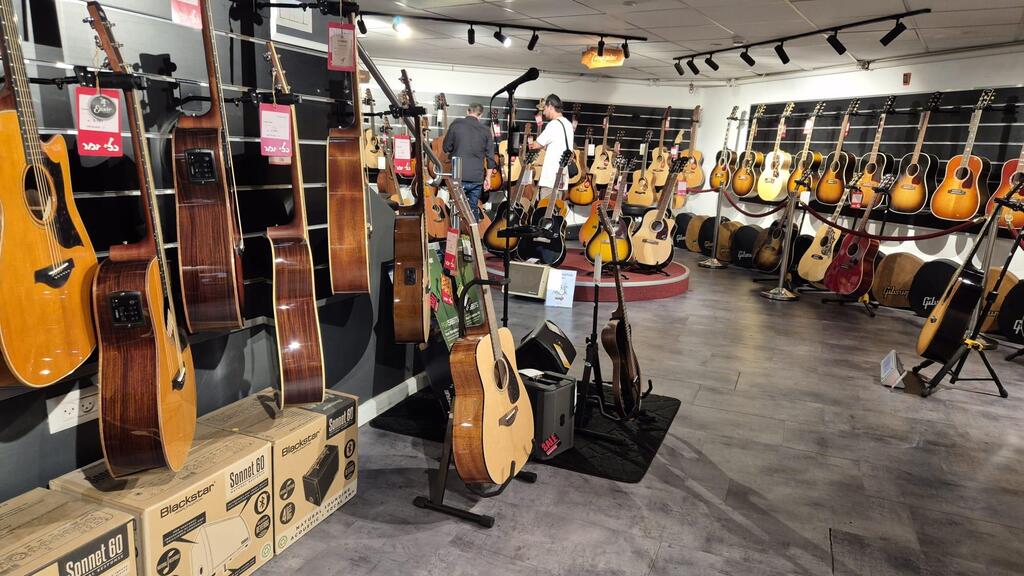
Kley Zemer
(Photo: Meirav Crystal)
This structure is part of both the mall’s “magic and madness,” he adds. “You can’t manage it rigidly. Each shop owner is also your client. You have to balance flexibility and control so the mix survives.”
7% drop in visitors since the war
Most Israelis have visited Dizengoff Center at least once, it’s a Tel Aviv landmark, known for its maze-like layout and eclectic crowd. But its main audience remains city locals and niche communities like gamers, cosplayers and vintage lovers.
“Since the war began, we’ve seen about a 7% drop in visitors,” Kaplan says. “We feared worse, so we consider it moderate.” Traffic and construction around Tel Aviv have also hurt business. “People think the city is closed off,” he says. “It’s more of a perception issue, but it keeps some away.”
The war and protests have emptied the city on Saturday nights. “Tel Aviv has the most reservists in Israel,” Kaplan adds. “When they’re on duty, we feel it.” Elderly shoppers also venture out less since COVID-19. “Every new illness wave scares them again,” he says.
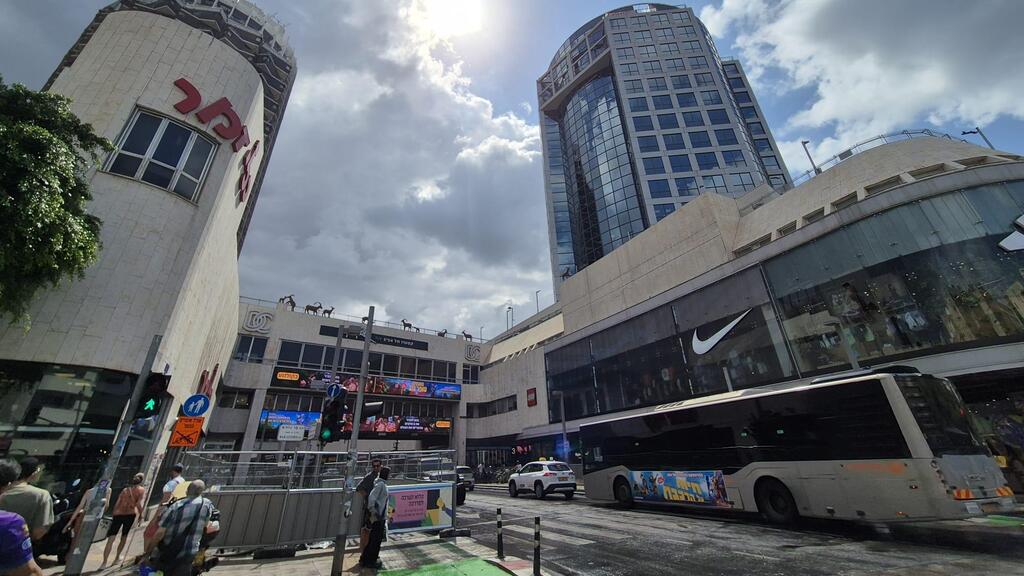
The Center from the outside, affected by Tel Aviv’s ongoing construction
(Photo: Meirav Crystal)
It’s hard to get to the Center because it’s in the middle of the city. “Unlike other malls, most of our visitors come by bicycle. We’ve increased the number of bike shops fivefold, and it’s still not enough. We even set up a free air and repair station outside the Center, near Gate 3. Inside, people can charge electric bikes or swap scooter batteries. We understand the changing transportation needs and provide real solutions.”
The city is congested and blocked.
“That’s true,” Kaplan admits. “The Center has been hit especially hard by transportation issues because it’s in the heart of Tel Aviv, and access has become difficult due to traffic jams and light-rail construction. In fact, the problem is more about perception than reality, many routes to the Center are still open, but people think Tel Aviv is closed off, so they’re hesitant to come.”
What’s next for Holmes Place, Be and Hamashbir?
Rumors are swirling about several tenants. “It’s true that Hamashbir may leave,” Kaplan confirms. “The space is huge and full of potential. Urbanica is expected to move in.”
Holmes Place isn’t closing, but downsizing. “It lost its edge; newer gyms opened nearby with better prices,” Kaplan says. “We’re renovating it, reducing from 1,700 to 800 square meters. The pool will stay but likely under new management.” The Be pharmacy will also shrink. “It’s spread over two floors, which is inefficient. They plan to merge into one level and lease out about a third of the space.”
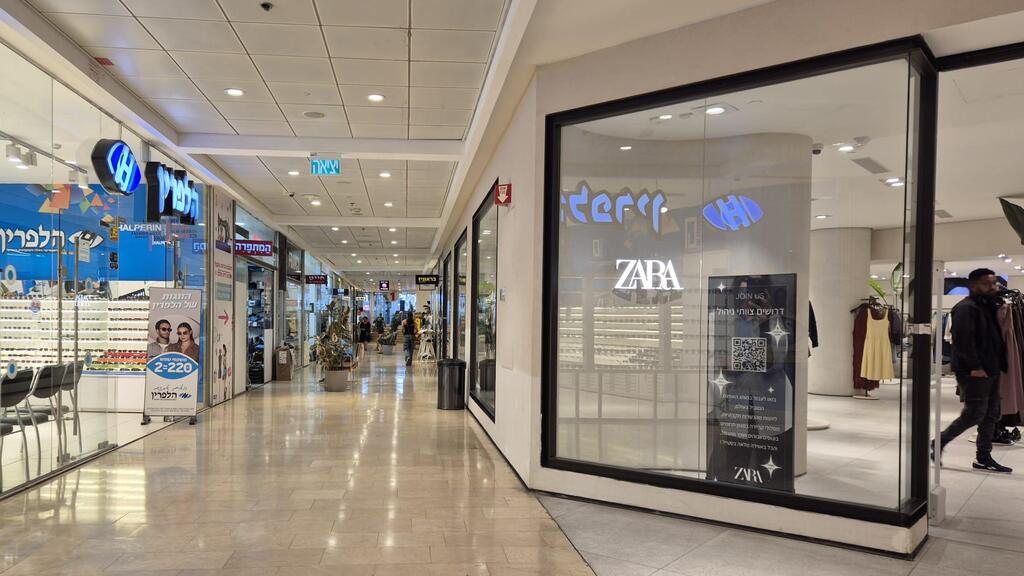
The No. 1 store in sales: Zara
(Photo: Meirav Crystal)
The most successful stores
“Zara is the top performer,” Kaplan says. “Then come Lego, Nintendo, Bug, Lyra, Kley Zemer, Flying Tiger and The Fairy Forest. What they share is constant renewal.”
Many small shops close quickly if they lack patience or capital, he adds, but others have thrived for 35 years. “Tel Aviv customers don’t buy impulsively,” Kaplan notes. “It can take three visits before they step inside—but then they’re loyal.”
“Of course, there’s a real challenge for the stores to draw in the people already walking around here,” Kaplan says. “That’s where we see the big difference in revenue between those who come to work and those who just show up for work. When there’s a management team and sales staff who truly care and make an effort, they have customers. Around 7,000 people pass by your store each day, if you manage to get 5% of them inside and sell to 10% of those, you’re set. But if you don’t actively work to bring them in, they simply won’t come.”
Pop-ups turned success stories
Dizengoff Center was the first mall in Israel to officially turn temporary stalls into permanent stores. “We have an area called The Balconies that serves as our pop-up zone,” Kaplan explains. “It’s a six-month trial, enough time to see if a business works and can transition into a permanent shop. We now have 13 stores that started as small booths, including On (sneakers), Lyra (jewelry), Zendigi (bags) and Pangaea (vintage items). Just two weeks ago, Liana Candles opened a full store after operating as a booth.”
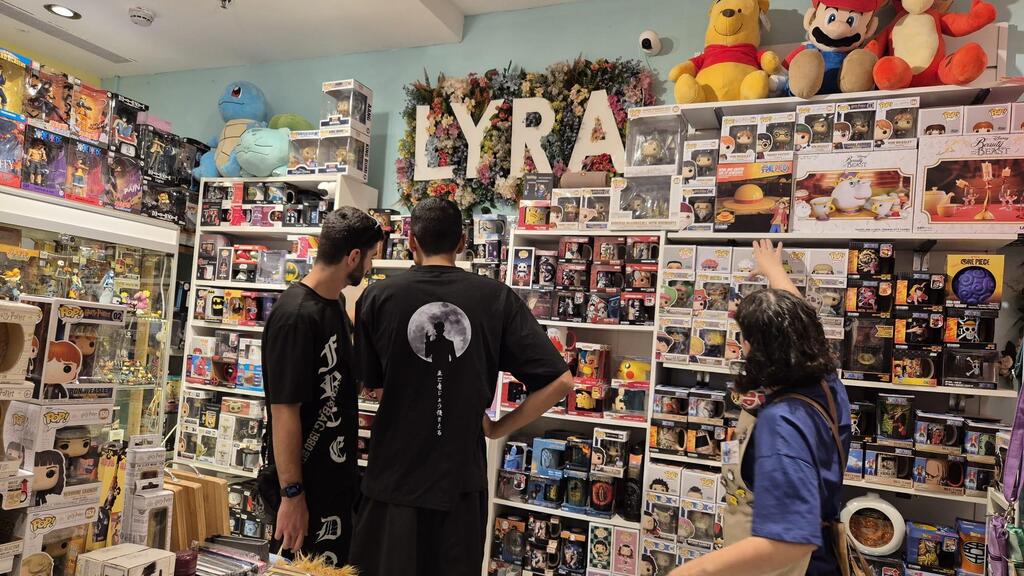
Lyre
(Photo: Meirav Crystal)
“We also offer financial support, sometimes interest-free loans, renovation grants, mentoring from Dan (the CEO) and the entire marketing team and free advertising when space allows. The goal is to help these small ventures grow into real businesses. Many of them have survived and are thriving. It’s part of our philosophy.”
The mall has also attracted niche businesses from elsewhere. “We brought in Freak, a store for role-playing, board and card games, which we’d dreamed of having for years,” Kaplan says. “It’s probably the best board game store in Israel, with live activities and its own loyal community.”
That store is located in the less popular Building B. “There are fewer major chains in Building B,” Kaplan notes, “but the eclectic mix of shops there has created its own subculture. You’ll find anime stores and collectible figure shops, there are six of them now, plus a secondhand and retro video game shop that opened recently. There’s also Geek Shelter, a space for the tabletop gaming and Warhammer community, where people build and paint their figures and even hold weekend events.”
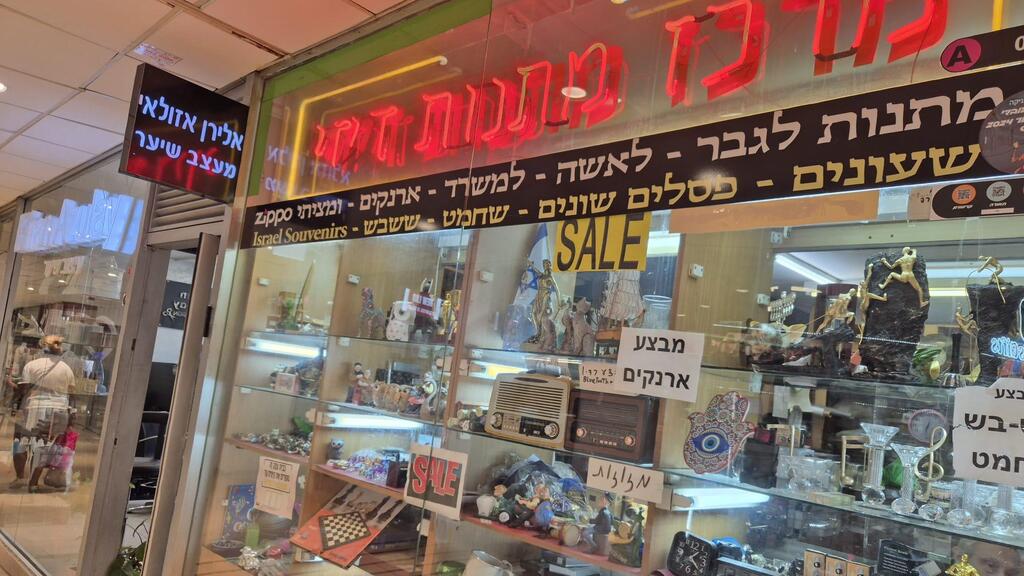
Bazaar-style shops
(Photo: Meirav Crystal)
“There are some stores in the center with window displays that look like a bazaar,” Kaplan says. “We can ask a shop to fix up its décor, suggest that it leave the lights on after closing and even help those struggling with their electricity bills but we can’t force anyone. And if an owner decides to sell their property, there’s nothing we can do. Until the sale goes through, which can take years, we’re left with an empty, dusty, dark space.”
“In malls with fixed opening and closing hours, that just doesn’t happen,” he continues. “You won’t see a store with paper taped over the windows. All the lights go on and off at the same time, and even the brightness is uniform—it’s all controlled from above. Here, because of the large number of owners, it’s much harder to move stores around or free up space for a new tenant who needs a bigger area. Sometimes compromises are required, and sometimes it’s simply impossible. That’s how we lost H&M to Azrieli eight years ago.”
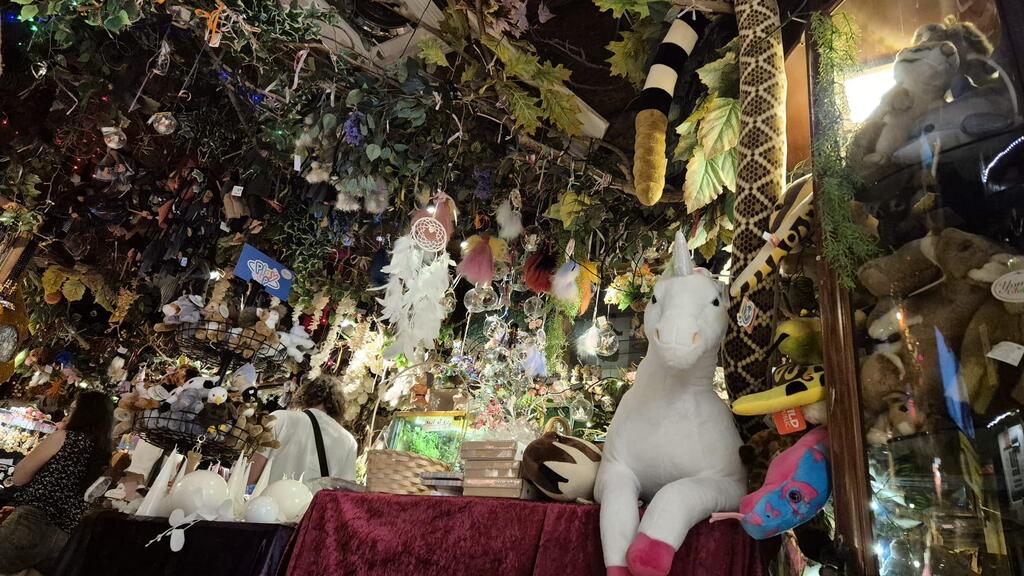
The Fairy Forest shop
(Photo: Meirav Crystal)
Geek culture, magic and Marvel
Kaplan also spearheaded unique events: Harry Potter festivals (licensed by Warner Bros.), SpongeBob’s 25th birthday, Marvel exhibits with props flown in from Hollywood and more. “Those events put us on the map,” he says. “Even international franchises use certificates we invented for the Potter event.”
Some projects flopped, like a DC event that lacked content but most drew huge crowds. “People want immersive experiences,” Kaplan says.
A mall like no other
From bats to beehives, fantasy shops to fitness chains, Dizengoff Center remains Israel’s most unconventional retail space. “It’s not just a mall,” Kaplan concludes. “It’s a living ecosystem; chaotic, magical and uniquely Tel Aviv.