


Singapore’s ST Engineering is set to unveil its largest cargo drone to date at the Singapore Airshow opening Tuesday. The aircraft was developed jointly with Israeli company AIR and is designed to meet European Aviation Safety Agency standards for unmanned aircraft, allowing it to compete in European tenders and other global markets.
The new aircraft, known as the DrN-600, is an electric vertical takeoff and landing unmanned aerial vehicle, or eVTOL. It has an eight-meter wingspan and a maximum takeoff weight of up to 600 kilograms, with the ability to carry payloads of up to 100 kilograms. Powered by lithium polymer batteries, it has a maximum flight range of up to 120 kilometers.
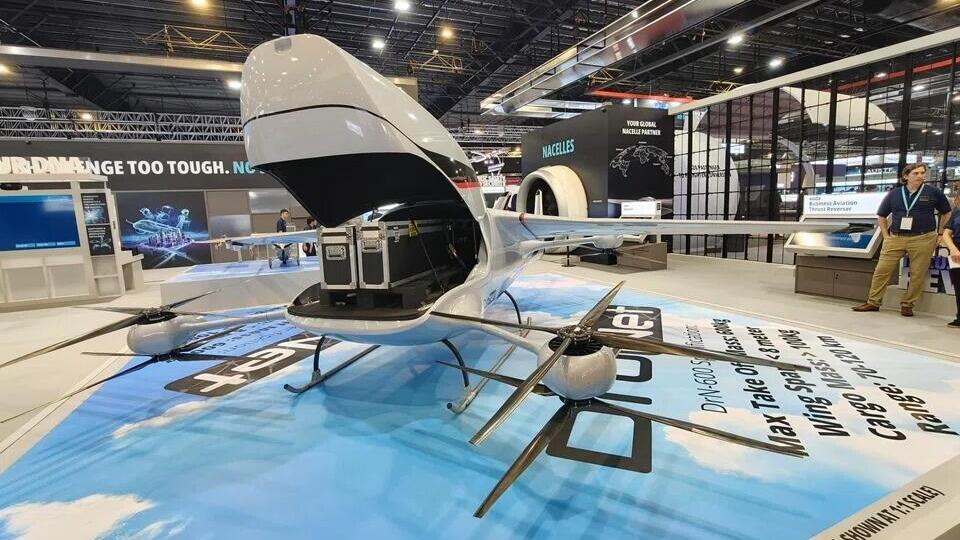
The drone is part of a broader unmanned aerial system called DroNet, which includes a ground control station and communications systems operated by human controllers. The aircraft can fly fully autonomously along a preprogrammed route or be piloted remotely by a human operator.
Israeli company AIR was founded in 2018 by Rani Plaut, Chen Rosen and Netanel Goldberg. The company employs about 50 people and operates from Kfar Yona, with testing facilities in Israel and the United States. Plaut, AIR’s co-founder and CEO, said the European market plays a central role in shaping the future of aviation.
“Our collaboration will allow us to bring advanced autonomous cargo solutions into real-world operations and set a new industry benchmark,” he said.
The global cargo drone market is currently experiencing rapid technological and commercial growth, with Chinese companies leading much of the competition. Most existing cargo drones can carry only a few kilograms up to about 40 kilograms. Agricultural drones can reach payloads of up to 100 kilograms, and in recent months manufacturers such as DJI have introduced cargo drones capable of carrying 100 kilograms, but with flight ranges of only about 12 kilometers.
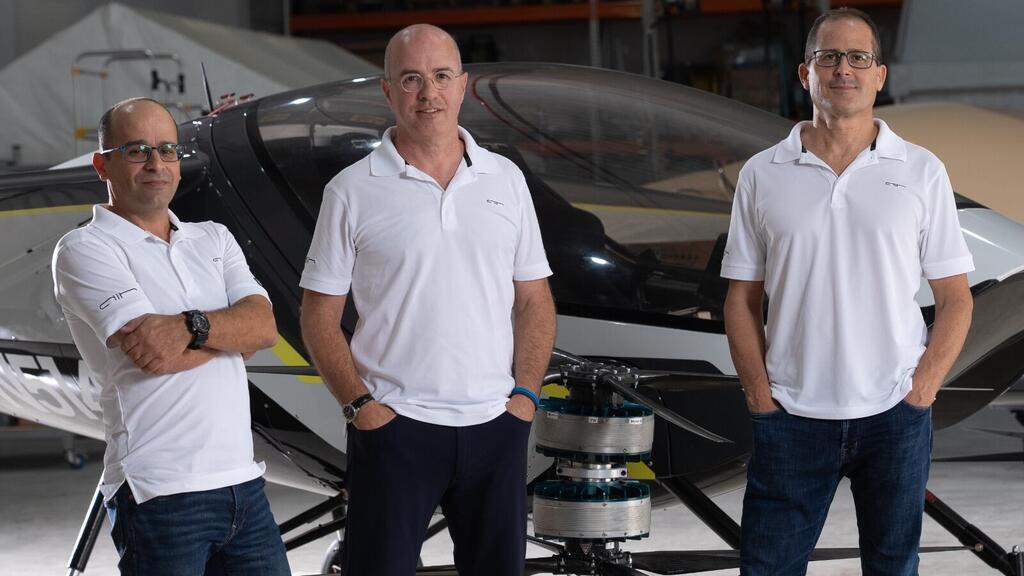
Air founders, from right: Netanel Goldberg, Rani Plaut and Chen Rosen
(Photo: Air)
By comparison, the ST Engineering and AIR drone offers significantly stronger performance. The partnership was designed to address emerging needs in autonomous air logistics, a sector drawing growing interest from regulators and commercial operators worldwide. The companies developed a scaled cargo platform intended to help operators gain operational experience and build trust in electric aerial logistics.
Only a small number of heavy cargo drones can carry larger loads. China’s Air White Whale, for example, has developed the world’s largest cargo drone, capable of carrying up to five tons. However, electric propulsion and battery limitations mean that heavier drones typically have shorter ranges than lighter models.
Test flights of the DrN-600 are scheduled to begin in the second quarter of 2026, with commercial operations planned for 2028. The companies envision uses such as delivering critical supplies to remote locations or areas lacking transportation infrastructure, including islands and mountainous regions.
ST Engineering is one of the world’s leading aerospace and defense technology companies. In Israel, its subsidiary ST Engineering Telematics Wireless operates as a continuation of Tadiran, founded in 1996 and acquired by ST Engineering in 2008. The Singapore-based company maintains strategic defense collaborations with Israel Aerospace Industries and other Israeli firms.
ST Engineering has been developing autonomous drones since 2018 and has participated in pilot projects delivering food in Singapore, including drone-based supply runs to ships offshore.
The technology behind the new cargo drone is also used in AIR’s two-seat electric passenger aircraft, the Air One, which features vertical takeoff and landing. The same platform underpins AIR’s electric cargo aircraft designed for short- to medium-range missions, capable of carrying up to 100 kilograms and intended for autonomous logistics operations in remote or infrastructure-poor environments.
AIR is currently undergoing regulatory certification in the United States and has already received an airworthiness certificate from the Federal Aviation Administration. The company is also participating in the U.S. Air Force’s Agility Prime program and has demonstrated beyond-visual-line-of-sight cargo flights.
AIR reported that it has already delivered its first aircraft to customers and plans to supply about 20 unmanned eVTOL cargo aircraft this year. In the coming years, the company expects to deliver approximately 3,000 manned Air One aircraft to customers who have already placed orders. The aircraft’s expected price is about $200,000.