


Alice Walton, 76, has never shown much interest in running Walmart. Her father, Sam Walton, built the retail empire, but Alice spent only a few months working there in 1971 as a buyer in the children’s clothing department. Beyond owning an enormous amount of Walmart stock, she has never served on the company’s board or joined its senior management.
That role was largely left to her brothers. Walton chose something very different.
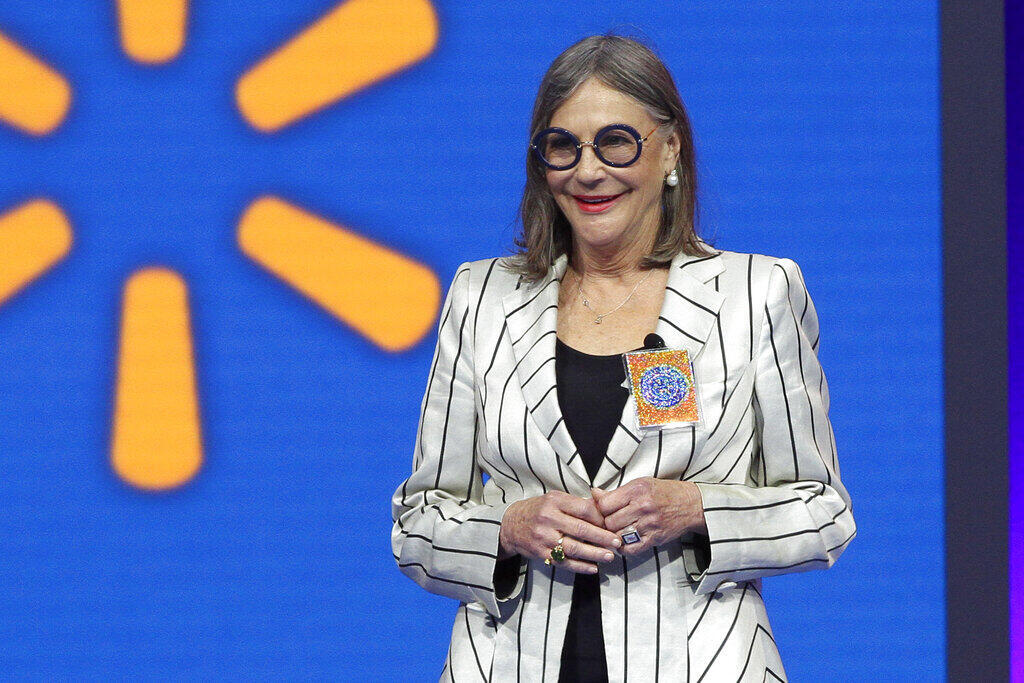
This year, Forbes named her the world’s richest woman for the third time, estimating her fortune at about $134 billion. She ranks 14th among the world’s richest people overall.
Unlike the rest of the Walton family, Alice spent more than five decades deliberately avoiding the management of the family business and building a life centered on two passions: American art and horses.
Her interest in art began in childhood, when she discovered watercolor painting. She and her mother often painted during family camping trips through the Ozarks. As an adult, she began collecting watercolors, and the hobby gradually developed into a serious interest in American art from the colonial period through the present day.
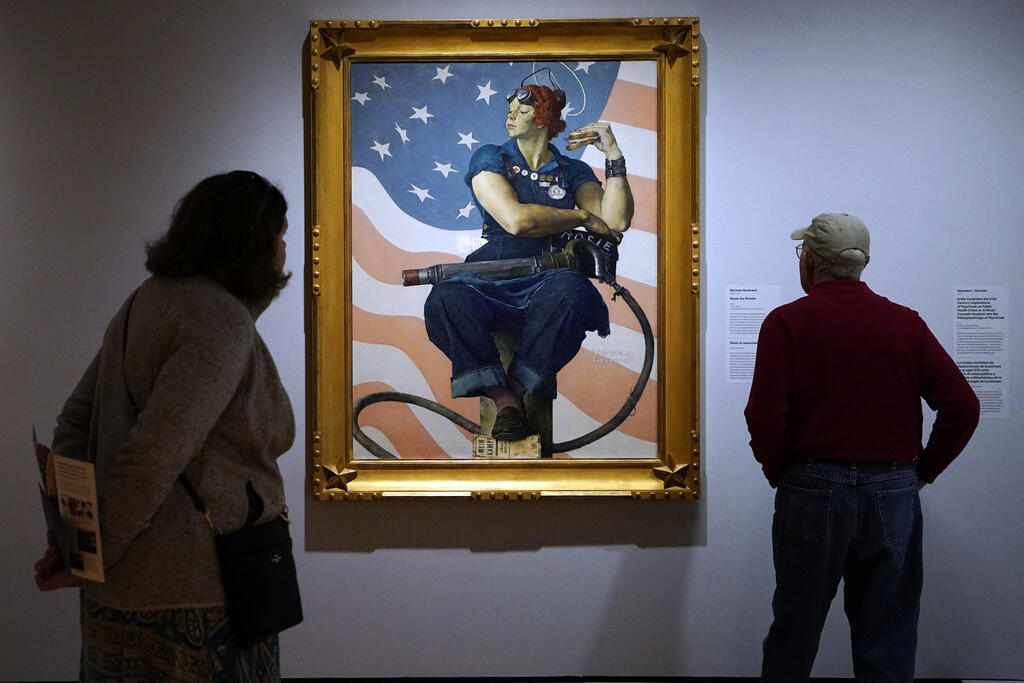
Among her best-known purchases are Gilbert Stuart’s 1797 portrait of George Washington and Jasper Johns’ 1983 work Flag, which she reportedly bought for about $36 million.
But Walton’s approach to collecting has never been focused solely on building a private trove. Her stated goal has been to tell the American story through art and make that art accessible to the public for free.
In that sense, her philosophy bears a certain resemblance to the Walmart model created by her father: broad access, low barriers and an emphasis on reaching ordinary Americans. In Walton’s case, the product is not inexpensive retail goods but museum-quality art.
A museum designed to be free forever
The centerpiece of Walton’s cultural work is the Crystal Bridges Museum of American Art in Bentonville, Arkansas, which she established as a nonprofit in 2005. Planning and construction took six years, and the museum opened to the public on Nov. 11, 2011.
The Walton family created an $800 million endowment intended to support the museum indefinitely, one of the largest such commitments ever made to an American art institution. Walmart separately donated $20 million specifically to cover admission costs, ensuring that general admission would remain free.
The family also donated land in central Bentonville, while Walton contributed her private collection as the foundation of the museum’s holdings.
Designed by Israeli-American architect Moshe Safdie, Crystal Bridges sits amid more than 130 acres of Ozark forest. Its connected pavilions surround natural ponds, creating an experience designed to blend art, architecture and landscape.
Crystal Bridges Museum of American Art in Arkansas
(Photo: Sue Ogrocki / AP)
The museum’s mission is explicitly democratic: to welcome everyone and celebrate the American spirit by combining major works of art with the natural beauty of the region at no cost to visitors.
Walton has long argued that museums have historically been concentrated in major cities and associated with elite audiences. Crystal Bridges was intended to bring first-rate American art to people who might never travel to New York, Chicago or other traditional cultural centers.
Critics, however, have pointed to the irony of a lavish cultural institution funded by wealth derived from Walmart, a company long criticized over wages and working conditions.
Buying millions in art while competing on horseback
Walton’s effort to expand access to art did not stop in Bentonville.
In 2017, she helped lead a $120 million Walton Family Foundation donation to establish an art school at the University of Arkansas, the first and only accredited academic art school in the state.
That same year, she founded Art Bridges, an organization that helps circulate major works of art to smaller regional museums across the United States, extending the same principle behind Crystal Bridges: moving art out of private collections and major metropolitan institutions and bringing it to wider audiences.

(Photo: Ted S. Warren / AP)
One of the most famous stories about Walton’s collecting habits was recounted by The New Yorker. Walton was competing in a horse event in Fort Worth while simultaneously bidding by telephone in a Sotheby’s auction in New York.
The reporter accompanying her watched Walton advance through the riding competition while purchasing millions of dollars’ worth of paintings. By the end of the morning, she had reached the final and spent roughly $12 million. By the end of the day, her purchases totaled about $20 million.
Her passion for horses reflects her Arkansas roots. Walton is particularly fond of cutting horses, which are trained to separate cattle from a herd. A profile in the French business newspaper Les Echos said she developed a reputation for identifying promising young horses at an early age.
From art to medicine
In 2021, Walton founded the Alice L. Walton School of Medicine next to Crystal Bridges.
The school focuses on preventing and reducing chronic disease rather than treating illness only after it develops. Tuition is free for its first five graduating classes and is expected to remain comparatively low afterward, with the goal of reducing the debt burden on future physicians.
After selling her Texas ranch, Walton settled in Bentonville to remain close to the institutions she had created.
Politically, she followed her father for years as a major donor to Republicans. That changed when Hillary Clinton, the former Arkansas first lady who had also served on Walmart’s board, entered Democratic presidential politics.
Walton shifted her support toward Democrats, complicating the Walton family’s relationship with Donald Trump.
The tension resurfaced when MAGA supporters called for a boycott of Walmart after Alice’s sister-in-law, Christy Walton, backed a “No Kings” protest against Trump in June 2025. Alice stayed out of that fight, and Walmart said it had not funded the movement.
Still, the relationship remained complicated rather than severed. Ivanka Trump visited Bentonville in October to attend the opening of Walton’s medical school.
The darker side of an extraordinary fortune
Walton’s personal life has also included serious tragedies and accidents.
Reports over the years have said she struggled with depression after severe car crashes. In 1983, while traveling to a family Thanksgiving dinner near Acapulco, she lost control of a rented Jeep and plunged into a ravine. She was badly injured and underwent 22 operations, leaving her with recurring pain and a slight limp.
In 1989, Walton struck and killed 50-year-old Oleta Hardin, who appeared unexpectedly in the road. No charges were filed against Walton, but she later said she had to learn to live with the tragedy.
She was involved in another crash in 1998, this time while under the influence of alcohol. In 2011, she was arrested on suspicion of drunken driving, producing a mugshot that has circulated widely online ever since.
Walton married twice, first at a young age to an investment banker and later to a contractor who had built her swimming pool. Both marriages ended quickly, and she has no children.
That raises an obvious question for a woman with a $134 billion fortune: who will inherit it?
Most of Walton’s wealth is expected to flow into family philanthropic foundations and the cultural and educational institutions she created, while some family assets are expected to pass to her nieces and nephews, the third generation of the Walton family.
She has already begun transferring responsibility to that generation. The chairmanship of Crystal Bridges, for example, was handed to Olivia Walton, the wife of her nephew Tom.
Much of the rest of the fortune is expected to continue supporting the institutions that have come to define Alice Walton’s life outside Walmart: the museum, the medical school and private foundations focused on education, culture and health.