

Cybersecurity startup Neo has emerged from stealth with $100 million in funding, as businesses confront growing risks from artificial intelligence tools that can act independently inside corporate systems.
The round was led by Andreessen Horowitz and Bessemer Venture Partners, with participation from Craft Ventures and Merlin Ventures.
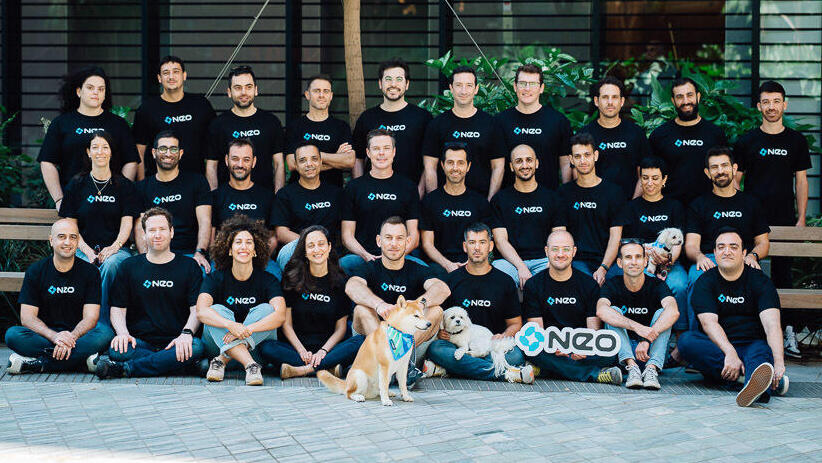
Neo
(Photo: Netanel Tobias)
Neo was founded by former executives and engineers from SentinelOne, Wiz and Palo Alto Networks. The company is building software intended to help security teams identify and manage AI agents, AI-enabled applications, browser tools, identities and traditional programs that are gaining autonomous functions.
The company said the funding would be used to expand its engineering and sales operations.
Neo is entering a crowded field of cybersecurity companies seeking to address the rapid spread of so-called agentic AI, systems that can take actions, invoke tools and move through workflows with limited human involvement.
As businesses adopt more AI products, security teams face the challenge of tracking what those tools can access, which permissions they inherit and whether their actions can be traced back to a particular user or system.
Neo says its platform is designed to provide an inventory of such tools, assess their capabilities and risks, create audit trails and allow companies to enforce restrictions on actions including data transfers, application programming interface access and tool use.
“Enterprise security was built for a world where software behaved predictably,” said Nick Warner, Neo’s co-founder and CEO.
Warner said the spread of AI agents inside browsers, developer tools and widely used software was changing that model and creating a need for more direct oversight.
The company cites a Gartner forecast that the share of enterprise applications with agentic capabilities could rise from 5% in 2025 to 40% by the end of 2026.
Neo’s platform includes a continuously updated database of AI agents, extensions, plugins and other software, along with tools intended to assess what they can access and how they are configured.
It also seeks to link actions to the responsible user, agent, application or identity and to block activity deemed risky.
Warner previously built SentinelOne’s go-to-market organization and served as chief operating officer when the cybersecurity company went public in 2021.
Co-founder Shlomi Salem spent more than a decade leading detection engineering and threat research at SentinelOne.
A third co-founder, Eran Shirazi, previously co-founded customer experience software company EasySend and led vulnerability research in the Israeli military’s Unit 8200.
Investors said the team’s background was a major factor in backing the company.
“Employees are rapidly adopting AI agents and software vendors are embedding agentic capabilities into products enterprises already use,” said Zane Lackey, a general partner at Andreessen Horowitz.
He said organizations increasingly need to understand what those systems can do and set limits on their behavior.
The market for AI security has expanded quickly as companies deploy autonomous software before many existing security systems have been adapted to monitor it.
Neo is betting that enterprises will need a dedicated control layer for software that can act on behalf of users, move between applications and operate with legitimate credentials.
Whether that becomes a distinct cybersecurity category or is absorbed into existing security platforms remains uncertain, but the size of the funding round suggests investors expect demand to grow rapidly.