

It took several years, but artificial intelligence pioneer OpenAI is considering establishing operations in Israel. The initial move would not involve a research and development center but rather a business development operation aimed primarily at building ties with the local tech sector.
According to information obtained by Calcalist, a senior Israeli Amazon executive who until recently led AWS for Startups — Amazon’s cloud operations for the local tech industry — has been recruited by OpenAI and is beginning work at the company. He will be responsible for the EMEA region, covering Europe, the Middle East and Africa, and will report to a manager in London, though he is expected to focus primarily on Israel.
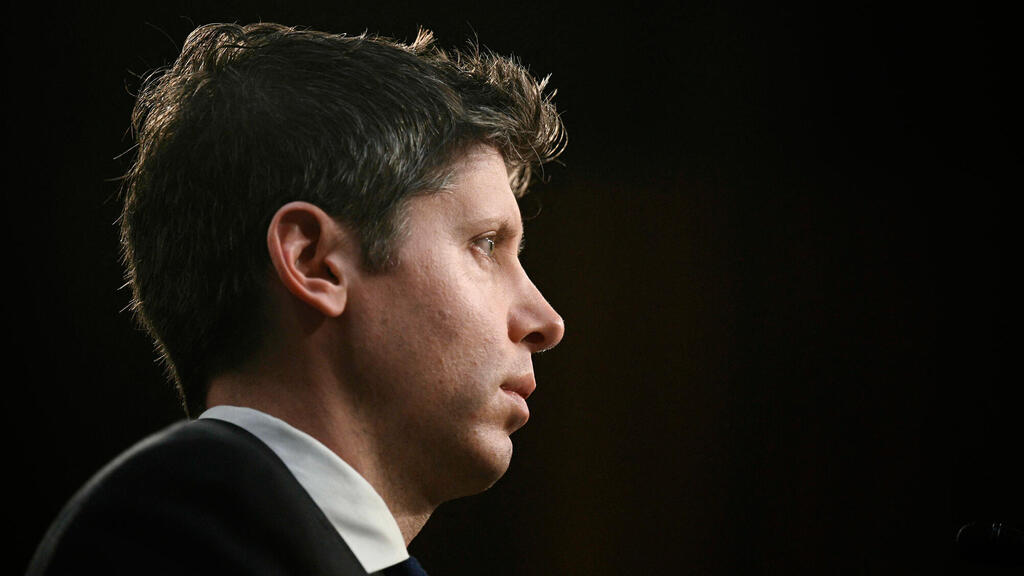
OpenAI CEO and founder Sam Altman
(Photo: Brendan Smialowski/AFP)
The AI giant, which launched ChatGPT, its large language model-based application for the general public, wants to build a presence in the Israeli ecosystem using a model similar to that of cloud companies. Such companies establish relationships with local startups soon after they are founded, then increase their revenue as the startups grow and develop.
OpenAI is expected to hold an event for startups in Israel with AWS toward the end of the month, where it will present its services for the enterprise market. At the same time, OpenAI’s careers website currently lists an opening for an account manager serving Israel’s tech sector.
Although the position is officially listed as being based in Paris, the managers are expected to work from Israel and report to the company’s European offices. Depending on how its Israeli operations develop, people familiar with OpenAI’s plans believe the company will later seek a senior executive to lead an Israeli sales office in a country manager role.
Depth of AI adoption in the ecosystem
OpenAI’s expansion outside the United States has generally begun with marketing and business development operations rather than R&D centers, followed later by the recruitment of engineers. In comparison, OpenAI began operating in India a year ago by hiring for positions similar to those it is now seeking to fill in Israel. By the end of 2025, it already had an active office in the country.
This is not yet the holy grail for Israel, a local R&D center like those operated by Amazon, Google, Apple, Microsoft and Nvidia, each of which employs thousands of people in the country, but it represents an important initial foothold.
Google’s operations in Israel also began with a greater focus on marketing and business activity before expanding into R&D. Historically, development centers in Israel have often been established through acquisitions of local startups or larger companies, as in the case of Mellanox, which was already publicly traded when it was acquired by Nvidia.
OpenAI currently has only two R&D centers outside the United States: one in London, its largest, and another in Zurich, which has become a significant AI hub because of the city’s academic institutions.
OpenAI’s interest in establishing business development operations in Israel illustrates the importance Sam Altman’s company places on the Israeli tech industry. Although Israel has not developed its own large language model, it is considered one of the world’s most advanced countries in the use of AI tools, particularly in the enterprise market among tech companies.
According to recent data from Anthropic, OpenAI’s fierce rival, Israel ranks first worldwide in per-capita use of Claude, Anthropic’s AI tool. The study, conducted in March, examined use among working-age populations around the world and found that Israel surpassed countries including the United States and Singapore.
The usage figures highlighted both the depth of AI adoption in the Israeli ecosystem and the speed at which new technologies are embraced.
Calcalist also reported last week on a Bank of America study examining the countries leading in various aspects of AI behind the two dominant powers, the United States and China.
Israel ranked just outside the global top 10. Its position was hurt primarily by weak national infrastructure and limited government investment, while it ranked much higher in measures related to the private sector.
Israel ranked first in the concentration of AI talent, according to LinkedIn data, and third in investment in AI companies between 2013 and 2025, with a total of $19 billion.
Hundreds of Israeli startups now build their products on language models, and OpenAI does not want to miss out on this significant market. The widespread adoption of Claude, which is highly popular among developers, and Gemini, aided by Google’s strong presence in Israel, has put OpenAI at a disadvantage.
A growing startup that eventually generates hundreds of millions of dollars in revenue could also become a major customer spending large sums on AI models, much as Israeli tech companies became major cloud customers over the past decade.
Establishing a presence in Israel could also help OpenAI improve its language model, which develops as more people use it.
Annual revenue run rate of $50 billion
OpenAI, which is seeking a Wall Street flotation in the coming year, significantly trails Anthropic in both enterprise-market penetration and expansion outside the United States.
OpenAI was the first company to launch a widely accessible artificial intelligence application and remains the better-known brand. That has attracted many customers who use either the free version, which accounts for the overwhelming majority of users, or the basic paid version, which costs $20 a month.
Anthropic, by contrast, focused on the enterprise market from the outset, generating significantly higher revenue per customer. It also invested more heavily in expanding across Europe and East Asia, establishing centers in Germany, Japan and South Korea — countries that, like Israel, rank among the leaders in AI adoption.
As a result, Anthropic is expected to overtake OpenAI this year in annualized revenue, approaching $50 billion compared with OpenAI’s $25 billion, despite OpenAI’s commanding lead in user numbers.
Neither company is profitable, though Anthropic is believed to be burning less cash.
Anthropic also recently surpassed OpenAI’s valuation for the first time in a private funding round, reaching a valuation of $965 billion compared with OpenAI’s latest valuation of $852 billion.
Anthropic is now expected to go public before its older rival. OpenAI recently decided to postpone its initial public offering until 2027, rather than proceed with its original plan for late 2026, amid concerns that it would not secure the valuation of more than $1 trillion it is seeking.
Anthropic, meanwhile, reportedly began its roadshow last week, holding a series of intensive meetings with investors ahead of a major New York offering, confident that it can achieve a valuation exceeding $1 trillion.