

Germany’s navy has received a large autonomous underwater vehicle developed jointly with Israel, as Berlin pushes ahead with plans to expand its unmanned maritime capabilities amid growing security concerns in Europe.
The system, known as BlueWhale, was delivered Tuesday at the naval base in Eckernförde by Israel Aerospace Industries (IAI) and Germany’s thyssenkrupp Marine Systems (TKMS). The project is part of the German Navy’s long-term modernization framework, “Kurs Marine 2035+,” which aims to integrate more autonomous and networked systems into its fleet.
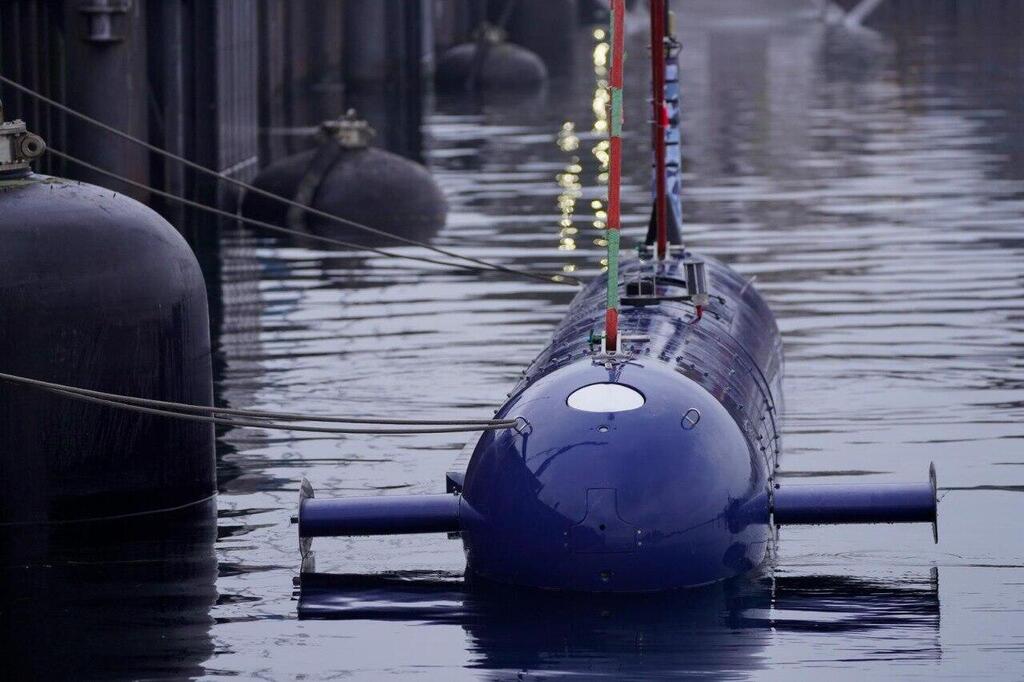
BlueWhale is designed for anti-submarine warfare and other maritime security missions without a crew on board. According to the companies, the vehicle can operate for extended periods, gathering reconnaissance data, detecting vessels and submarines, collecting acoustic intelligence and identifying sea mines.
IAI developed the core platform, while TKMS and its subsidiary ATLAS ELEKTRONIK integrated a towed sonar system intended to enhance submarine detection capabilities.
German defense officials say autonomous systems are expected to play a larger role in monitoring contested waters, particularly in regions such as the Baltic Sea, where the vehicle recently underwent sea trials. The Baltic has become an area of heightened strategic focus following increased military activity and suspected sabotage incidents targeting undersea infrastructure in recent years.
Unlike traditional submarines, BlueWhale is intended to act as a forward sensor platform, relaying information to manned ships and command centers. Defense analysts say such systems can reduce risks to personnel while expanding surveillance coverage across large maritime areas.
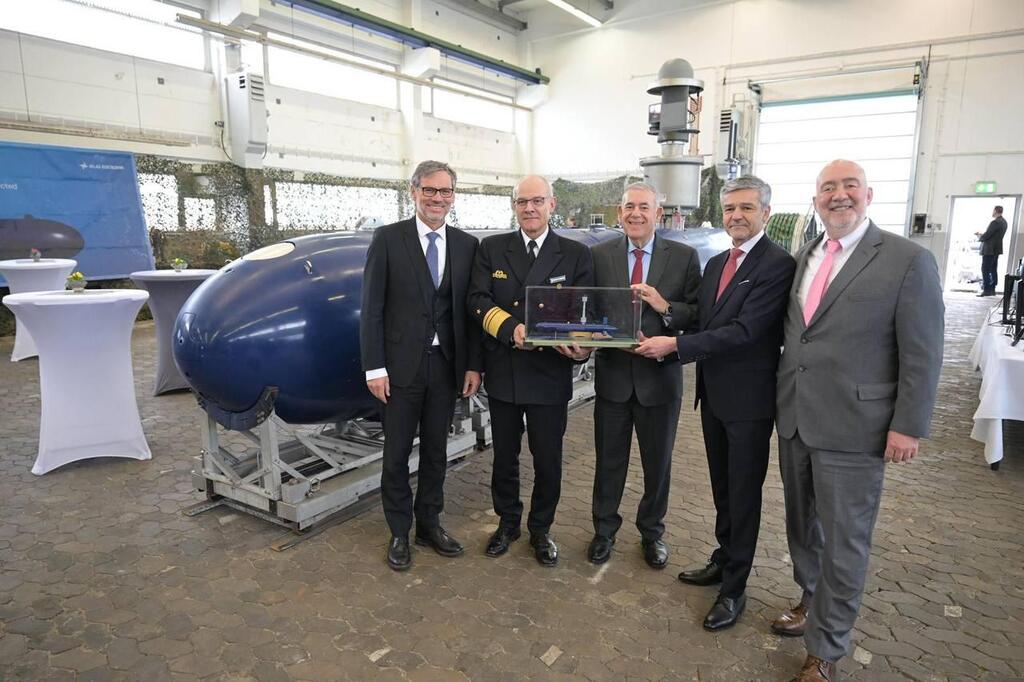
Israel’s ambassador to Germany, Ron Prosor; TKMS ATLAS ELEKTRONIK CEO Michael Ozegowski; IAI CEO Boaz Levy; German Navy commander Adm. Kaack; and German Defense Ministry State Secretary Jens Plötner at the handover of the submarine sold to Germany
(Photo: IAI)
Financial details of the project were not disclosed, and it was not immediately clear how many units Germany plans to procure.
The delivery underscores expanding defense cooperation between Germany and Israel, particularly in high-tech systems. In recent years, Berlin has also acquired Israeli-made air defense systems as part of a broader effort to strengthen its military capabilities following Russia’s invasion of Ukraine.
German officials described the underwater vehicle as part of a broader shift toward integrating manned and unmanned systems within a shared digital architecture, a trend seen across NATO navies adapting to new maritime threats.