

It was supposed to be a celebratory year for Lufthansa, one of the brands most closely associated with — and most impressive symbols of — the German economy. A symbol of stability, precision and safety. The company was reborn only in 1953, but the original airline was founded in 1926 and dissolved after the war, which made this the year it was supposed to celebrate 100 years since its founding.
But last week, at the airports I passed through — Vienna, Budapest, Berlin and Munich — the mood among Lufthansa service providers and customers was far from festive. The cardinal problem of jet fuel shortages following the war in Iran had already caused total chaos and mass flight cancellations, but Lufthansa was not hit harder by that than other airlines.
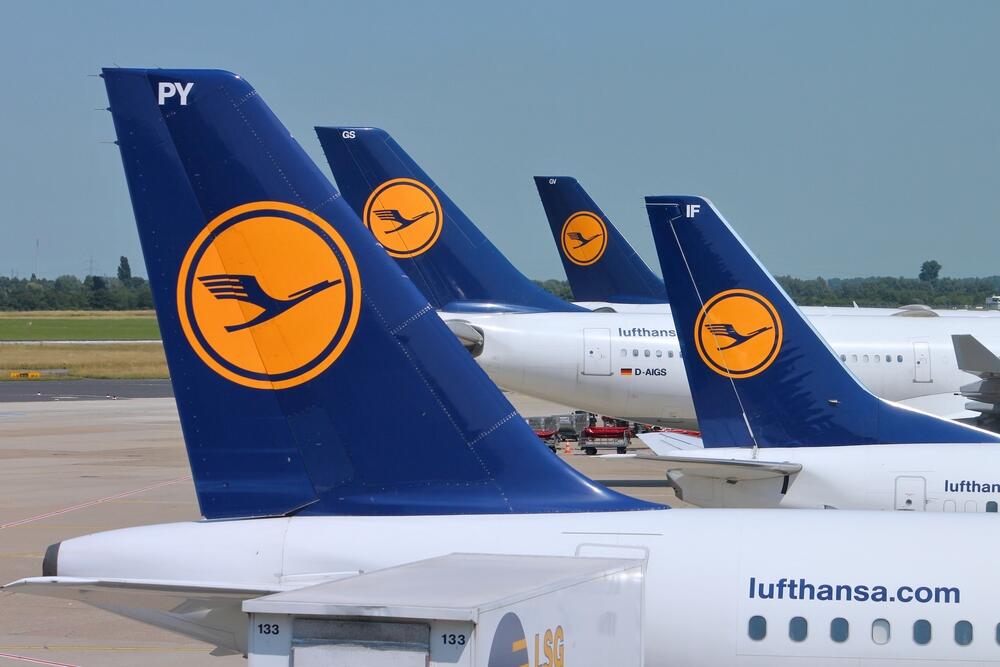
At Lufthansa, however, that was compounded by a pilots’ strike that entered its fifth day, turning the chaos into a full-blown spiral. It was a theater of the absurd: on one hand, Chancellor Friedrich Merz arrived at the company’s headquarters to celebrate the anniversary, while on the other, tens of thousands of customers found themselves without flights, scrambling for alternatives through other airlines, trains or rental cars, forced to pay out of pocket for lodging in foreign cities or to rework their entire daily or weekly plans. The company’s slogan, “Say yes to the world,” had turned into a bad joke.
“What a disgrace,” Katharina Kanuth, a Berlin lawyer searching for a way home from a conference in Vienna, told me with a roll of her eyes. “It is a precise allegory for the state of Germany. One of the country’s most famous companies reaches its 100th birthday, and this is what it looks like. Total contempt for the customer, public relations that embarrass the country.”
That, of course, did not stop the suits from celebrating. An Airbus A380 was painted blue and white with the crane logo stretched along its body, historic aircraft were brought to Frankfurt, and billboard campaigns adorned terminals in Berlin, Munich and Frankfurt.
On April 6, the day the company’s first flights took off in 1926, Lufthansa launched two special flights meant to recreate its first two routes, from Berlin to Zurich and from Berlin to Cologne. On April 15, the festive ceremony was held in a Frankfurt hangar with the participation of the chancellor and company CEO Carsten Spohr. Champagne glasses were raised, impressive words were spoken, one man patted another on the back. A celebration. From inside the hall, demonstrators outside could be heard chanting, “Spohr must go.”
Meanwhile, just a few hundred feet from the party, flights were being canceled left and right, and thousands of customers were forced to watch hundreds of departures disappear from the board and set out on a hunt for travel alternatives. First the pilots went on strike, then the flight attendants. No sooner had the flight attendants ended their strike than the pilots walked out again. A celebration. The forecast for the coming weeks: more strikes, along with demonstrations.
“These are people who are supposed to make sure ticket buyers get from place to place at the times they bought those tickets for,” Kanuth said. “And to me it looks as though they do not care about me and do not care about the company’s future. It is a marketing and image disaster. For me, as a German, this was always the first option. If the price differences were not very significant, I would always choose Lufthansa, even if its ticket was more expensive. After what happened this week, I will look for another alternative — either another airline or the train. We do not have the luxury of flying on government planes like the chancellor.”
A CEO refusing to bow to pressure?
The energy crisis and labor action have led Lufthansa to completely freeze the operations of its subsidiary CityLine — a move that had been expected and was simply brought forward — ground six passenger aircraft and transfer nine additional planes to Discover Airlines, another Lufthansa subsidiary.
(Photo: Shutterstock)
And this problem is not going anywhere, mainly because the disagreements do not remain only between management and shareholders on one side and employees on the other, but also exist among the employees themselves. The union representing flight attendants is demanding additional days off and rest time, changes to working hours and influence over crew compositions. The pilots’ union is seeking improved pension terms, compensation and additional benefits. If Lufthansa were to meet the demands of both unions, it would amount to aviation suicide, especially given the current crisis in the airline industry and the lack of clarity about the future.
The current energy crisis is forcing Lufthansa to buy about 20% of its jet fuel at soaring market prices. Lufthansa hedged the price of 80% of its fuel purchases, which puts it at an advantage over other airlines in that respect. At the same time, it is losing millions of dollars a day because of the labor actions and strikes, and it will have to ground more aircraft, cut subsidies and cancel most of its unprofitable flights next winter. It also has a five-year plan for mass layoffs of about 4,000 employees in administrative and consulting roles. There is never a good time for a labor strike, but the current timing appears especially bad.
Although the aviation crisis is still far from resolved, it is not yet known when additional jet fuel will be imported into Europe through the Strait of Hormuz. But Lufthansa can also view the crisis through rose-colored glasses: the company entered the coronavirus crisis with liquidity of about 3 billion euros, and it now enjoys liquidity of about 10 billion euros. That is also the reason for the tough line taken by the company’s management, despite the poor public relations it is getting because of the shutdown, the cancellations and the delays. It has managed to shift the blame onto the workers. Every additional day of disruption works against them. Spohr is perceived as a CEO who refuses to bow to pressure.
Still, there are strikes, disappointed customers and flights canceled because destination airports do not have enough jet fuel. Shareholders who had been rubbing their hands over forecasts of 4% growth for 2026 can forget about that. The striking pilots and flight attendants come from the parent company, the group’s highest-cost unit and the one with the lowest share of profits. Despite the hedging, Lufthansa could find itself spending nearly 1.5 billion euros more on jet fuel than planned for 2026. In the end, that means Lufthansa will have to make the end customer absorb the additional costs.
In the current economic climate, it is unclear how much the end customer will be able to afford those price increases, especially given that other travel and leisure sectors such as hotels, car rentals and restaurants are also expected to raise prices sharply. It is more likely that Lufthansa will have to contend with much lower demand for its flights.
For now, Lufthansa is still benefiting from the near-total suspension of flights by Gulf airlines. That shutdown has created very strong demand for the company’s flights to Asia. But that party, too, will soon be over. This is not exactly how Germany’s national airline planned to celebrate 100 years of existence.