

U.S. software company ServiceNow has agreed to acquire Israeli cybersecurity firm Armis for $7.75 billion, in what could become one of the largest exits in Israel’s high-tech sector.
The planned acquisition was first disclosed about two weeks ago, and the companies have now finalized the agreement. Industry sources estimate the total value of the deal could exceed $8 billion once employee retention grants are included, potentially making it the fourth-largest exit ever in Israeli high-tech.
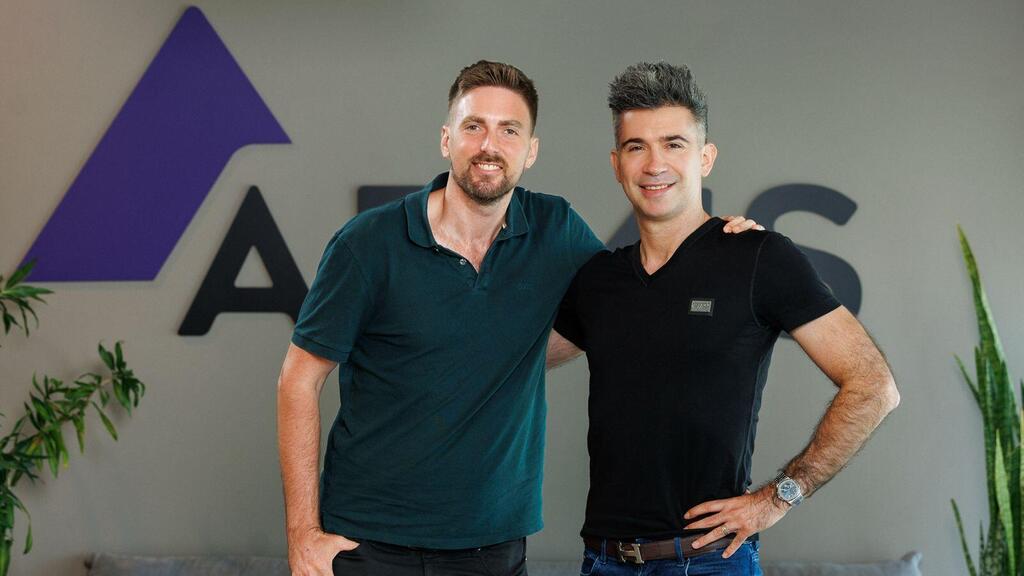
Founders Nadir Izrael and Yevgeny Dibrov
(Photo: Armis)
ServiceNow said the acquisition is expected to triple its market opportunity in security and risk solutions and accelerate its roadmap toward proactive, autonomous cybersecurity. The company said Armis’ technology will enable it to offer unified, end-to-end cyber exposure management and security operations, capable of seeing, deciding and acting across an organization’s entire technology footprint.
Founded in 2016, Armis focuses on securing connected devices in real time to protect against cyber threats. Its software monitors devices connected to corporate networks, including printers, cameras and other equipment, identifies normal activity patterns and alerts on anomalies. When necessary, the system can disconnect compromised devices from the network.
The company is also active in operational technology security, including the medical sector, where hospitals rely on a wide range of connected devices such as monitors and imaging equipment, and in industrial environments that require protection for production-line machinery.
Armis has built a large customer base among major U.S. companies. In November, it completed a $435 million funding round that valued the company at $6.1 billion.
The company was founded by Yevgeny Dibrov and Nadir Izrael.
In a 2022 interview with Ynet, Dibrov spoke about his childhood and military service in Unit 81 of the IDF’s Military Intelligence Directorate. At age four, he immigrated from Dnipro, Ukraine, with his mother, grandfather and grandmother, settling in the Sha’arayim neighborhood of Rehovot.
“My parents divorced before we immigrated. I never knew my father,” Dibrov said. “My grandparents were very dominant in raising me and did everything so I would not feel I was missing anything.”
He recalled that despite professional backgrounds in engineering, pharmacy and economics, his family worked picking oranges and doing multiple jobs after immigrating to Israel. “They understood they would not return to their professions and that the future was me, so they invested everything in me,” he said.
Dibrov said his grandparents brought suitcases filled with books from the former Soviet Union, and that reading was always encouraged. “The most important thing for them was that I read a lot,” he said.
Today, he said, his focus is on helping his family. “After a lifetime in rented apartments, I recently helped them close a mortgage, and now I want to buy them a larger apartment in Rehovot,” he said.