

Is the fuel that powered the sharp gains in Israel’s capital market starting to run out? After many months in which the Tel Aviv Stock Exchange outperformed many markets around the world, signs of fatigue appear to have begun emerging recently.
Wednesday was another red day in Tel Aviv, with the TA-125 and TA-35 indexes falling by about 1%, and it was not the only such day this week. The decline came, among other things, against the backdrop of concern over a security escalation. But that is far from the only reason. In the first three trading days of the month, the TA-125 lost about 3.7% of its value, while the U.S. S&P 500 rose by about 0.4% and the MSCI Emerging Markets index gained about 1.2%.
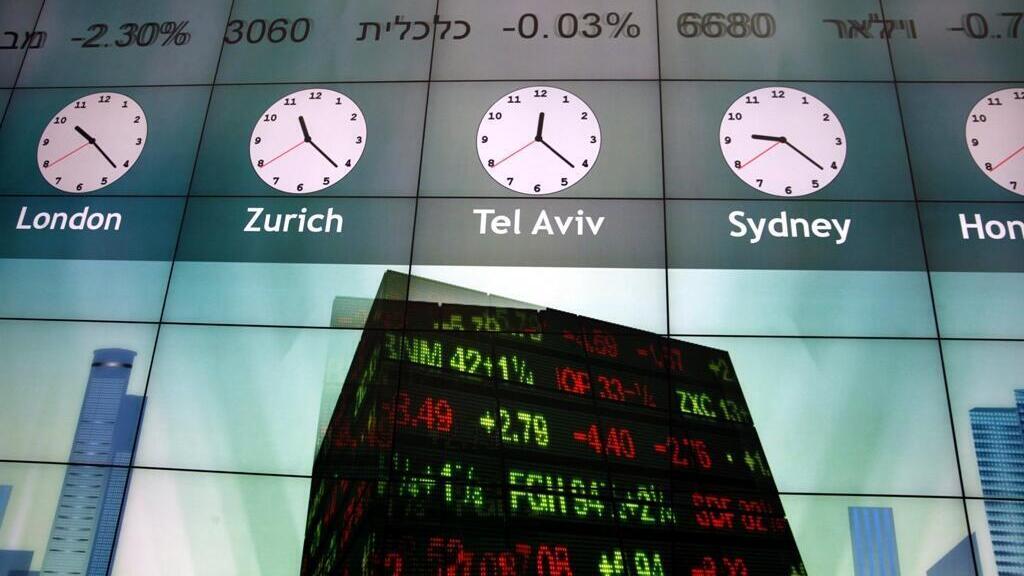
Still, the TA-125 has risen 16.4% since the beginning of 2026, compared with an increase of only 11.2% in the U.S. index. The emerging markets index has performed even better, with a gain of 26.3%. But it may be precisely the strong return recorded by the local market that is one of the main reasons for the current weakness. In capital markets, this is sometimes called “fear of heights.”
One of those warning about this for several months is Matan Shitrit, chief economist at Phoenix, Israel’s largest institutional body in terms of assets under management and market value. Since March, Shitrit has published analyses comparing the Israeli stock market with major markets around the world. One of the key indicators he examines is the source of the gains: whether they stem from a real improvement in corporate profits, or from an expansion of price-to-earnings multiples, meaning investors’ willingness to pay more for each shekel of profit. Put simply, the question is whether companies’ value is rising because they are earning more, or because investors are becoming more optimistic and willing to take on greater risk.
From the beginning of the year through the end of May, the TA-125 rose by about 20%. According to Shitrit’s analysis, almost all of that rise came from multiple expansion, not from an improvement in the companies’ own profitability. Based on the data he presents, the average earnings multiple of the TA-125 is now about 52% higher than the average multiple recorded over the past decade. The MSCI Emerging Markets index, which rose by about 25% over the same period, showed a completely different picture. According to his analysis, about 39% of the rise came from an improvement in corporate earnings, while earnings multiples actually contracted by about 10%. In other words, despite the sharp gains, the emerging market index effectively became cheaper in valuation terms, because the pace of profit growth exceeded the pace of the rise in share prices.
Shitrit is not the only one identifying warning signs. A senior official at one of Israel’s large institutional bodies, who asked to remain anonymous, said the weakness recorded since the beginning of June is the result of a combination of several processes taking place at the same time. According to him, the first factor is a shift in overall sentiment. “Investors are beginning to sober up from some of the narratives that were built in recent months,” he said. “There was a sense, especially on social media and in some economic news channels, that Israel had almost overnight become the strongest and richest country in the Middle East, that the Iranian regime was moments from collapse and that countries in the region were lining up to normalize relations with Israel. Now investors are beginning to understand again that the security and geopolitical situation is still very complex.”
According to the same official, the ongoing fighting on the northern border and in the south continues to exact a significant economic price, and markets are beginning to factor that in. Another factor weighing on the local market, he said, is the broad wave of IPOs sweeping the stock exchange. “The Israeli stock market relies to a large extent on money from institutional bodies,” he explained. “When a large wave of IPOs arrives, institutions need to allocate significant sums to buying new shares. Sometimes this means hundreds of millions of shekels in each deal. That money comes at the expense of demand that would otherwise have gone to stocks already traded on the exchange.”
“When the number of companies issuing shares grows, the supply of shares in the market grows accordingly,” he said. “The new companies usually come to the exchange at relatively high valuations and attract a significant portion of institutional money. In the coming weeks, the market will have to digest all this new merchandise.” Beyond initial public offerings, companies already traded on the exchange are also taking advantage of high price levels to raise capital. “Managements recognize that their shares are trading at high valuations and are rushing to seize the opportunity,” the senior official said.
According to him, this is especially prominent in the renewable energy sector. “Prices in the sector are very high, whether justified or not. That is why companies are using the momentum to raise capital. Doral, for example, completed a NIS 930 million raise and even examined a much larger raise. To complete the raise, it had to offer a discount of about 23% on the market price. When such a supply of shares is created all at once, it puts pressure not only on the stock itself, but also on similar companies in the sector.”
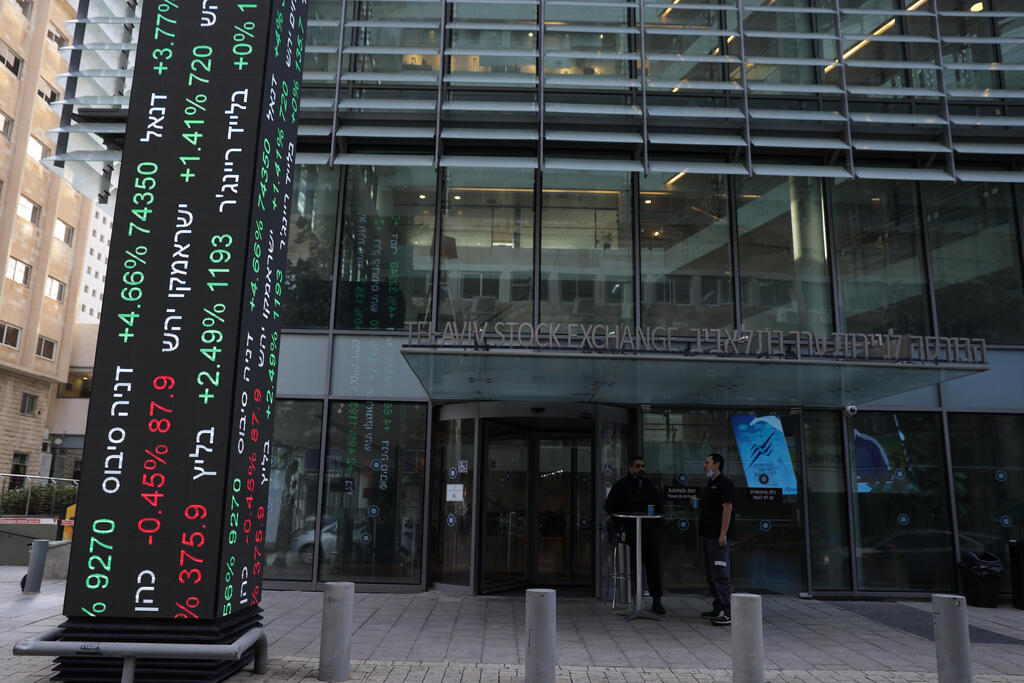
The Tel Aviv Stock Exchange
(Photo: Orel Cohen)
One obvious question is why the local market is not reacting positively to the possibility of an acceleration in the pace of interest rate cuts by the Bank of Israel. According to the same senior official, the answer is simple: “The market is almost ignoring it. The other factors are stronger and are influencing investor behavior more right now.” Asked whether the recent declines have created buying opportunities, he replied: “We are still far from that. There are sectors that are overvalued. When new money comes in, I have to buy shares, but I do not define that as an opportunistic purchase.”
Shimon Oliel, head of Israel investments at Altshuler Shaham, points to another factor affecting sentiment: “The escalation in the north and the deepening of activity inside Lebanon, alongside a feeling that there are limitations on Israeli military activity in the Lebanese arena because of the negotiations between the United States and Iran.” According to him, “It seems that against the backdrop of foot-dragging in the negotiations, the market is losing faith in the quality of the emerging agreement.”
In addition, Oliel said, the local stock market has risen more than most markets around the world since the beginning of the year, and therefore, against the backdrop of the security situation, it is natural for it to perform worse than other markets. Alongside the concerns, Oliel stresses that the Israeli economy is still in relatively good shape. “In general, the economy is coping well with many challenges. There is also clear development among companies outside Israel, especially defense companies. We see Elbit continuing with contracts worth billions of dollars. Beit Shemesh Engines signed a contract worth hundreds of millions of shekels. Next Vision is also continuing to report agreements with new customers. Renewable energy companies are also advancing. Enlight reported a deal with Google, there were equity raises at Doral and Econergy, and also a preferred share raise at Nofar, all for business development.”
According to Oliel, “One of the main concerns is in high-tech, which is suffering not only from the development of AI but also from the strengthening of the shekel. We are seeing reports of many layoffs at several companies. There is concern this will spill over into the Israeli economy, with damage to growth, consumption and demand for offices and residential real estate.” However, he also notes bright spots: “The deal by Elbit to lease offices in Ness Ziona means the success of defense companies is spilling over into real estate and beyond.”
Alongside the cautious voices, there are also those who believe the market is going through an entirely natural process. Eran Goldring, chief investment officer at Analyst, believes the recent declines are mainly a correction after an exceptional period of gains. “There is nothing beyond that here,” he said. “Whoever rose more also corrects more. This is a completely natural process.” According to him, it is difficult to point to a single factor responsible for the relative weakness of the Israeli market. “It is a combination of many factors. At the end of the day, it was a good quarter, there was growth in corporate profits, and in some sectors the growth was even higher than in the United States.”
Still, Goldring agrees that some of the sectors that led the rally over the past year, led by renewable energy, are now being affected by an oversupply of shares following capital raises and IPOs. “When the market has to absorb NIS 1 billion in new shares, that is a lot of money even for the local market,” he said. According to him, the scale of purchases by institutional bodies has also moderated. “I think the institutions have stopped increasing their exposure to Israel, and therefore less new money is currently entering the market.”
In addition, after a particularly strong period, some of the leading sectors are beginning to show a more moderate pace of growth. “In the banks, it is already clear that the coming year will be less strong than the previous one, and insurance companies are also beginning to show a more moderate pace of growth,” Goldring said. Despite this, he does not currently identify a fundamental change in the picture. “There is no need to be surprised. The market went through very sharp gains, and now it is making a correction. That is a natural and healthy part of capital market behavior.”