

Israeli stocks surged Friday, reversing a mixed opening and recovering some of the steep losses recorded over the previous two sessions, following a sharp sell-off on Wall Street fueled by concerns over artificial intelligence investment and the fallout from the U.S. midterm elections.
The Tel Aviv Stock Exchange's three main benchmarks — the TA-35, TA-90 and TA-125 — each rose more than 2%, with financial and insurance stocks leading the rebound.
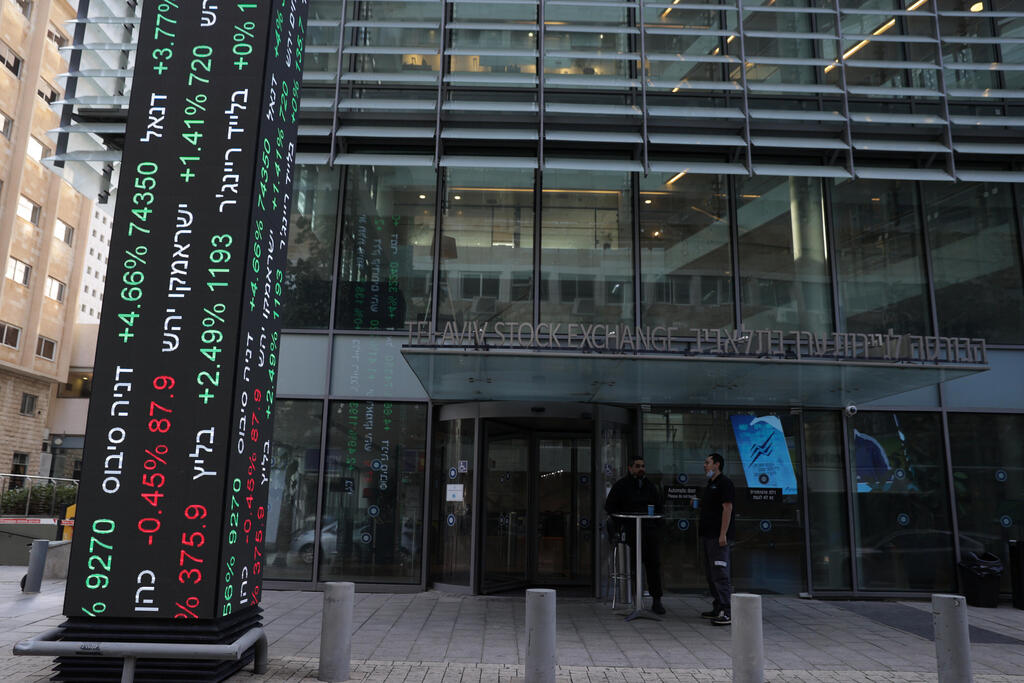
The Tel Aviv Stock Exchange
(Photo: Orel Cohen)
The insurance index jumped 4%, while the broader financial index gained 3.6% and the banking index advanced 3.3%. Real estate stocks climbed 3%, the construction index rose 2.35% and the defense sector index recovered 2.4% after plunging 7.09% on Thursday.
In currency trading, the U.S. dollar continued to strengthen against the Israeli shekel, briefly reaching 3.22 shekels, its highest level since December 2025, before paring gains to trade around 3.19 shekels.
The euro also strengthened, reaching 3.60 shekels before retreating to approximately 3.56.
Friday's rebound followed two consecutive sessions of steep declines on the Tel Aviv exchange.
On Thursday, the benchmark TA-35 index plunged 3.69%, after falling 1.96% Wednesday, bringing its cumulative two-day loss to approximately 5.6%.
The broader TA-125 index dropped 3.38%, while the TA-90 fell 2.23%. Defense stocks suffered the sharpest losses, with the sector index tumbling 7.09%, while the insurance index shed 5.07%.
The sell-off subsequently spread to Wall Street, where major U.S. stock indexes recorded heavy losses Thursday.
The technology-heavy Nasdaq Composite plunged 5.52%, the S&P 500 lost 4.3% and the Dow Jones Industrial Average declined 3.44%.
Technology and semiconductor stocks led the downturn amid growing concerns about a potential slowdown in investment in artificial intelligence infrastructure and possible restrictions on data center construction following Democratic victories in the US midterm elections.
The market turmoil was also reflected in a sharp rise in the Cboe Volatility Index, commonly known as Wall Street's "fear gauge."
The VIX, which measures expected volatility in the S&P 500 over the coming 30 days, surged approximately 70% Thursday to around 28 points, reflecting heightened investor anxiety and uncertainty across financial markets.