

In a matter of months, OpenAI is expected to carry out not only the most important move in its history but also one of the most significant in capital markets: a blockbuster Initial Public Offering (IPO) at a record valuation that could reach $1 trillion. It would mark the moment when the AI revolution sweeping the world over the past three years reaches its defining test.
But as it prepares for this landmark event, the company is grappling with serious structural problems that threaten not only the upcoming IPO and its future but also raise broader questions about the AI ecosystem. According to a Wall Street Journal report, the company has missed internal growth targets for user numbers and revenue increases.
The shortfall is fueling concerns among senior executives and investors about the sustainability of OpenAI’s business model and its ability to generate sufficient revenue to justify its massive infrastructure investments. According to the report, Chief Financial Officer Sarah Friar told other executives she fears OpenAI may not be able to pay for future computing contracts if revenue does not grow quickly enough.
Sources familiar with the matter say ChatGPT’s growth slowed significantly toward the end of 2025, and the company is also facing high user churn. This is partly due to a sharp rise in activity from Google’s Gemini, which has weighed on OpenAI’s growth. As a result, the company did not meet its internal target of 1 billion weekly active users by the end of 2025. It has still not announced that it has reached this milestone, a fact that worries investors. SoftBank’s stock, which holds a 13% stake in OpenAI, fell 9.8% yesterday.
OpenAI also missed its annual ChatGPT revenue target for 2025. Earlier this year, it missed monthly revenue goals, according to sources, due in part to growth from Anthropic in the enterprise market, which has hurt its performance there.
$600 billion in future spending commitments
This situation is particularly challenging given the company’s enormous infrastructure costs required to continue training and running advanced AI models. In recent years, OpenAI CEO Sam Altman rapidly signed deals for data centers and computing capacity. Last year alone, this strategy generated $600 billion in future spending commitments for OpenAI.
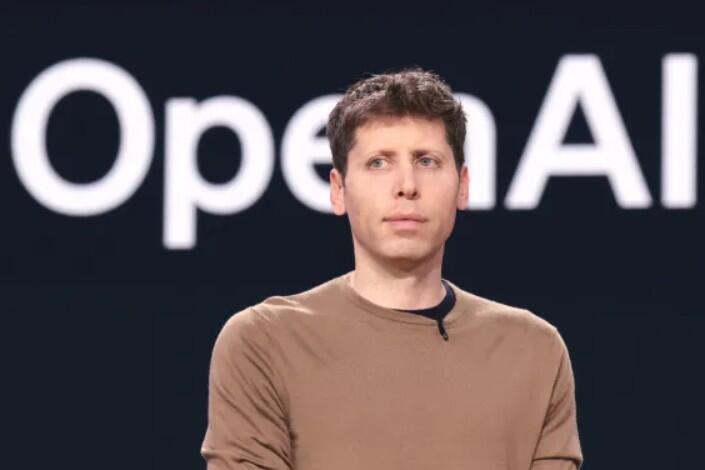
OpenAI CEO Sam Altman
(Photo: AFP)
Slowing growth directly threatens the company’s ability to meet those obligations. As a result, Friar and other executives are pushing for tighter cost controls and stronger financial discipline. According to the report, Friar has also recently expressed reservations about OpenAI’s planned IPO toward the end of the year. In discussions with other executives and the board, she emphasized the need to improve internal controls and warned the company is not meeting the reporting standards required of a public company.
Altman and Friar told the Wall Street Journal: “We are totally aligned on buying as much compute as we can and working hard on it together every day.”
At the same time, OpenAI is also revising its partnership agreement with Microsoft in a move that will reduce near-term revenue but could enable greater long-term income. The change ends Microsoft’s exclusivity over offering OpenAI models and products on its cloud platform.
Microsoft is one of OpenAI’s early investors and has invested $135 billion in the company to date. Under the previous agreement, Microsoft had exclusive rights to offer OpenAI’s technology to its cloud customers, while OpenAI received a share of Microsoft’s revenues from those sales.
However, the relationship between the companies has become more strained due to OpenAI’s rapid growth, its restructuring from a nonprofit into a company preparing for an IPO, and its desire to expand partnerships with other cloud providers to compete with rivals such as Anthropic.
Microsoft and OpenAI
(Photo: AFP)
Against this backdrop, the two companies announced an updated agreement earlier this week that reduces mutual dependence. The most significant change is the removal of exclusivity and revenue-sharing provisions. Instead, Microsoft will receive first access to new OpenAI models and features, unless it chooses to decline them, while OpenAI will be able to offer its technology through other cloud providers.
Microsoft will remain OpenAI’s primary cloud partner and will continue to provide its models and products through at least 2032. The updated agreement also replaces a previous arrangement under which OpenAI would share revenue with Microsoft until it achieved artificial general intelligence (AGI), defined as AI with capabilities comparable to the human brain. Instead, OpenAI will share revenue with Microsoft up to an unspecified cap through 2030, regardless of model progress.
The end of revenue sharing is expected to reduce OpenAI’s near-term cash flow. However, ending exclusivity will allow the company to distribute its products through cloud services such as Google and Amazon, potentially reaching more customers and competing more effectively with Anthropic in the enterprise market.
OpenAI is in the midst of a broader strategic shift aimed at moving its focus from the consumer market to the enterprise sector, similar to Anthropic’s business model, which is seen as more stable and more profitable. Slowing consumer growth and missed revenue targets, which occurred before the shift began, highlight the rationale behind the decision and underscore its urgency.

Claude
(Photo: JRdes / Shutterstock.com)
The revised Microsoft agreement is expected to accelerate this transition significantly and represents an important step in OpenAI’s efforts to stabilize its financial performance ahead of an IPO planned for the second half of 2026. With an estimated valuation of about $852 billion, a record-breaking IPO at $1 trillion or more is possible. But if the company fails to revive its growth metrics and its strategic shift does not deliver quickly enough, the largest IPO in history could still turn into an unprecedented collapse.
Ripple effects would hit Anthropic first
Such a collapse would send shockwaves across the market. The first to be affected would be rival Anthropic. While OpenAI is currently under pressure, Anthropic has become a market favorite. Its decision to focus on the enterprise sector and avoid costly consumer-facing products such as image and video generation tools in favor of coding and business applications has made it the preferred solution for organizations. Compared with the consumer market, enterprises are willing to pay higher prices for AI access and the company is believed to have a significantly better revenue-to-cost ratio than OpenAI. Struggles or even a relative failure in the IPO could weigh on Anthropic as well or alternatively give it a boost if investors conclude it avoided the pitfalls its rival fell into.
More broadly, a disappointing OpenAI IPO could dampen sentiment across the sector, reduce company valuations and limit fundraising capacity. This could trigger a cascade effect leading to a wave of failures, mergers and acquisitions that leaves a much smaller market.