


The deal between Israeli AI company Decart and U.S. AI giant Anthropic, which is expected to be signed soon, will go down as one of the phenomenal achievements of Israeli high-tech. Not necessarily because of the acquisition price, based on an estimated valuation of $7 billion, which is certainly impressive, but because Anthropic intends to transfer a significant part of its operations to Israel and place Decart’s teams at the heart of the effort to develop what is considered the golden fleece of AI: artificial general intelligence, or AGI.
In two years, Decart has managed to raise a series of major funding rounds, become Israel’s first AI unicorn and is now set to be sold for $7 billion.
Gallery
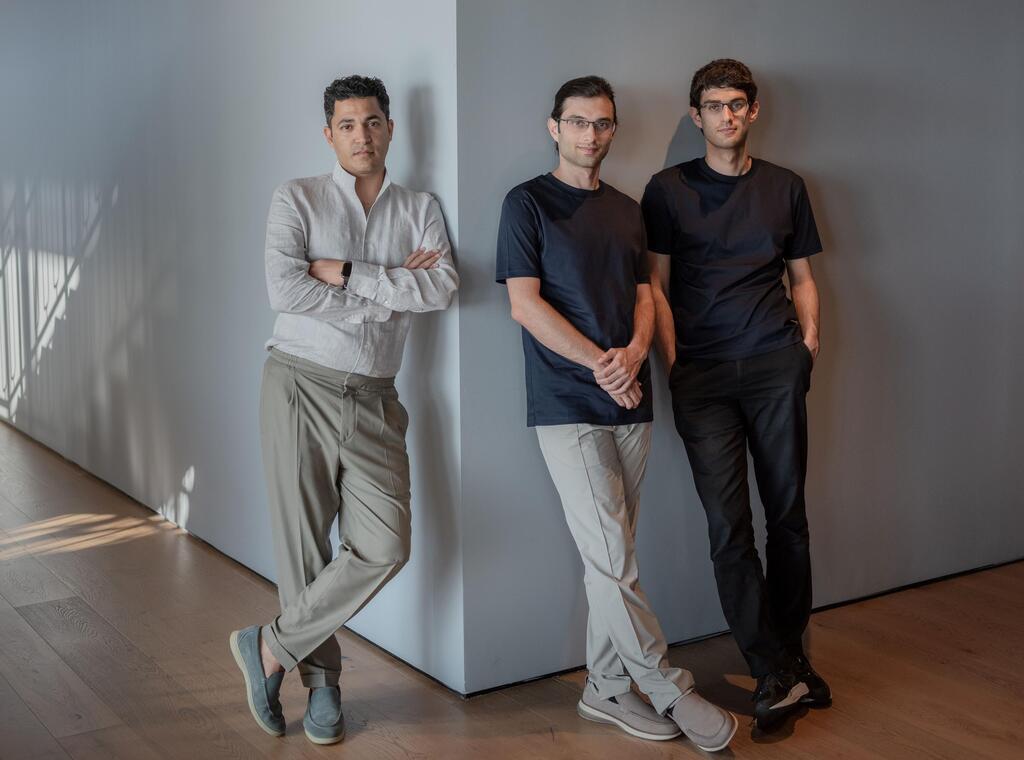
Decart founders, from right, Orian Leitersdorf, Dean Leitersdorf and Moshe Shalev(
(Photo: Amit Elkayim)
Decart was founded at the end of 2023 by Dr. Dean Leitersdorf, 28, and Moshe Shalev, 39, who met during their military service in Unit 8200. Later, Dr. Orian Leitersdorf, Dean’s younger brother, also joined the founders. The Leitersdorf brothers, descendants of the well-known business family also known for its ownership of Tel Aviv’s Shalom Tower, are considered two of the brightest minds to emerge from the local high-tech industry. At 23, Dean Leitersdorf became the youngest Israeli to complete a doctorate at the Technion — a record recently broken by his brother Orian.
According to estimates, the three founders hold more than 60% of the company’s shares. If the deal is indeed signed at $7 billion, each founder’s share in the deal will be about $1.5 billion. They will not receive most of the money in cash, but through shares in Anthropic, which is expected to begin trading on the New York Stock Exchange in the coming year in one of the largest and most intriguing IPOs in Wall Street history.
The AI giant’s biggest acquisition
In recent days, ynet revealed just how much artificial intelligence has intensified in the field of cyber, and how the dangerous cyberattacks it carries out on its own have spun out of control. That event is only the preview for the capabilities of artificial general intelligence when it emerges into the world. This is “superintelligence,” artificial intelligence smarter than all humans, which could achieve revolutionary breakthroughs in medicine and science, but could also perhaps lead to the destruction of the human race, as leading AI experts around the world have warned.
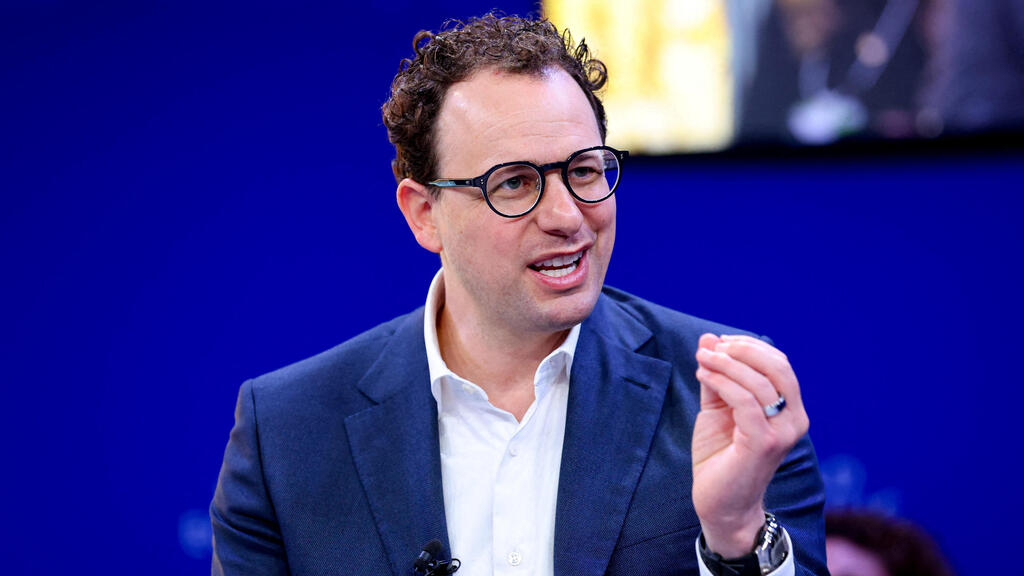
Anthropic CEO Dario Amodei: 'It isn't over 'til it's over'
(Photo: Denis Balibouse/Reuters)
For Anthropic, the acquisition of Decart is the largest in its history. This shows just how decisive the technology developed by the Israeli company could be for Anthropic in its attempt to win the race to AGI. The deal is no less significant for Decart: Unlike perhaps other potential buyers, acquisition by Anthropic will allow Decart to become a central axis in the defining event of the current era and to influence the world technologically, economically and socially.
Decart has such technological depth that even the most advanced company in the AI world in Silicon Valley believes it can help push AGI forward as quickly as possible. The danger of AI’s growing power, the early signs of which we are seeing today, has concerned Anthropic from its first day. Decart will also have something to contribute to Anthropic on that front.
Anthropic is competing in the race to AGI against other companies such as OpenAI, Google, Meta, Elon Musk’s SpaceX and a long and worrying list of Chinese companies. Decart’s technology enables the acceleration of the AGI development process. Whoever wins the race will largely control the future directions of human development. Decart’s people will be there, and they will also take part in the ethical decision-making.
The acquisition of Decart and Anthropic’s entry into activity in Israel could herald a new era for the Israeli AI industry. Israeli high-tech discovered AI too late, and the few companies that operated in the field did not manage to leave their mark on the global industry. Decart was one of the first companies in a new wave of Israeli AI companies seeking a way to break into the global market. Anthropic’s entry into Israel could become the anchor around which the Israeli AI ecosystem grows and a magnet for additional international companies to open research and development centers here.
Unlike other startups, Decart had millions of dollars in revenue within a few months of its founding, thanks to technology that significantly accelerates AI processing speed. That technology, intended to serve as the basis for much broader capabilities later on, is of particular interest to Anthropic. With its help, the company will have a significant advantage over other AI giants in lowering the cost and expanding its AI tools for customers.
Decart developed its AI models on its own and trained them using its own data. The constant improvement in the quality of its models gave it the ability to optimize training processes, and later inference processes — the main product sold by companies like Anthropic. This is the technological depth that allowed Decart to surprise the world, even Elon Musk, who responded “wow” when he saw Decart’s video model, which can generate continuous video using AI, unlike competitors’ eight-second videos or slightly longer clips.
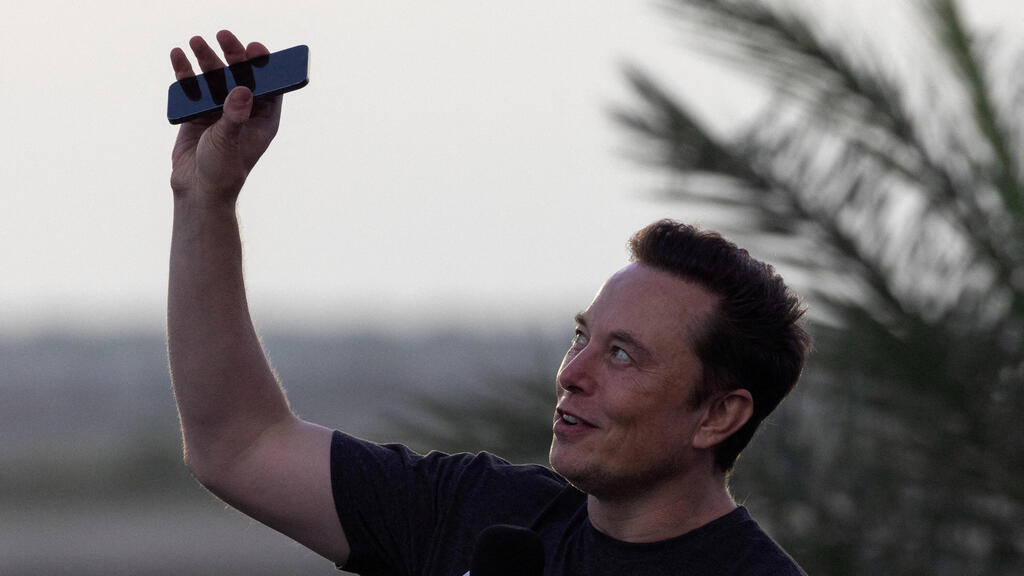
Elon Musk
(Photo: Adrees Latif/Reuters)
Behind Decart’s innovation is a team of engineers with expertise in engineering and optimization of complex systems. Many team members come from advanced technological units, including Unit 8200, and specialize in low-level programming, development of high-performance computing systems and optimization for GPUs and dedicated chips. This workforce is one of the elements attracting Anthropic to the emerging deal.
Decart has become one of the most sought-after companies in recent months. A series of companies expressed interest in acquiring it, some of them submitting glittering price offers. According to various reports, the bidders included Nvidia, Google - which only recently acquired Israel’s Wiz for $32 billion, Elon Musk’s SpaceX, Amazon and server farm company Nebius. Decart is keeping all options open — 'It isn't over 'til it's over', as they say in America.
Following in Mellanox’s footsteps
One of the questions that remains open is why Decart chose the path of selling to another company rather than listing shares on Nasdaq and preserving its independence as an Israeli company. The explanation may lie in the fact that, despite all the innovation developed at Decart, the company did not build a significant consumer market. It presented surprising capabilities, but not product-market fit. The deal with Anthropic represents great interest in Decart’s technology, but less in its customers. In that sense, Decart is following the path of Mellanox, for example, which was sold to Nvidia, or Annapurna, which was sold to Amazon, rather than the path of Israeli companies that chose to go public on Nasdaq and remain independent.
Another significant player is involved in the decision on a sale deal and in the negotiations between Decart and Anthropic: the giant venture capital fund Sequoia Capital, the company’s largest investor. Sequoia has led Decart from the beginning through a series of huge investments, and also paved its business path through its extensive connections in the U.S. It is reasonable to assume that Sequoia has a central role in the decision on when to sell the company and to whom.
The timing of the deal may depend on another factor: Anthropic’s intention to launch an IPO on Nasdaq in September. According to some estimates, the company’s valuation could reach $2 trillion. The value Nasdaq investors assign to Anthropic’s shares will be heavily influenced by such a deal to acquire Decart. They may, for example, be impressed that Anthropic is presenting technology capable of helping it absorb the growing demand for its Claude chatbot services, thereby saving billions of dollars in cloud infrastructure and shortening response times.
Market estimates suggest that publication of Anthropic’s prospectus ahead of the IPO is currently being delayed because of the wait for the deal to be finalized, but it appears that the final announcement on the signing of the deal is very close.