

A book printed and bound in just 30 seconds, without warehouses, large print runs or thousands of shekels in upfront costs. That is the promise behind a new Israeli publishing initiative that aims to change how books are produced, sold and distributed, while potentially allowing independent authors to earn as much as 90% in royalties.
The project brings together Israel's Getter Group and Jerusalem-based Bookpod, an online bookstore and publishing platform working with more than 3,000 authors. The companies are introducing an automated print-on-demand system capable, they say, of producing a finished book in as little as half a minute. The technology will be unveiled in Israel at ISPRINT 2026, the printing and digital production exhibition taking place November 3–4 at Expo Tel Aviv.
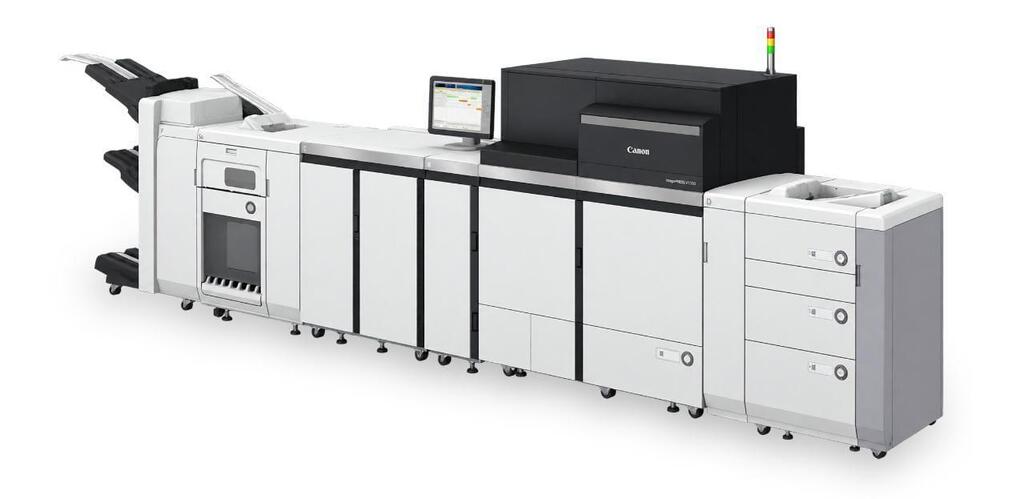
The concept is straightforward: instead of printing hundreds or thousands of copies in advance, books are produced only after customers order them. Paper enters one end of an automated production line, and a printed, bound book emerges from the other. The process eliminates the need for large inventories, reduces storage costs and allows publishers to offer titles that might otherwise be financially unviable to keep in print.
The approach builds on a model popularized internationally by Amazon's Kindle Direct Publishing platform, which opened new opportunities for independent authors. Traditional publishing frequently requires substantial upfront investment in printing, distribution and storage, with authors receiving only a fraction of the retail price. Print-on-demand removes much of that financial risk by allowing a book to remain available digitally until someone purchases a physical copy.
But the Israeli initiative is not focused solely on printing speed. Bookpod is promoting a business model that offers independent authors up to 90% in royalties, potentially allowing writers to earn NIS 40–50 per book sold, depending on the price and applicable costs. Such earnings would represent a significant departure from conventional publishing arrangements, although the actual financial benefits depend on production expenses, sales volumes and how royalties are calculated.
Bookpod, which describes itself as Israel's fourth-largest online bookstore after E-vrit, Steimatzky and Tzomet Sfarim, already works with established publishers including Yedioth Books, Magnes Press and Tzameret. Alongside its independent authors, the company has introduced a publishing package combining printed books, e-books and audiobooks, giving writers multiple ways to reach readers without relying exclusively on traditional bookstore distribution.
Behind the production process is advanced digital printing technology from Canon, including its imagePRESS V1350, a commercial color printer capable of producing up to 135 pages per minute at a resolution of 2,400 by 2,400 dpi. According to the manufacturer, the machine supports monthly production volumes of up to 1.2 million pages and has an estimated operating lifespan of up to 72 million sheets. Combined with automated binding and finishing equipment, the system is designed to deliver commercially printed books without the need for conventional large-scale production runs. The companies say production times will vary depending on each book's specifications.
For independent writers, the potential benefits extend beyond lower costs. Authors could publish smaller editions without committing substantial savings, while publishers could keep older titles available without maintaining stock. Academic institutions, professional publishers and educational organizations could also update books digitally and print revised versions as needed. Producing only what customers purchase could reduce unnecessary paper consumption, waste and the transportation of unsold books.

Israela and Gil Stier
(Photo: Konstantin Grossman)
The technology is among the innovations scheduled for display at ISPRINT 2026, organized by Stier Group. The exhibition will feature companies including Getter Group, Mafil Group, Canon, Epson, HP and Ricoh, with demonstrations covering digital printing, automation, artificial intelligence and industrial applications ranging from textile printing to vehicle branding and printing on glass, metal, plastic and wood.
"The printing industry is undergoing a significant technological transformation, and the boundaries between printing, design, branding and manufacturing are becoming increasingly blurred," said Gil Stier, CEO of Stier Group. "ISPRINT gives professionals and industry leaders an opportunity to discover new technologies and business opportunities, while the integration of the packaging conference strengthens the connection between innovation, industry and design."
The exhibition will also host PackNavigate 2026 on November 4, in cooperation with the Manufacturers Association of Israel and the Israel Packaging Institute. The conference will address sustainability, European packaging regulations, changing consumer behavior and emerging industrial technologies. Speakers will include Luciana Pellegrino, president of the World Packaging Organisation, alongside Israeli industry executives. The event will conclude with the Israel Star 2026–2027 packaging innovation awards.
For Israel's publishing industry, however, the most significant question is whether faster, more flexible production can translate into a genuinely better business model for authors. The technology promises to remove some of the financial barriers that have long discouraged independent publishing, but its success will ultimately depend on printing costs, consumer demand and whether writers can reach enough readers to make the economics work. If those challenges can be overcome, the real breakthrough may be less about producing a book in 30 seconds and more about giving its author a larger share of every sale.