

Nearly two weeks after the campaign against Iran began and Hezbollah joined the war, chef Itay Hasson and his wife Gal planned to reopen their restaurant, “300 Gram.”
They founded the business more than a decade ago in the moshav of Betzet on the Lebanon border, which has since been evacuated of residents. In July 2024, they relocated it to the moshav of Bustan HaGalil. Last Sunday, after calling employees back and preparing to finally welcome local residents seeking a bit of routine and “normalcy,” they received devastating news: evening shift manager Or Damari was killed by Hezbollah fire while rescuing a tank in southern Lebanon.

“Or started working for me at 15 as a dishwasher. He grew in the kitchen, became a cook and eventually the evening shift manager,” Hasson said, describing him as “a loving kid, amazing and hardworking, who was loved by everyone.”
The restaurant’s reopening was postponed again, and only last Thursday did they finally open their doors in order to support their employees’ livelihoods and provide a place for residents seeking a brief escape at the popular restaurant, known for its affordable prices and distinctive meat dishes.
“I won’t deny it’s very difficult for us that another front has opened here again, just as we had started getting used to routine and recovering, and we so hoped there would be quiet,” Hasson said. “I believe the state will take care of us and compensate us. The government understands that in a situation like this it needs to open its wallet so we can keep our heads above water. I also hope the government and the military won’t listen to the complainers and will do whatever is necessary to make sure this war is the last, so we can live here with real security.”
‘All the groups canceled’
At the Druze kosher restaurant “Noor” in the village of Julis, owner Basma Hano opened on Friday and prepared takeaway orders as part of a special offer meant to encourage families confined to their safe rooms. For 200 shekels, she offers a full meal for four diners: lamb mansaf, tabbouleh salad, kubbeh, meat sambousek and more.
“It’s very difficult. Look at my calendar — all the groups and events until April have been canceled. I’m afraid the war will continue into April and it will take time before travelers return,” she said.
“I want to make a living and keep my employees, so I open, but there are almost no guests. Only a few people come because most are afraid to go out because of the sirens.”
During the war, thousands of meals were sent from Hano’s kitchen to soldiers. In their honor, she even made the restaurant kosher and has since maintained a kashrut certificate.
“I get many requests from soldiers who fought here a year and a half ago and are now returning to the war and asking for treats, but I can’t fund everything myself anymore. I prepare food for them with all my heart, but it costs money.”
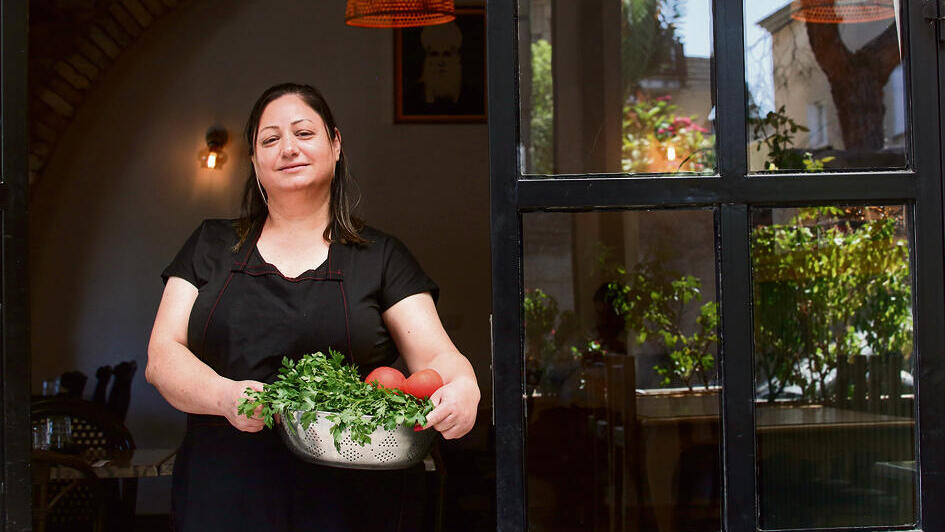
Basma Hano, owner of 'Noor'
(Photo: Ryan Preuss)
‘They won’t break me’
At Kibbutz Kfar Giladi on the Lebanon border, a food truck complex was set up in recent months but has been closed since the current campaign began.
Mozi Anidjar, owner of “ConPapa,” a well-known burger spot that recently moved there from Merom Golan, announced last Wednesday: “They won’t break me! I’m not counting on compensation from the government. If I can’t open the business there, I’ve brought the business to my home.”
He left the large food truck in Kfar Giladi and brought the smaller one back to Merom Golan, parking it near his house. From there, he serves local residents and reserve soldiers.
“I wish I could give them food for free like I did at the start of the war,” Anidjar said with frustration. “I lost tens of thousands of shekels back then, but the fighters were happy and it encouraged them. Now I treat them to free fries, and I know that even if I charge, they’re happy to have a place with food that’s different from what the army offers.”
‘We’ve been stopped again’
Another place hit hard is “Dafnela,” a new commercial complex at Kibbutz Dafna that opened just three months ago after a 16 million shekel investment.
Complex manager Doron Medina said: “The complex was supposed to open in October 2023. Because of October 7, the opening was delayed by more than two years, and now there’s another war. Today, only two businesses are operating here, both takeaway only: the burger restaurant and the ‘Julaan’ café. They operate without outdoor seating because our warning time is zero. People order in advance and just come to pick up. The problem is that we have shelters and protected spaces in the complex, but we have no warning time — only a few seconds, and sometimes the impact happens at the same time as the siren.”
According to Medina, “I’m arguing with my tenants about their desire to open for takeaway, because even that is dangerous. Even if customers aren’t sitting down, with zero warning time just coming here exposes them to danger. If three military Humvees arrive, even just to pick up food, it’s still a risk.
“On the other hand, the tenants say: ‘Do you know how hard it is to restart a business? To bring employees back, create a working cash flow again, get the refrigeration rooms running.’ We’re still arguing about it. I’m not saying I should get money because I stayed in the kibbutz — I’m an employee — but for the self-employed? The situation isn’t good. I’ve spoken with quite a few businesspeople and restaurant owners. It was very difficult to restart everything from scratch, and now we’ve been stopped again. The problem is that this time businesses in the north have no breathing room after two years of war.”