

The world of crypto has always appeared to the general public like a wild roller coaster: coins such as Bitcoin soar and crash by dozens of percentage points within days, making them perhaps a speculative investment instrument, but unsuitable for everyday payments at the supermarket or online. But what if it were possible to enjoy the technological advantages of blockchain without the fear that the value of your money would be cut in half by morning?
This is where stablecoins enter the picture — a growing global market that the Finance Ministry and the Capital Market Authority have now decided to regulate officially in Israel, as part of a draft law on the issuance of stable digital currencies circulated earlier this week. How does it work, what will it do to the way we transfer money, and what does it mean for all our wallets? Calcalist breaks it down.
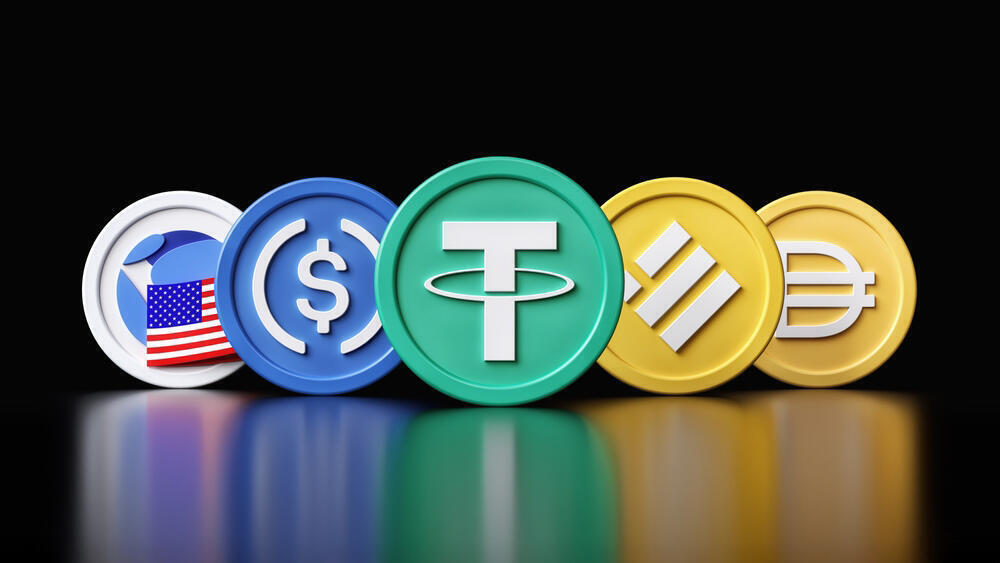
What is a stablecoin?
Stablecoins are digital currencies whose value is pegged to a recognized major currency, such as the shekel or the dollar, at a fixed 1-to-1 ratio. The peg is meant to maintain stable value and prevent sharp fluctuations. The main difference between them and ordinary money is that they are issued by private entities and managed on blockchain networks, not by a central bank.
Think of the regular banking system as a ledger kept in the bank’s safe, so only the bank can see and update who transferred money to whom. Blockchain, by contrast, is like a huge digital ledger open for everyone to see, with an identical copy duplicated and synchronized simultaneously across thousands of computers around the world. Every time a transfer is made, all the computers on the network check and approve it together, creating a system in which it is very difficult to forge or alter data. Because this ledger is managed by the computer network, not by a central bank or credit card company, the system operates nonstop and enables money to be transferred directly from wallet to wallet within seconds.
Why is this move significant?
Until now, the crypto and coin issuance sector in Israel has operated largely in a regulatory gray area. Publication of the draft law creates, for the first time, clear rules of the game, a licensing framework and close supervision requirements for private companies seeking to issue such currencies in Israel. It is a step that signals the sector’s move closer to the regulated financial mainstream.
What can the average consumer do with a stablecoin?
These currencies make money faster and cheaper in three main ways. The first is instant money transfers abroad. Sending money to relatives or suppliers overseas can be done within seconds, 24 hours a day, seven days a week, at lower costs and without having to wait days for bank approvals.
The second is stronger security for online purchases: payment on e-commerce sites without the need to expose credit card or bank account details, while businesses also save on the clearing fees they pay to traditional financial institutions.
The third is turning money into "smart" money — in other words, programmable money. For example, it will be possible to set up payment in advance for a product, but have the money released and transferred to the seller’s account only when the delivery company digitally updates that the package has actually been delivered, without the need for an intermediary.
"Today, transferring money through the regular banking system involves high costs and takes time. This model makes it much cheaper and effectively turns the transfer into an immediate one. It’s just like sending a WhatsApp message or transferring a file — you’re not sending an instruction that has to undergo validation and approvals along the way; you’re simply transferring the file itself," Eli Tubul, senior deputy commissioner at the Capital Market Authority, who is responsible for advancing the regulation, told Calcalist.

Eli Tubul, senior deputy commissioner at the Capital Market Authority
(Photo: Streame)
"When we look at the uses on the ground, this is an entirely new infrastructure for transferring assets, providing an alternative to old systems such as SWIFT and bank transfers. Even today, there are entire companies, such as Papaya Global, that enable salaries and supplier payments to be received in stablecoins in order to bypass the limitations of the traditional banking system," explains Youval Rouach, CEO of Bits of Gold, which recently received a license to issue the shekel-denominated stablecoin Bils.
"Beyond that, it opens the door to continuous foreign currency trading. Today, a retail customer can trade between the shekel and the dollar only about 40% of the time because trading closes in the evenings and on weekends, while blockchain operates 24/7 and enables continuous trading between the shekel-based Bils and the dollar-based USDC.
"It is also programmable money that provides escrow solutions without the need for an escrow agent. For example, at a Bank of Israel hackathon, we presented a model for buying a car in which the money sent by the buyer is released and transferred to the seller automatically only after digital confirmation is received that the car has been registered in the buyer’s name. Within three to five years, this infrastructure will also enable agentic payments — a situation in which artificial intelligence agents communicate with one another and carry out actions, purchases and micropayments for us completely automatically."
What is the economic benefit of this move?
Regulating the market has the potential to encourage competition with the banking system and credit card companies, lower barriers to entry for technology companies and fintech firms, and attract foreign investment to Israel. In addition, these currencies are expected in the future to operate alongside the digital shekel being developed by the Bank of Israel, together forming a dynamic, cheaper and advanced payments system for the entire economy.
While a stablecoin is issued by a private entity, such as a fintech company, the digital shekel is an official technological version of the cash we know, to be issued and managed directly by the state through the Bank of Israel. Although they come from different sources, both types operate on the same advanced digital infrastructure. This means they "speak" the same technological language and will be able to operate together in full synchronization. In the future, the hope is that a dynamic, cheap and advanced payments system will emerge, allowing consumers at any moment to choose the tool that is most worthwhile and convenient for them.
What is happening globally in this field?
Israel is not reinventing the wheel. The new rules in Israel are based on international standards, including U.S. legislation, the GENIUS Act, and the European Union’s MiCA regulations. More than 200 stablecoins already operate worldwide, with a total value of more than $300 billion. Their monthly activity volume reaches about $2 trillion, with annual growth of more than 40%.
Which companies are already licensed in Israel?
As of today, there are nine license holders in Israel authorized by the Capital Market Authority to provide financial services in digital assets. Entities that have received licenses in recent years include Bits of Gold, the crypto exchange Bit2C and eToro.
Who guarantees that the private company that issued my coin won’t disappear with my money?
That is precisely the purpose of the law. "For an entity issuing a stablecoin to truly be able to commit that the value remains stable at one-to-one, it must manage the backing assets according to standards of full 100% backing. The assets themselves must be liquid and very low-risk, with the vast majority held in cash deposits or short-term government bonds," Tubul said.
In other words, to receive an issuance license from the Capital Market Authority, private companies will be required to meet threshold conditions, including a significant minimum equity requirement as a safety cushion, alongside corporate governance, cybersecurity and risk management mechanisms.
The core of the supervision will focus on management of reserves: companies will be required to completely separate the backing assets — shekels or dollars — from their operating capital, hold them in trust accounts and invest them only in solid and liquid channels, such as short-term bank deposits or government bonds. In addition, supervision will require full transparency through periodic audits by accountants and will enshrine in law the consumer’s right to convert the stablecoin back into regular money at any time, without delay and at full value.
"Alongside the important progress the draft brings, in its current wording it still has not solved the tax issue, and that is a major challenge. Today, because a stablecoin is defined as an asset, converting it may create a taxable event on paper, even if the profit is absolutely zero. It may need to be reported, and in some cases the company may even be required to withhold tax at source from the proceeds. Without a solution and an interministerial decision, this is something that will leave the sector behind," Rouach said.
When will all this actually happen, and when will we start seeing official stablecoins in Israel?
"Work on the draft took more than a year, and from here we enter the legislative process of three readings in the Knesset. There is still a way to go before we can grant licenses officially. But we are not waiting for the end of the process. We are already operating, within the framework of our authority, a sandbox, or regulatory testing environment, wherever possible, in order to study the field and not halt the development of the market," Tubul said.