

The sharp surge in oil prices following the war between Israel and Iran pushed a leveraged inverse exchange-traded fund managed by Israeli asset manager KSM Mutual Funds into the unusual position of having a negative net asset value.
The incident does not reflect the wipeout of massive sums — the fund managed less than 1 million shekels ($320,000) as of Monday morning — but it offers a glimpse into what happened to investors who aggressively bet on falling oil prices.
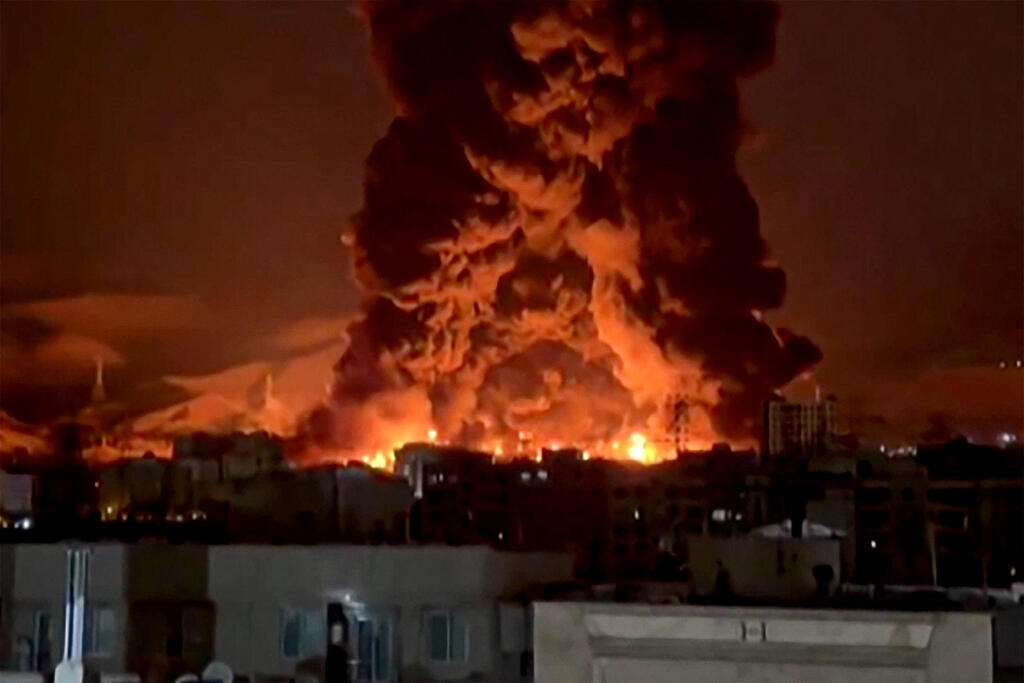
Oil depot in Tehran engulfed in flames after Israeli strike
(Photo: AFP - SOURCE: UGC / UNKNOWN)
KSM Mutual Funds, part of the Phoenix Group, said it would halt trading in the “KSM ETF Leveraged Short Bloomberg Brent Crude Futures x2 Monthly” after the fund’s net asset value turned negative.
The ETF was designed to deliver twice the inverse return of the oil benchmark that tracks the price of Brent crude. The passive fund follows a formula that generates a return of minus 200% of the change in the oil price. In practice, a $1 decline in oil prices would generate a $2 gain for investors, while a $1 increase would produce a $2 loss. Investors who bought the fund were therefore effectively seeking leveraged exposure to a bearish bet on oil.
In recent days, however, the war with Iran — which has led to the closure of the Strait of Hormuz, one of the world’s main oil shipping routes — sent oil prices soaring from about $83 per barrel to roughly $104. On Monday alone, prices jumped another 11%, reaching their highest level since June 2022. The spike followed Israeli Air Force strikes on three Iranian oil facilities.
Energy markets estimate that damage to Iran’s oil infrastructure could disrupt global supply, as Iran is one of the world’s largest oil exporters. Amid the geopolitical escalation, oil prices have already climbed about 38% since the start of the year — an especially sharp move for investors holding leveraged short positions in the commodity.
KSM’s ETF is relatively small and managed less than 1 million shekels in assets as of Monday morning, suggesting that the appetite for aggressively shorting oil was limited among investors. While the financial scale of the incident is modest, it illustrates the high risks embedded in leveraged products of this type.
Once the oil index crossed the level of 1,912 points, the fund’s net asset value became mathematically negative. The fund manager subsequently submitted an urgent request to the Tel Aviv Stock Exchange and the Israel Securities Authority to suspend trading in the ETF and cancel trades and share creations executed during the trading day.
According to the fund manager, the extreme volatility in oil prices amid the war could leave the fund with a negative net asset value by the end of the trading session — even if the oil index later moderates and the fund’s value theoretically returns to positive territory.
Unlike a conventional equity investment, where the maximum loss is limited to the amount invested, short exposure can generate losses exceeding the initial investment. In KSM’s case, the mechanism is not based on borrowing securities but on the use of futures contracts tied to the Brent crude benchmark.
The fund establishes a short position in those futures — effectively selling oil futures and profiting if prices decline. If oil prices rise, the position generates losses. Futures trading operates through a daily mark-to-market mechanism, in which gains or losses are recorded each day.
To maintain continuous exposure to oil prices, the fund also rolls its position from one contract to the next each month, closing the nearest contract before expiration and opening a new short position in the following contract.
Because the ETF is leveraged two times, it seeks to generate an inverse return of about 200% of the change in the oil index. Arithmetically, this means that a price increase of more than 50% over a short period could push losses beyond the fund’s equity — leaving its net asset value negative.
As of the end of January, KSM — managed by Avner Hadad — was Israel’s largest mutual fund company, with about 122 billion shekels ($39 billion) in assets under management across active mutual funds, ETFs and money-market funds.
Alongside the leveraged inverse ETF, KSM also operates two funds providing standard exposure to oil prices: KSM ETF (4D) Bloomberg Brent Crude Futures, which has risen about 39% since the start of the year, and KSM ETF (4A) Bloomberg Brent Crude Futures Currency-Hedged, which has gained about 44% over the same period.