


Bank of Israel projections released Monday sketch an unusually optimistic picture for Israel’s economy in 2026 and 2027, pointing to strong growth, rising living standards, low unemployment and subdued inflation, provided there is no renewed war and the government maintains budget discipline.
The forecast, published by the central bank’s research department, builds on an already positive outlook issued in September and adds what economists described as a significant dose of further optimism.

According to the projections, real economic output is expected to grow by nearly 10% over the two-year period, or about 8% per capita. The private standard of living for the average family is forecast to rise by 13%, a sharp increase that would erase most of the stagnation experienced during the war period. Productive real investments, seen as a critical engine of growth, are projected to jump by 21%, an unusually high figure by historical standards. Unemployment is expected to remain very low, at about 3.3% of the labor force, while the employment rate is forecast to climb to a record 81%.
Despite an election year, the government is projected to rein in its deficits, with the debt-to-GDP ratio remaining below 70%, easing concerns among investors. As a result, Israel’s perceived risk premium among foreign investors is expected to fall to negligible levels. Inflation, the central bank said, is forecast to be restrained in 2026 and 2027 to below an annual rate of 2%, paving the way for additional interest rate cuts.
The only notable weak spot in the outlook is foreign trade. The forecast envisions a deterioration in the trade balance, as imports surge and exports struggle to expand. Even so, the bank said Israel’s foreign currency reserves are expected to continue growing. Bank of Israel Gov. Amir Yaron said the realization of the forecast hinges on two main conditions. “In short, it depends on the absence of war,” he said. “In slightly longer terms, on the absence of war and a responsible budget.”
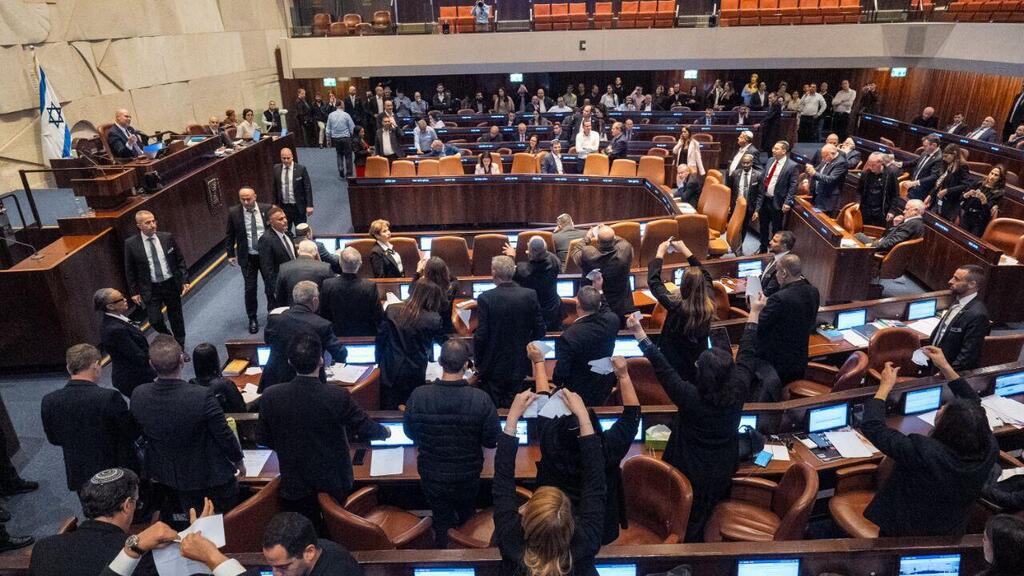
(Photo: Shalev Shalom)
Calm along Israel’s borders would allow a reduction in defense spending, the release of reserve soldiers back into the workforce and a shrinking government deficit, he said. A responsible budget would enable resources to be redirected away from coalition spending and policies that encourage draft avoidance, toward investments in infrastructure, transportation and artificial intelligence.
The economic outlook also carries political implications ahead of a future Knesset election. If economic, fiscal and employment trends in 2026 unfold as projected, including real wage growth and low inflation, and if economic conditions influence voter behavior, the impact could be significant. The central bank’s “super-optimistic” forecast underpinned its unexpected decision to cut interest rates again this month by 0.25 percentage points, a move that surprised most financial market analysts.
The bank has shown little concern over public complaints about the cost of living, arguing that when wages rise faster than prices, as they did last year and are expected to do again this year, such concerns do not signal economic distress. The governor said the bank also closely examined credit trends among households and businesses and found no cause for alarm. The rate cut, the bank said, is intended to further support economic growth and ease the burden on borrowers.