

As war rages on in Israel’s south and uncertainty looms over the nation’s economic outlook, one corner of the tech ecosystem is signaling resilience—and even growth. Ed Frank, CEO and founder of Axis Innovation, is preparing for the 12th annual Axis Tel Aviv conference, a boutique international gathering that has become one of the most influential tech events in the country.
Speaking with Ynetnews ahead of the conference, Frank is upbeat. "This is the 12th year that we've been doing this," he says, "and we're really focusing on bringing international investors and corporations to Israel to connect with startups." But 2025 is different. "With the war, it's a lot harder than it's been."
Gallery
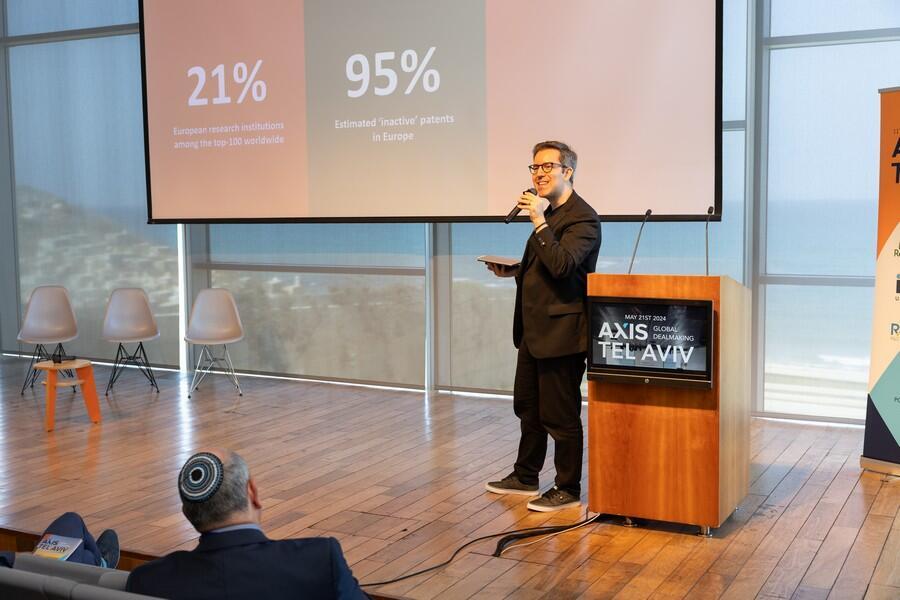
Select startups invited to pitch to panels of investors and corporate leaders at last year's Axis Tel Aviv event
(Photo: Liliya Mamina/Axis Innovation)
Even so, Axis Tel Aviv has continued to grow, with over 150 startups participating and around 30 confirmed international guests—surpassing last year’s turnout, which came just six months after October 7.
However, Axis Innovation isn't trying to be another sprawling expo. The event is capped at 300 attendees, an intentional decision designed to foster genuine connections and facilitate real deals. “We’ve kept our events small because we want deals to happen, not just put on an event for our sponsors,” he says. “We see ourselves more as dealmakers than as event producers.”
To accommodate those unable to attend in person, Axis Innovation has expanded its reach beyond Israel. “We realize that not everybody can come to Israel, so we have a second conference in New York,” Frank explains. “In January, we had more than 35 multinationals and about 40 investors. Some of those people are coming now because they realize that Israeli tech is really important for them, but a lot of large corporations have travel restrictions, so it is harder.”
Unlike typical tech expos, Axis Tel Aviv puts the startups front and center. “Our conference is more about the startups pitching, hearing from the investors and having them interact, rather than just having a conference where there are a lot of talking heads on stage,” Frank says.
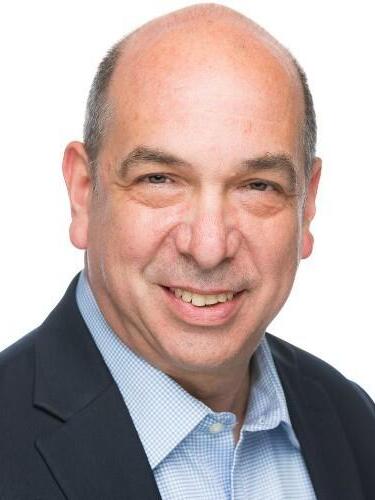 Ed Frank Photo: Courtesy of Axis Innovation
This year’s program highlights four areas of Israeli strength: dual-use technologies, sustainability, manufacturing and artificial intelligence. In each track, selected startups will present to expert panels of investors and corporate representatives. The conference will also host the Israeli qualifier for the Startup World Cup, a global competition by Pegasus Tech Ventures that awards a $1 million investment to its winner.
“We did a lot of research on the companies that won the competition and we've chosen companies that were the right stage, in the right area—ones we believe could possibly change the world,” Frank explains.
While international interest hasn’t faded, Frank says the nature of that interest has evolved. “We focus a lot on corporate innovation and corporate VC, called CVC, and those corporations are still very, very strong and interested in the show,” he explains. “But one shift I did notice is that while these corporations still see Israeli startups as critical to them, they don’t want to publicize it. They don’t want people to travel here, and they don’t want to do newspapers—but they still want to make those investments and deals.”
Venture capital firms, especially smaller ones, are more agile. “It’s a little easier to get VCs here because they’re small businesses—just a few people—and if they want to fly here, they fly here,” he adds. “Corporations, on the other hand, have risk departments, insurance issues and they just can’t get approvals to fly here. So that’s been a big issue.”
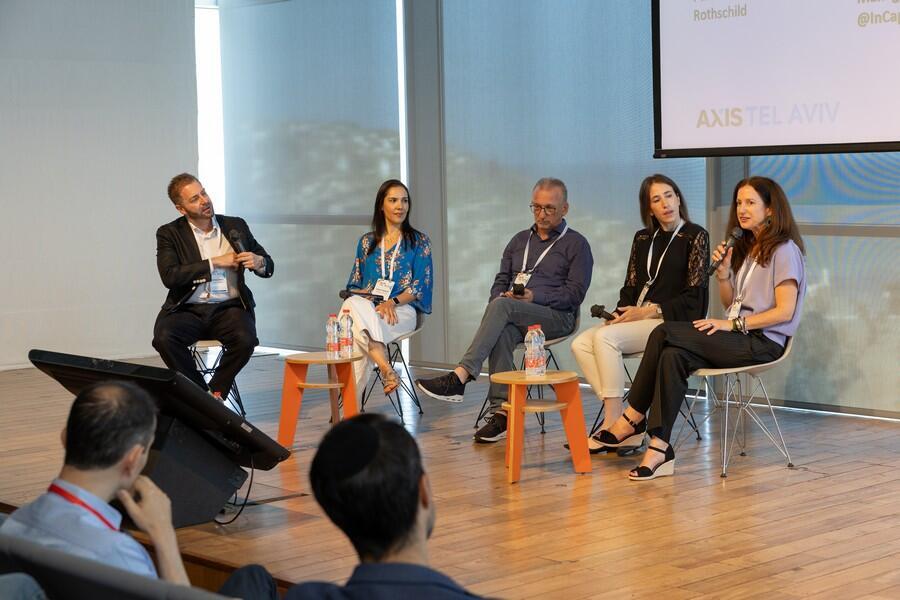
Select startups invited to pitch to panels of investors and corporate leaders at last year's Axis Tel Aviv event
(Photo: Liliya Mamina/Axis Innovation)
He also notes an uptick in activity from Jewish investors. “I’ve seen a lot more activity from people, especially Jewish investors, who realize now they need to double down on Israel and show support. Even after the Wiz exit and this constant flow of exits, investors still realize that Israeli companies are a good investment for them.”
With limited travel options, much of the engagement has shifted online. “We have one Israeli company that we introduced to a large energy company from Europe, and the pilots aren’t in Israel—they’re all outside the country,” Frank says. “They just came back from Italy, where they met with a large energy company and are in the middle of a pilot. Next week, they’re going to another pilot in France. So they're Israeli companies, but the pilots are all over where the customers are.
Get the Ynetnews app on your smartphone: Google Play: https://bit.ly/4eJ37pE | Apple App Store: https://bit.ly/3ZL7iNv
In that sense, the Israeli startup advantage remains intact. “There’s no strong need for them to be based here or to come here, because people here are always willing to travel overseas,” he says.
Despite a crowded field of international tech events, Frank believes Israel still stands out. “When we started this business 12 years ago, there were a few main tech events around the world. Now, every single country is talking about their tech ecosystem and what they've accomplished,” he says. “I just read this morning about India’s tech ecosystem. India probably has five times as many startups, at least if you ask them, but they’re not deep tech. They don’t have the traction Israel has, and they don't have the management depth. People in Israel have been through a few exits, through failures, and they know how to sell outside of Israel. Startups from other countries a lot of times have no intellectual property, there are no barriers to entry. Their teams haven’t done it before. There are a lot of reasons people still choose Israel.”
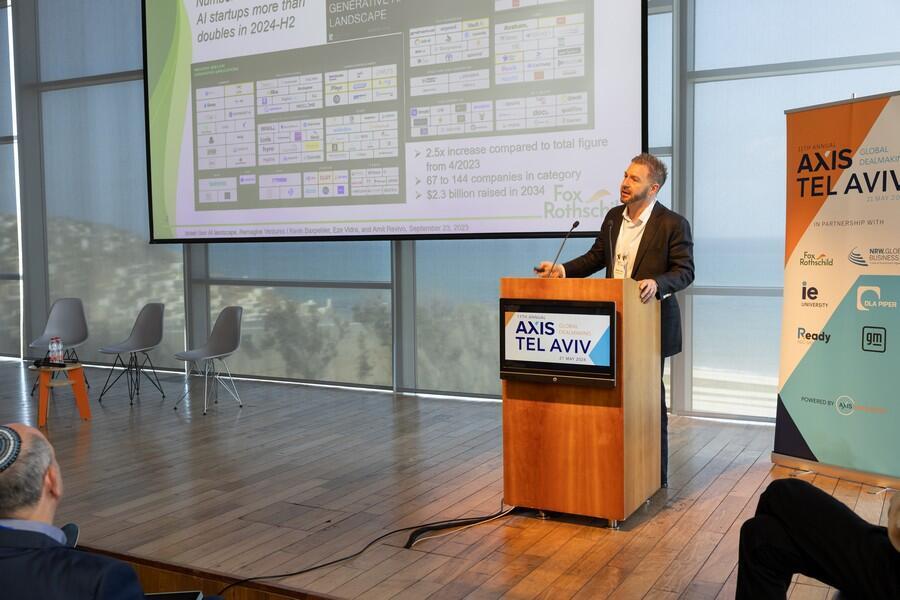
Select startups invited to pitch to panels of investors and corporate leaders at last year's Axis Tel Aviv event
(Photo: Liliya Mamina/Axis Innovation)
With more than 300 companies helped and over $2 billion in raised capital, Frank has strong views on what separates winners from the rest. “It sounds so simple, but every startup has to solve a problem for a client, and they need to focus on the client—not the technology,” he says. “We have startups that just talk about their technology, but they don’t realize the customer isn’t buying it based on their technology. They buy it if it can solve a problem for them or help them enter a new business.
"I had a call this morning with this drone company, and we went over their presentation, and it was all about the military, but the guy is selling to Walmart and a few energy companies on this pilot that could lead to an order for 25,000 drone systems. He solves a real problem for them—but he was only talking about the military, when really it should be just solving a problem for his customers.
"The companies that we focus on that have been really successful are the ones that the client realizes add a lot of value to them. It's not rocket science. We help these companies get their message a little simpler. When we work with them, we try to understand more what their real issues are."
Asked what misconception still clings to the Israeli tech brand, Frank doesn’t hesitate, pointing to the narrow perception of Israel as a cyber-only powerhouse. “A lot of corporations and investors we talk to still think Israel’s strength lies solely in cyber—and yes, we are strong in cyber. But we personally don’t touch cyber conferences, because there are plenty of those,” he says.
Instead, he wants the world to recognize the broader scope of Israeli innovation: “We've had companies in Israel that innovate in the golf industry, cricket and of course in food and in so many different areas. We once did a project for a consulting company whose client had an innovation department in Israel and they had to justify why there should be an innovation team in Israel. So we identified 10 tech sectors—like robotics, cyber and others—and benchmarked where Israel stands in the world ranking. Except for robotics, where we’re not up there but still in the top 10, Israel ranked near the top in nearly every category. It was incredible. People look at us and think that we're only strong in cyber, but we obviously have a lot of other things here, from food tech to AI to agtech and so many other sectors. That's news to a lot of people overseas."
- Axis Tel Aviv 2025 will take place on May 22 at the Peres Center for Peace and Innovation. Attendance is capped at 300. For more information, visit www.axistelaviv.com.