

After two subdued years that mirrored the national mood during wartime, Israel’s flag market is staging a comeback ahead of Independence Day 2026. A ceasefire and a compressed holiday season have fueled a sharp rise in demand for Israeli flags, IDF flags and, unexpectedly, American ones.
Sales of U.S. flags have surged by at least 35%, compared with previous years when demand was largely limited to the July 4 holiday.
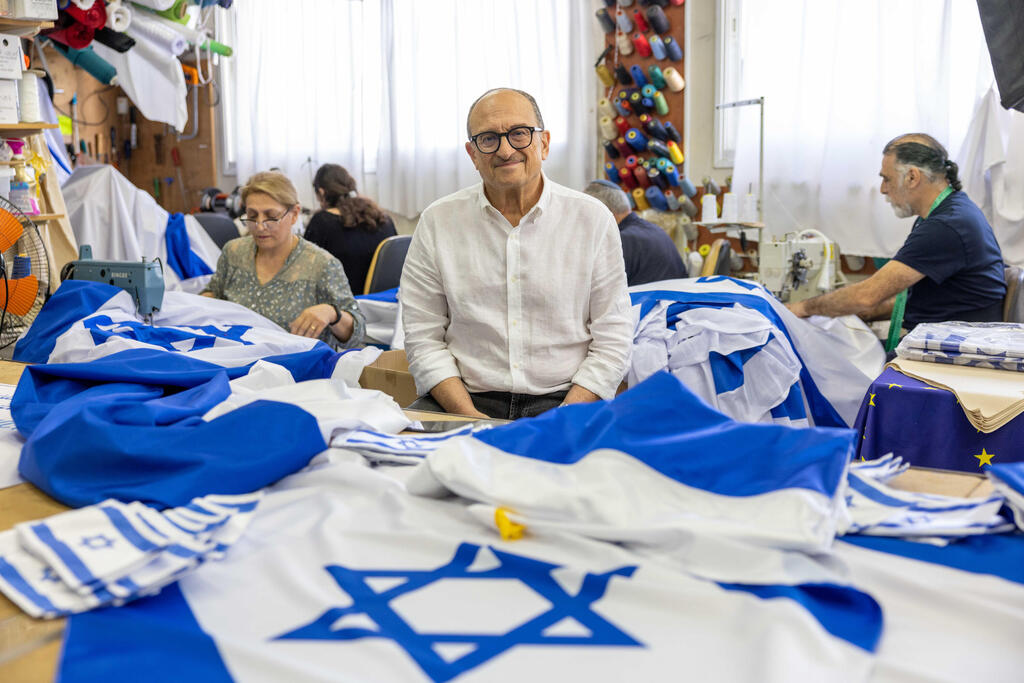
The spike is especially striking given this year’s shortened sales window. The war with Iran stretched through the end of Passover, leaving retailers scrambling to prepare in just days rather than months. While municipalities scaled back spending on large public displays due to canceled events, private consumers appear to be driving the surge.
Discount retail chains report strong demand, with expectations that peak sales are still ahead. At one branch of the “Rami Levy Stock” chain in Pardes Hanna, 10,000 car-mounted flags were sold in just two days this week.
“That’s a 25% jump, and it’s become the leading product in the category,” said CEO Yoni Damari, who in recent years has also worked as an importer, including of flags. He said customers are buying in bulk, not just one or two items. “There’s a high level of awareness. This year we added slogans like ‘Am Yisrael Chai’ and ‘Together we will win,’ and that boosted sales, and peak sales are still ahead. By Independence Day, we expect to sell about 25,000 flags.”
Chains such as Kravitz and Max Stock also report a surge in car flags, which have emerged as the standout item this year. Kravitz reported a 70% increase in sales, while Max Stock highlighted growing demand for hood-sized flags and flag accessories. “We thought it would be moving to see Israel’s roads painted blue and white in such a festive way,” Max Stock said.
“These aren’t flags people keep in a drawer,” said psychologist Dr. Liraz Margalit, highlighting the emotional dimension. “They’re meant to be seen. People want to express a position and, more than that, to see it reflected back at them. It turns an internal feeling into something visible and reassuring.”
‘Warehouses emptied out’
This year’s standout trend is the surge in demand for U.S. flags. “In my sales, the American flag is beating the Israeli flag this year,” said Haim Bohadana (49), a veteran importer and retailer. “This year, we were surprised by the sales of U.S. flags. In recent years, we sold about 1,000 units annually; in the past month alone, we sold 10,000, a tenfold increase. All of them were the popular 1.5-by-1-meter size. If I had known, I would have stocked up on U.S. flags for cars.”
Industry sources say importers brought in only small quantities of U.S. flags in recent years and relied on leftover inventory, but this year found their warehouses emptied by the surge in demand.
Can you explain the trend?
“We feel more and more like the U.S.'s 51st state, and the only thing separating us now is the currency. People are happy to show solidarity with a superpower that supports us. If we can show solidarity with the American people and soldiers who sacrifice for us and think of us, I think that’s a meaningful gesture", says Bohadana.
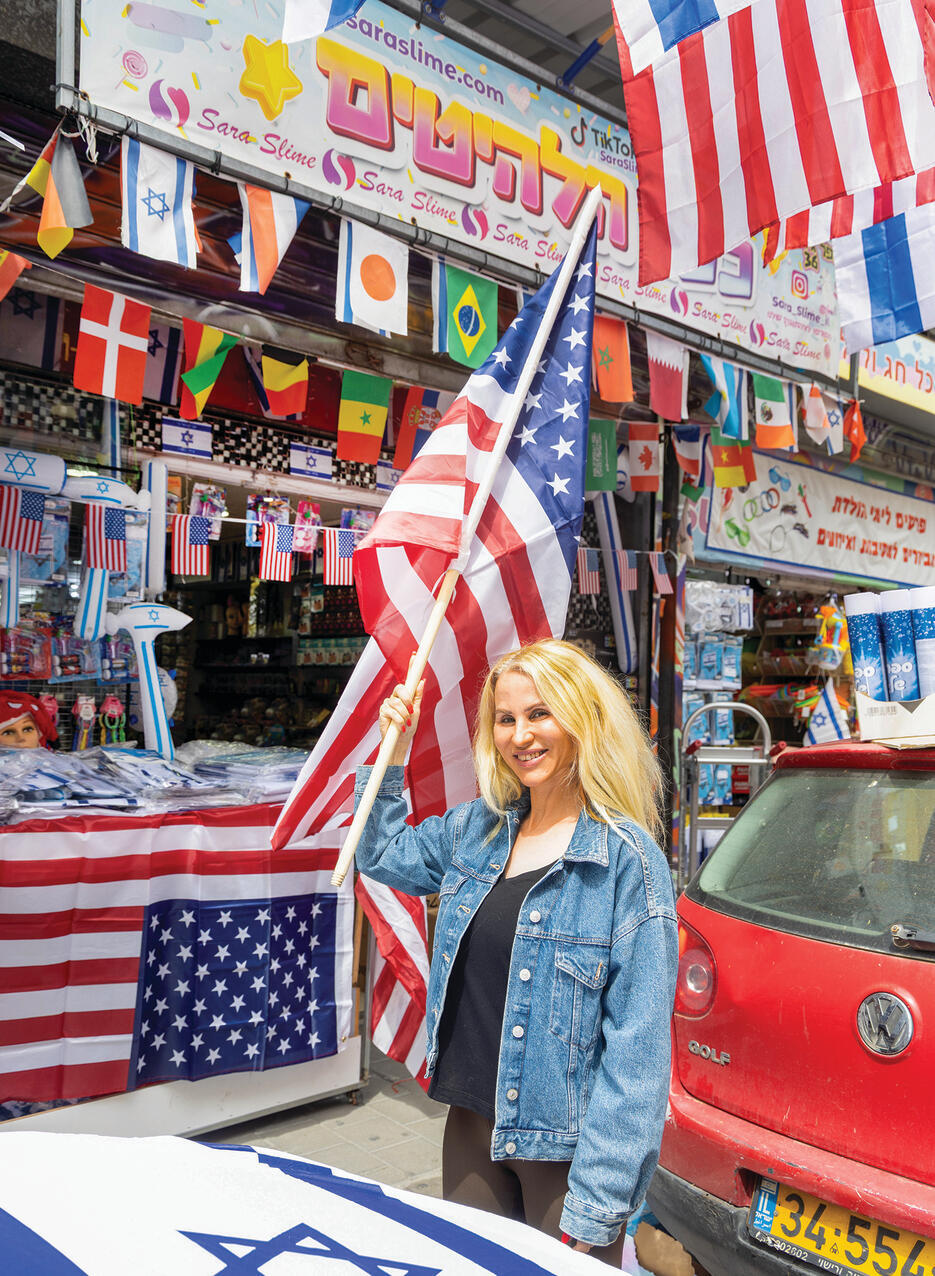
Ravit, Haim Bohadana's daughter, at the entrance to the family shop in south Tel Aviv. They have already sold 10,000 U.S. flags
(Photo: Avigail Uzi)
The surge has also pushed prices higher. Bohadana sells the American flag at a wholesale price of 12.5 shekels and sees it retailing for 40 to 50 shekels. By comparison, he sells Israeli flags for 6 shekels, which retail for 10 to 20 shekels. He said demand is strongest in the Tel Aviv metropolitan area, led by Tel Aviv, followed by Ramat Gan and Givatayim.
“After the ceasefire, there was a dramatic rebound and huge demand for Israeli, U.S. and IDF flags. U.S. flags in particular are seeing unusual demand from building committees, maintenance companies and retailers,” said Avi Marom Milberger, CEO of Marom FGP and a veteran flag industry expert who manufactures U.S. flags in Israel.
“A procurement manager at one of the duty-free chains told us they’ve already received requests from marketing teams to decorate stores with Israeli, U.S. and IDF flags", said Marom. He estimates that U.S. flags he produces have risen about 35%. “In a normal year, these are sold mainly for embassy events or July 4 celebrations. This year it has gone far beyond that.”
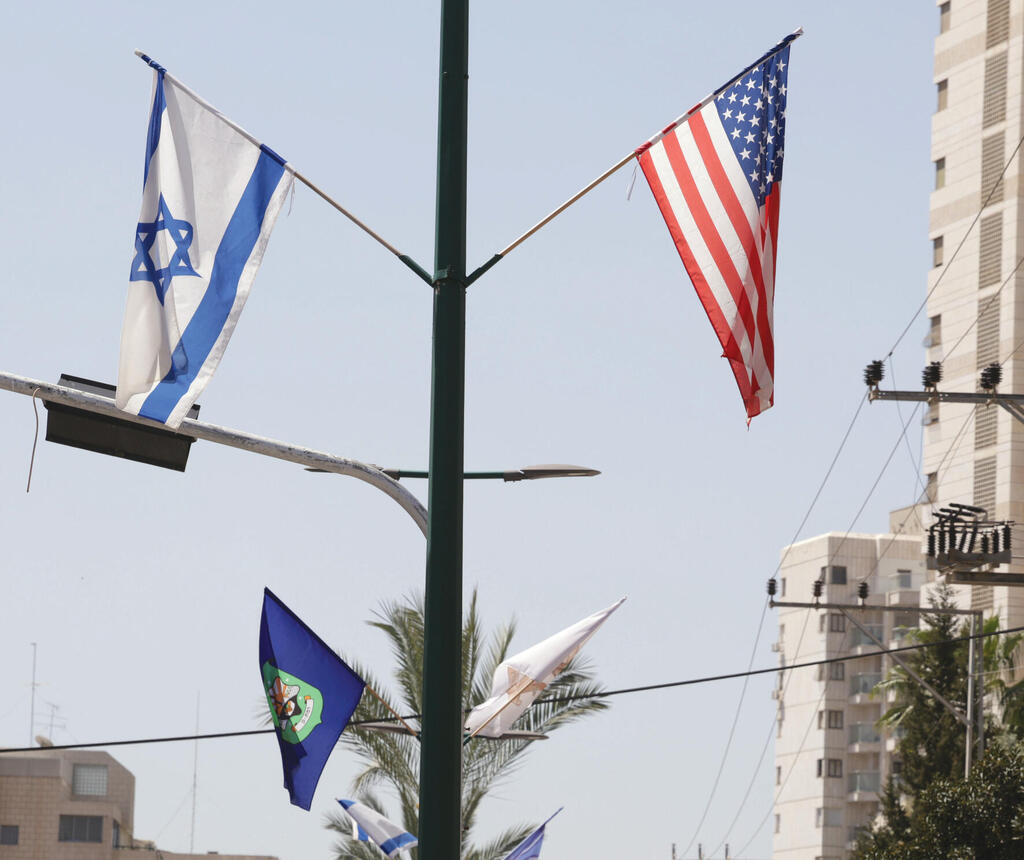
An Israeli flag alongside a U.S. flag in Ramat Gan
(Photo: Orel Cohen)
The largest U.S. flag that was sold measured 3 by 5 meters and was purchased by an immigrant from the United States. “The U.S. consulate is one of our clients, but we didn’t expect such high demand for American flags this year,” said Nadav Berman of Berman Flags, a fourth-generation member of the industry. “All of this is happening in an especially challenging year for production and sales planning, because instead of preparing for Independence Day over three months, everything was compressed into just nine days.”
Berman,27, joined the family business after surviving the October 7 Nova festival attack. “I felt someone needed to carry the torch,” he said. “There’s something meaningful about continuing this legacy.”
He has no issue selling the U.S. flags they produce alongside Israeli and other flags. “We also supply the U.S. consulate, so we always keep stock,” he said. “But I’ve spoken with many importers who have been bringing in American flags for years, and their warehouses are all empty.”
Demand for the U.S. flag has also come from many local authorities. In recent weeks, drivers in Ramat Gan have been surprised to see U.S. flags displayed alongside Israeli flags on street poles. The city installed 800 such pairs, an initiative led by Mayor Carmel Shama-Hacohen, who said he receives daily WhatsApp messages from residents praising the move.
“We were the first to do this, and I’m proud and happy that other cities have followed,” he said. “As someone who served as Israel’s ambassador to UNESCO and the OECD during the Obama and Trump administrations, I’m well aware that the strategic alliance between the U.S. and Israel has different levels and intensities of commitment and support. What the United States and President Trump are doing for and with Israel has never been done before, and it’s doubtful it will be again. Gratitude and appreciation are values not only between individuals but also between nations.”
Berman emphasized that “alongside cities like Jerusalem, there is also strong demand in communities with American immigrants, such as Hashmonaim and Modi’in.”
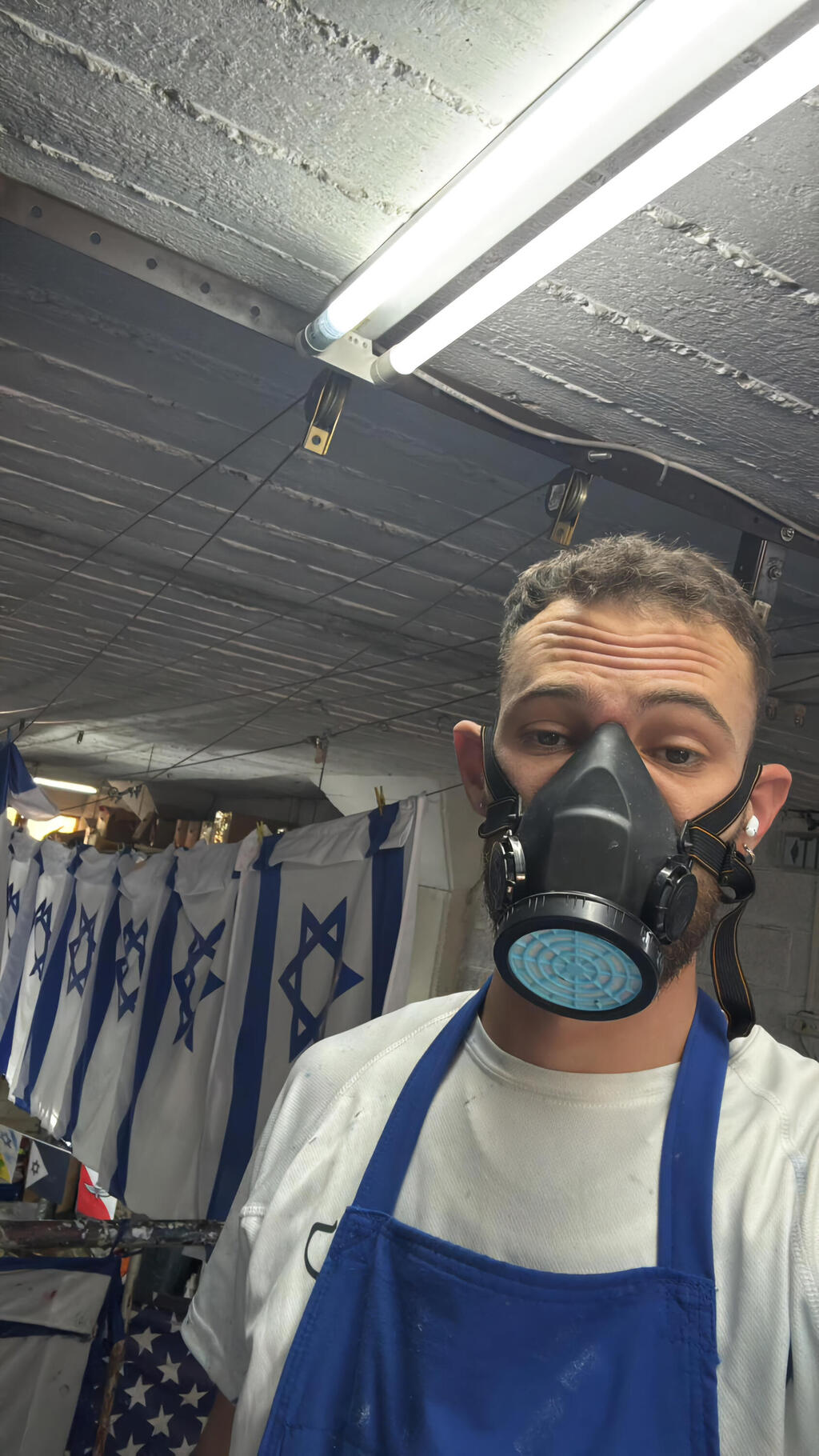
Nadav Berman painting flags
(Photo: Berman flags)
Competition from China
Because of the war and shipping disruptions, most U.S. flags that are sold in Israel today are locally made. In a striking contrast, the market for Israeli flags is dominated by imports. Marom Milberger estimates imports account for about 70% of the market, while Berman puts the figure closer to 80%, noting it continues to rise each year. Both agree that price ultimately drives sales, reflected in the growing dominance of discount chains, even at the expense of quality.
“My flag weighs 140 grams per square meter, compared to 20 grams for a flag imported from China,” Berman said.
"I cannot compete with Chinese production costs. I pay hourly wages that my Chinese counterpart pays monthly,” Marom Milberger said. “We fought for this flag, and the Chinese profit from it. We don’t make a profit from flags. Fortunately, we’ve developed two other business lines that generate our income, including representing suppliers of products for duty-free shops and airlines, such as blankets, storage boxes and more.”
He said the law requires public bodies, from government ministries to local authorities, to use only Israeli-made flags. However, he added, “the law exists mostly on paper. In practice, it’s widely bypassed.”
Under the legal definition and official tender requirements, an Israeli flag is one in which at least 35% of its cost comes from local production. That’s where the loopholes begin: Chinese-made flags are packaged in Israel, and it is not difficult to certify that the packaging cost meets the required threshold. One local authority that stands out for strictly following the law is the Tel Aviv municipality,” Berman noted.
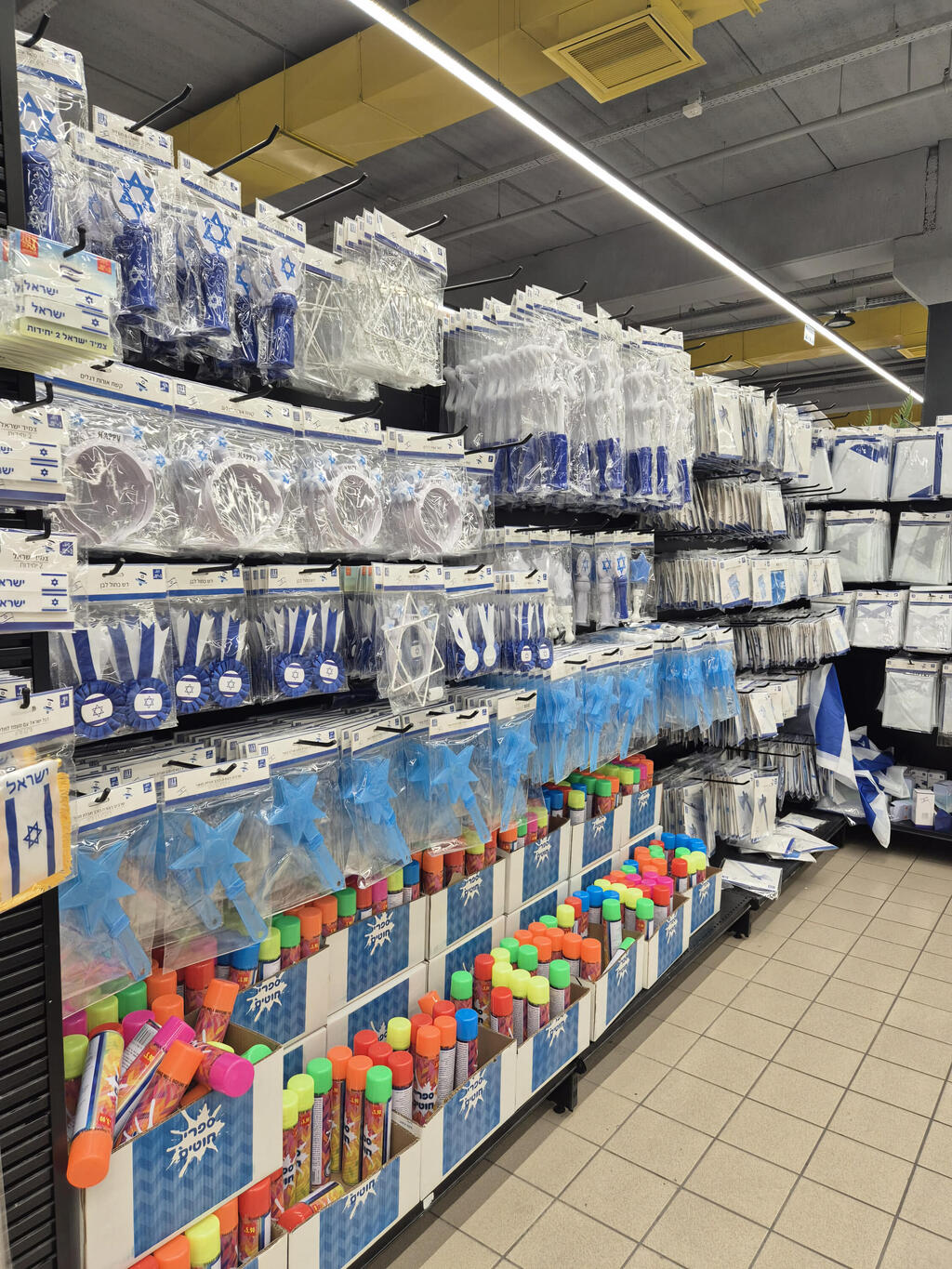
Flag products at “Max Stock”
Loyal to one flag
Ofer Barak, CEO of the “HaStock” chain, is opposed in principle to selling U.S. flags in his stores. “In Israel, especially at a time like this, we proudly fly our own flag, not those of other countries, even if they are friendly to us,” he said.
At “Rami Levy Stock,” U.S. flags are also not sold, as there is no demand in the Pardes Hanna area where the branch is located. Meanwhile, Bank Hapoalim is distributing a record number of flags this year, handing out about 500,000 Israeli flags at central locations and bank branches. The flags can be attached with magnets to homes or vehicles, and the bank, too, insisted on offering Israeli flags only.
“A flag is not just a national symbol, it’s also an emotional anchor. In times of uncertainty, people look for something tangible to hold on to, something they can hang up, display or drive with,” explained Dr. Liraz Margalit, a political psychologist specializing in decision-making in the digital age.
“The rise in purchases of Israeli flags is obvious, but the increase in U.S. flags tells another story. It’s not just a need for identity, but also for support. People are buying not only who they are, but also who they want to feel is standing with them. There’s an interesting psychological mechanism at play,” she said.
“When people feel threatened, they become more sensitive to symbols of alliance, protection and power. That’s why the American flag here is not being bought as decoration, but as a source of reassurance, something that says: we are not alone. In that sense, the flag becomes more than just another product; it becomes an emotional one that provides a sense of security, belonging and even hope.”
She said the demand for U.S. flags did not emerge in a vacuum. “It draws on the same emotional need that Netanyahu himself has repeatedly invoked in his speeches, not just a sense of national pride, but a sense of alliance. When a leader emphasizes again and again that Israel is fighting alongside the United States, he is not only describing a political or military reality, he is giving the public a reassuring narrative to hold on to.
“That’s why the American flag here becomes less a symbol of the United States and more a symbol of support, strength and the promise that we are not standing alone.”
Prof. Shalom Sabar of the Hebrew University’s department of folklore and art history who has previously examined the unique status of the Israeli flag, including its quasi-sacred standing rooted in the Jewish prayer shawl, is not concerned about the popularity of U.S. flags this year.
“From my experience, few things reflect a moment in time as clearly as material culture, its ideals and its aspirations,” he said. “The American flags that have recently become so popular are undoubtedly a reflection of the public mood in Israel, shaped by the dramatic ties that have developed in recent times between the U.S. and Israeli governments, for better or worse.
“Does this diminish the status of the Israeli flag in society? Personally, I don’t think so, and I believe the phenomenon will shift as the public mood changes.”
A multimillion-dollar market
Mass anti-government protests in Israel in 2023, known as the Kaplan protests after a central Tel Aviv gathering point, marked a turning point for the Israeli flag as a consumer product. After a decade of reports pointing to declining demand, both generally and ahead of Independence Day, due in part to economic pressures, municipal budget cuts and perhaps a weakening of the flag’s unifying symbolism, the protests made its use widely legitimate again.
In 2023, sales were reported to have surged by 200% to 300% compared with the previous year. The subsequent hostage protests further reinforced the flag’s status in public life.
Independence Day alone generates tens of millions of shekels in flag-related sales, including building flags, car flags and accessories. Millions of units are sold each year, though exact figures are unavailable.
Bank Hapoalim plans to distribute about 500,000 Israeli flags this year. Damari estimates that supermarket chains will sell and distribute between 350,000 and 400,000 flags.
Israeli flag
(Photo: Yael Grinberg/Shutterstock)
This year’s unique challenge has been the last-minute rush. According to Marom Milberger, “Those who typically order flags and items like flares for Memorial Day and Independence Day usually complete their orders before Passover. But because of the war, orders only started coming in once people returned to work, in some cases as late as last Thursday. That includes organizations that hadn’t ordered large quantities in the past.”
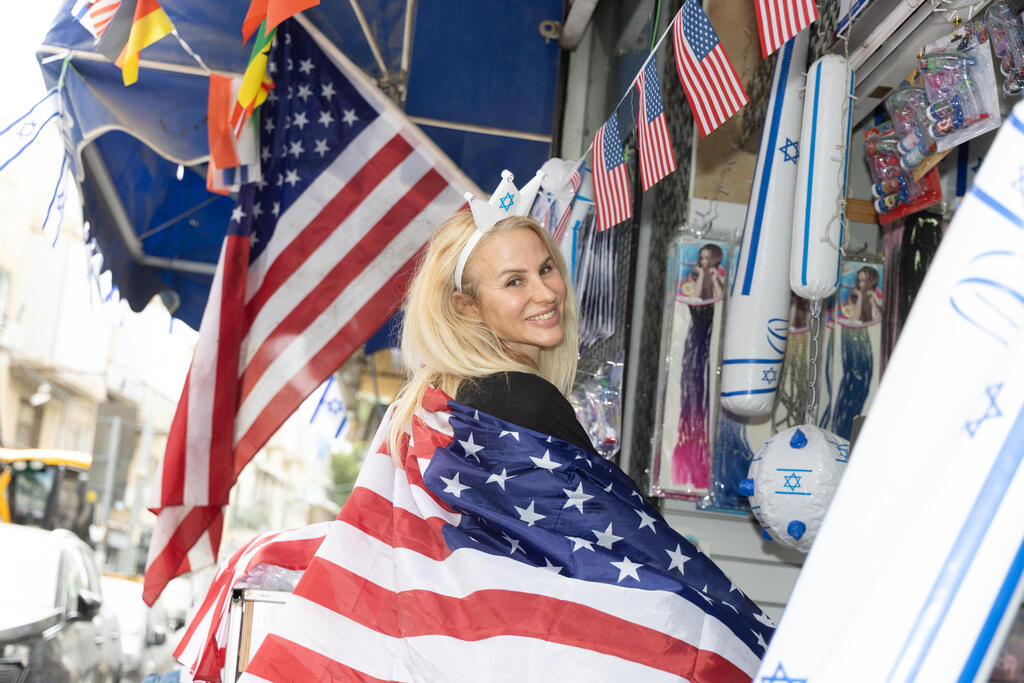
Ravit, the daughter of Haim Bohadana, at her father’s shop
(Photo: Avigail Uzi)
Demand has also come from unexpected sectors. Retirement homes and assisted living facilities have doubled their orders, aiming to create a festive atmosphere for residents who may remain on-site due to security concerns.
Exports hit by war
While domestic demand is booming, exports have dropped sharply. The war has hit flag exports, not only because of shipping disruptions tied to partial shutdowns at Ben Gurion Airport, but because many Israeli communities abroad are hesitant to display Israeli flags publicly.
“This is the most painful part. They are celebrating, but quietly, canceling orders,” said Avi, 73, a veteran of the industry with 44 years in the flag business, citing a group of Jewish and non-Jewish “friends of Israel” in Milan and a synagogue in Texas, both longtime clients. “Cancellations from institutions abroad and duty-free outlets have led to a 50% drop in sales.”