

The Manufacturers Association of Israel and the Israel Export Institute are calling on authorities to grant Israeli business leaders priority access to outbound flights from Ben Gurion Airport, warning that current restrictions are severely disrupting the country’s economic continuity.
In a formal letter addressed to the Head of the Home Front Command, the Director General of the Civil Aviation Authority, the Israel Airports Authority, and the CEO of El Al, Israel Export Institute Chairman Avi Balashnikov and Manufacturers Association President Avraham Novogrotsky urged the establishment of a dedicated mechanism that would allocate a portion of outbound flight capacity specifically for business travelers.
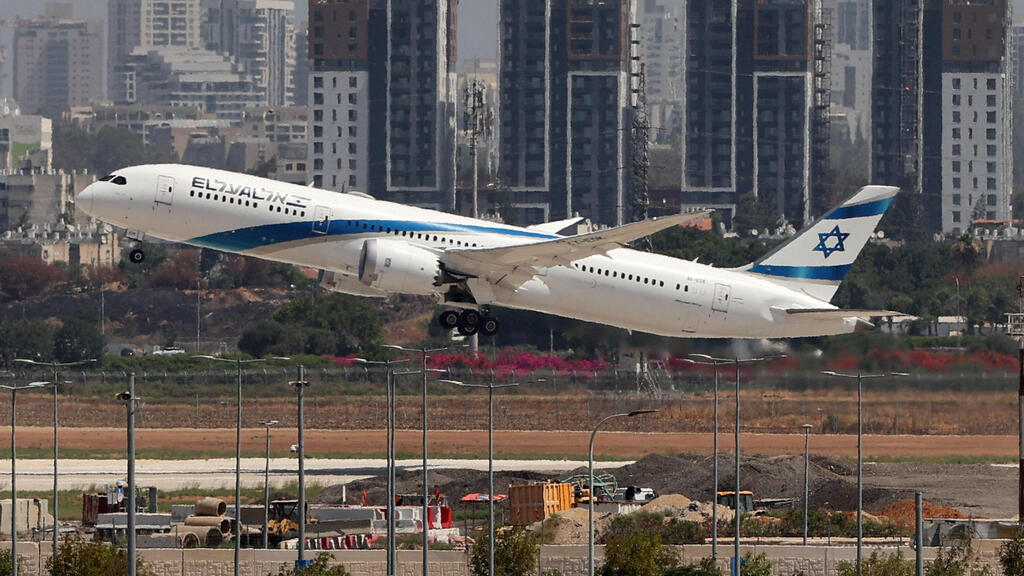
According to the organizations, many Israeli business owners are currently unable to secure seats on international flights due to strict passenger caps imposed since the outbreak of the war. They argue that the business sector must be formally recognized as essential, in order to prevent significant damage to Israeli companies operating in global markets.
“The Israeli economy is deeply anchored in international business ties — from exports and investment flows to supply chain management and ongoing operations in global markets,” the letter states. “At a time when flight availability is limited and demand is surging, there is a real and immediate risk to the ability of Israeli companies to sustain their business activity, hold critical meetings, finalize agreements, and maintain operational continuity with partners and clients worldwide.”
The appeal comes as the Ministry of Transport is expected to announce a partial easing of flight restrictions, allowing aircraft operating repatriation flights to depart Israel with up to 170 passengers, up from the current cap of 100. While this move is seen as a positive step, industry leaders stress that additional targeted measures are urgently needed.
The urgency is compounded by a series of major international exhibitions scheduled in the coming weeks, where Israeli participation is considered critical. Among them are Cosmoprof in Bologna, Italy, where 14 Israeli companies are set to exhibit; the Exponential defense exhibition in Düsseldorf, Germany, with 10 Israeli participants; and a major cybersecurity conference in San Francisco, expected to host more than 50 Israeli companies — including industry leaders such as Palo Alto Networks, NVIDIA, and Cato Networks. Many of these firms have already invested thousands of dollars in exhibition booths.

Avi Balashnikov
(Photo: Israel Export Institute)
According to estimates by the Israel Export Institute, approximately half of the Israeli business representatives planning to attend these events have yet to secure flights.
“Even in times of war, Israel must remain present in the global marketplace,” said Avi Balashnikov, Chairman of the Israel Export Institute. “Our exporters are not just representatives of individual companies — they are ambassadors of Israel’s economic resilience, innovation, and strength. Ensuring their ability to operate, travel, and engage with the world is not a luxury; it is a strategic necessity. The continuity of Israeli exports is vital to the stability of our economy and to our long-term national strength.”
Industry leaders are now urging swift action, emphasizing that delays in implementing a solution could result in missed opportunities, financial losses, and long-term harm to Israel’s position in key global industries.