

The 2026 FIFA World Cup, set to take place next month across the United States, Canada and Mexico, is expected to be far more than the biggest sporting event in history — it is also projected to become a massive engine of global economic growth and a live showcase for cutting-edge technologies.
According to a comprehensive Bank of America (BofA) report obtained by ynet, the tournament — which will feature 48 national teams for the first time — is expected to add roughly $41 billion to global GDP and generate around 824,000 new jobs, including approximately 185,000 in the United States alone. Public engagement is also expected to shatter records, with some 6 billion people — roughly 75% of the world’s population — anticipated to engage with the tournament through television, streaming services and social media platforms.
The global sports industry itself is undergoing unprecedented growth. According to the report, the industry generated $2.3 trillion in 2025 — effectively making it the “10th-largest economy in the world” — and is projected to reach a value of $3.7 trillion by 2030. In the United States alone, the upcoming tournament is expected to generate $30.5 billion in economic output, with the tourism sector contributing approximately $6.4 billion.
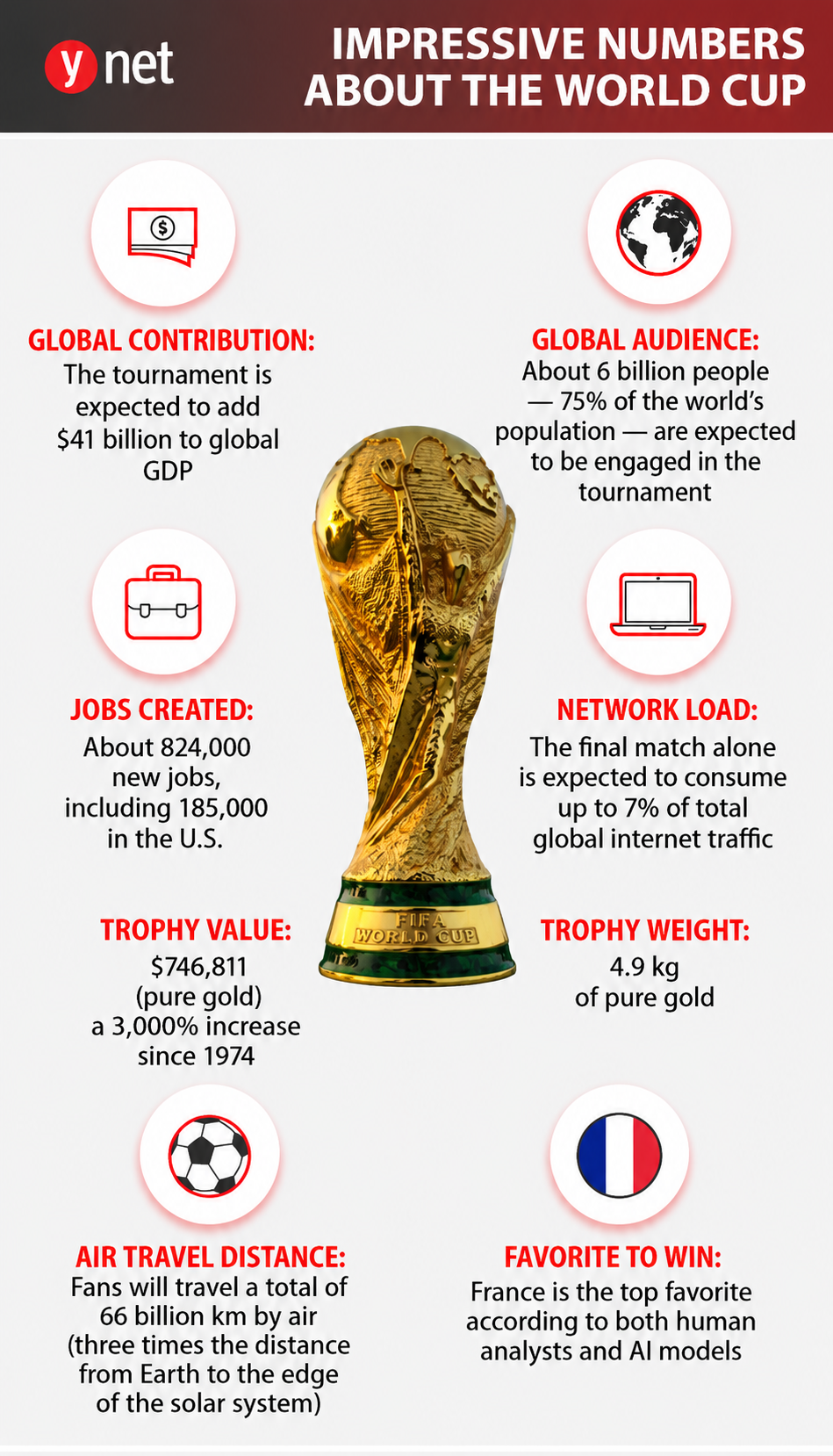
For comparison, since the last World Cup hosted by the United States in 1994, the American economy has grown by 340%, while the S&P 500 has surged by 2,097%. Alongside domestic growth, the tournament is expected to trigger an unprecedented wave of air travel: fans traveling between matches across the continent are projected to accumulate roughly 66 billion kilometers (41 billion miles) of air travel — a distance equivalent to three times the span between Earth and the edge of the solar system.
An extreme challenge
The upcoming tournament is expected to become the most digitally connected World Cup ever, creating an extreme challenge for logistics and network infrastructure.
Due to the massive shift toward streaming and social media broadcasting, the final match alone, scheduled for July 19, is expected to account for up to 7% of total global internet traffic. Overall, the tournament is projected to consume around 2 exabytes of data — equivalent to 45,000 years of 4K video — roughly 45 times more data than was generated during the 2022 World Cup in Qatar.
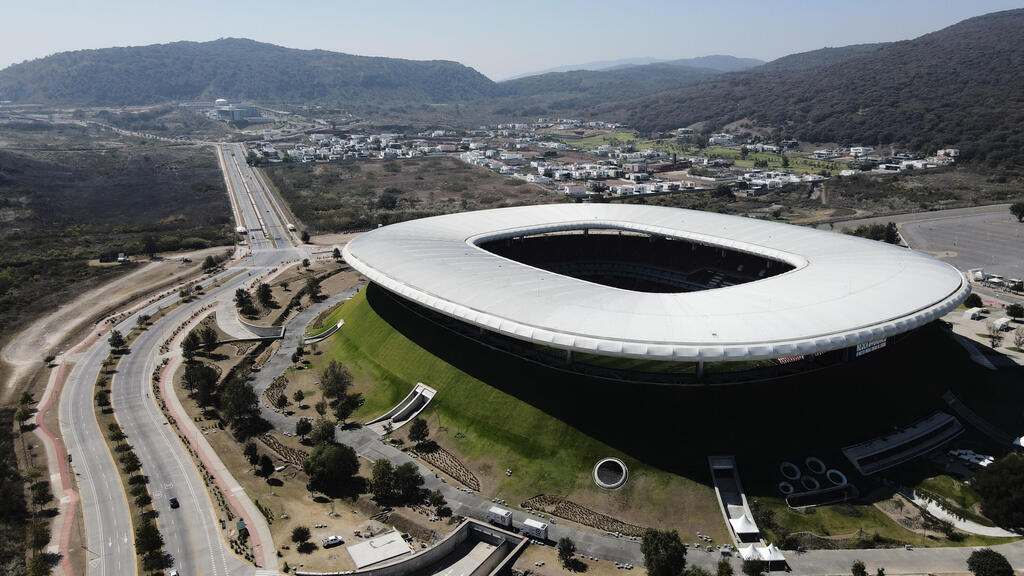
Akron Stadium in Zapopan, Mexico is ready for the World Cup
(Photo: Marco Ugarte/AP)
To manage this massive operation, an AI-powered command system will be deployed for the first time to coordinate joint operational centers across the three host countries. The system will create digital twins of stadiums to regulate crowd flow, security and logistics in real time.
Who is favored to win?
At the same time, “Football AI Pro” technology will analyze more than 2,000 player performance metrics in real time for every participating national team. These analytical tools will also attempt to predict the tournament winner: both human analysts and AI models currently rank France as the leading favorite to win the World Cup, with Spain in second place.

France’s Kylian Mbappé is projected to finish as the top scorer
(Photo: IMAGO)
Beyond predicting the champion, there is also broad agreement between analysts and AI systems regarding the tournament’s expected stars. France’s Kylian Mbappé is projected to finish as the top scorer, while Spain’s Lamine Yamal is considered the leading candidate for Player of the Tournament.
Robot dogs deployed
The World Cup is also expected to serve as a large-scale testing ground for autonomous mobility and robotics.
Seven different companies currently operate robotaxi services in 10 of the host cities across the United States. Waymo, the market leader, already offers commercial rides in seven host cities and is conducting trials in three additional locations.
On the robotics front, Hyundai — one of the tournament’s main sponsors — plans to deploy Boston Dynamics’ Atlas and Spot robots to assist with stadium operations and logistics. Mexico is also expected to deploy robotic dogs for perimeter security missions at stadiums — the first operational use of its kind at a sporting event of this scale.
Technological innovation is also colliding with extraordinary financial value on the pitch itself. The combined market value of players participating in the tournament is currently estimated at $18 billion, with England holding the title of the most valuable squad at $1.9 billion.
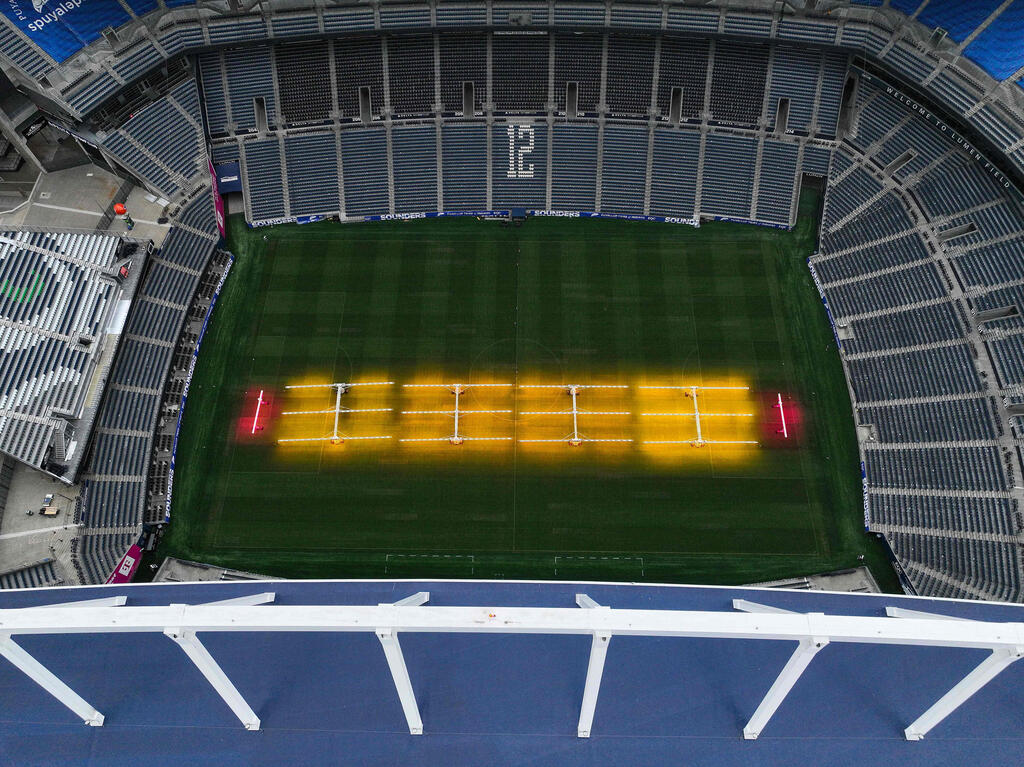
Seattle stadium ready with new turf
(Photo: Steph Chambers/Getty Images/AFP)
If the current pace of transfer fee inflation — roughly 37% annually — continues, the first soccer player in history to command a $1 billion transfer fee could emerge as early as 2031.
Even the trophy itself reflects the soaring economics of the sport: the value of the 4.9 kilograms of pure gold used in the World Cup trophy has risen by 3,000% since 1974 and is now estimated at approximately $747,000.
'Much more than soccer'
Haim Israel, Bank of America’s global strategist and a lead sponsor of the 2026 World Cup, said the event “is much more than soccer matches — it is an event that reflects and shapes the era we have experienced in recent years.”
“The amount of data this event is going to generate, the level of interaction it creates between people, all at near-zero response times for information traffic, is enormous,” he said. “This will be the first time more than 6 billion people watch World Cup matches, and they will not just watch the games — they will become part of them.”
“It’s an event built on extremely powerful infrastructure, far beyond just roads and new stadiums,” Israel added. “We’re talking about data centers and highly advanced communications networks, millions of fans from around the world experiencing autonomous vehicles transporting them to matches in many host cities for the first time, and we’ll see the metaverse make a comeback at this event, with every national team receiving its own digital world complete with digital twins, avatars and training models.”