

Israel’s consumer price index rose 1.2% in April from March, the Central Bureau of Statistics said Friday, within analysts’ forecasts of a 1.1% to 1.5% increase.
Annual inflation over the past 12 months stood at 1.9%, still within the government’s 2026 target range of 1% to 3%.
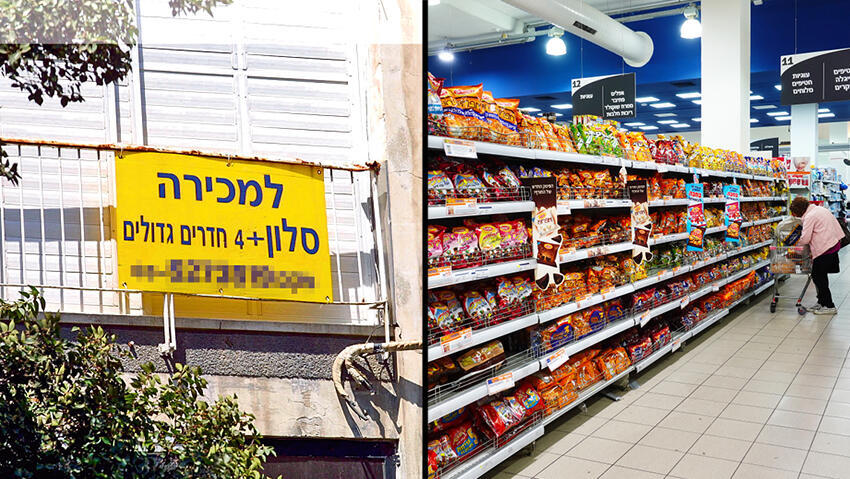
(Photo: Tvika Tischler, Shutterstock)
The April increase was driven largely by a NIS 1.03 rise in the price of 95-octane gasoline at the start of the month. The price rose by another 2 agorot in May, reaching NIS 8.07 per liter.
Notable price increases were recorded in fresh fruit, which rose 7.8%; transportation, 4.9%; culture and entertainment, 3.4%; clothing and footwear, 2.4%; and home maintenance, 0.5%. Health care prices fell 0.1%.
Despite the high April reading, markets expect the Bank of Israel to cut interest rates in 10 days by a quarter point to 3.75%, bringing the prime rate to 5.25%.
Housing prices rose 0.3% in February-March compared with January-February. Prices rose 0.4% in Jerusalem, 0.1% in Haifa and 1.2% in Tel Aviv, while falling 0.1% in the north and 0.2% in central Israel. Prices in the south were unchanged. New home prices rose 0.4%.
Compared with the same period last year, February-March 2026 housing prices fell 1.2%, narrowing from a 1.7% annual decline in the previous index.
Annual price increases were recorded in Jerusalem, up 4.2%; the north, 1.6%; and Haifa, 0.7%. Prices fell 3.5% in Tel Aviv and 2.9% in central Israel, while remaining unchanged in the south. New home prices fell 3.8%.
Rental prices rose 2.6% for tenants who renewed leases and 3.6% for new tenants. The bureau said those figures approximate annual rent changes for those groups, since most tenants’ rent does not change during the year because they are under fixed contracts, usually without indexation mechanisms.