

Avi and Eli Schron, who manage the real estate company founded by their father Rubin, Cammeby’s International Group, are key investors in a deal to purchase 110 acres of land in Beit Shemesh. This represents half of the land in Beit Jimal, near Beit Shemesh, purchased for $245 million in a deal signed in early April this year.
The real estate ventures of Steve Witkoff, the U.S. special envoy to the Middle East, include apartment towers in Chelsea and Tribeca, the luxury Edition Hotel in Times Square and a hotel and residential project in West Hollywood. These are just some of the dozens of real estate projects by the Witkoff Group.

The company, headquartered in Lower Manhattan, is a partner with Witkoff's real estate company in owning the iconic New York Woolworth Building, which they purchased in 1998. The partners still own 27 of the building's 57 floors, having sold the top 30 floors in 2012 to a group of investors who converted them into luxury apartments.
The biggest beneficiary of the Beit Shemesh deal is Ziva Cohen, owner of the real estate companies Kedmat Eden and Perachai Ramat Beit Shemesh. The $82 million she invested about a decade ago to purchase approximately 222 acres in Beit Shemesh from the Catholic Salesian Monastery in Beit Jimal has now yielded her three times that amount.
Moreover, she still owns the other half of the complex. However, the process was not simple. It has been 20 years since she first reached agreements with attorney David Shimron, who represents the monastery, and the journey has been fraught with legal battles that have lasted a decade and are still ongoing.
The complex is located between old Beit Shemesh to the north and the new neighborhoods to the south, making it a critical area for the city's growth. On April 9 this year, a warning note was added to the land registry, indicating Cohen's commitment to transfer half of the plot to the ultra-Orthodox investor group led by Shlomo Bruner, who will pay Cohen $245 million.

Steve Witkoff with Donald Trump
(Photo: Brian Snyder / Reuters)
The two main branches of Bruner's ultra-Orthodox group are Avi and Eli Schron, and a group led by Teddy Lichtschein, an ultra-Orthodox American real estate developer who owns nursing homes and senior living facilities in New York and Florida.
The Schron brothers will invest approximately $53 million, the same amount as Lichtschein. He has also brought in several additional businesspeople who will collectively invest about $8 million. Other developers in the group include Yechiel David Potash, Elimelech Fisher, Mordechai Mizrahi, and Ben Zion Mizrahi. Altogether, the group will contribute $120 million from its own funds, with the remainder to be raised from banks.
The twisting path of the church-owned land sale
Cammeby’s, founded by Rubin Schron in 1967, primarily operates in New York, New Jersey, and Connecticut. It is estimated to own over 20,000 apartments, senior living facilities, and commercial and employment spaces valued at $13 billion. In addition to its business ties with President Trump's envoy, the company had a deal with Trump's father, purchasing rental housing complexes with about 6,000 apartments from him in 2003. Rubin Schron was also a major shareholder in Discount Bank, holding about 7.3% of its shares for a decade until 2014.
Another key real estate player in the project is Nachshon Kivity, owner of the BSR Group. Kivity attended a meeting in January at the Jerusalem District Planning and Building Committee as part of the process to advance the zoning plan for the neighborhood. In a conversation with Calcalist, he explained that at this stage, he is serving as an engineering consultant to Ziva Cohen and will also collaborate with Bruner's group. It is not far-fetched to assume that BSR, which specializes in initiating and constructing office and residential projects, will eventually become a partner in the project.
Challenges and risks
While Cohen has made an excellent deal, the question remains whether the buyers have taken a calculated risk. The interest rate they will receive on their investment reflects their assessment of the risk. The equity invested will be recorded as a shareholder loan, which they can recover from the project's revenues with an annual interest rate of 12%. This rate reflects the risks involved in the deal due to several issues that will only become clear in the coming years.
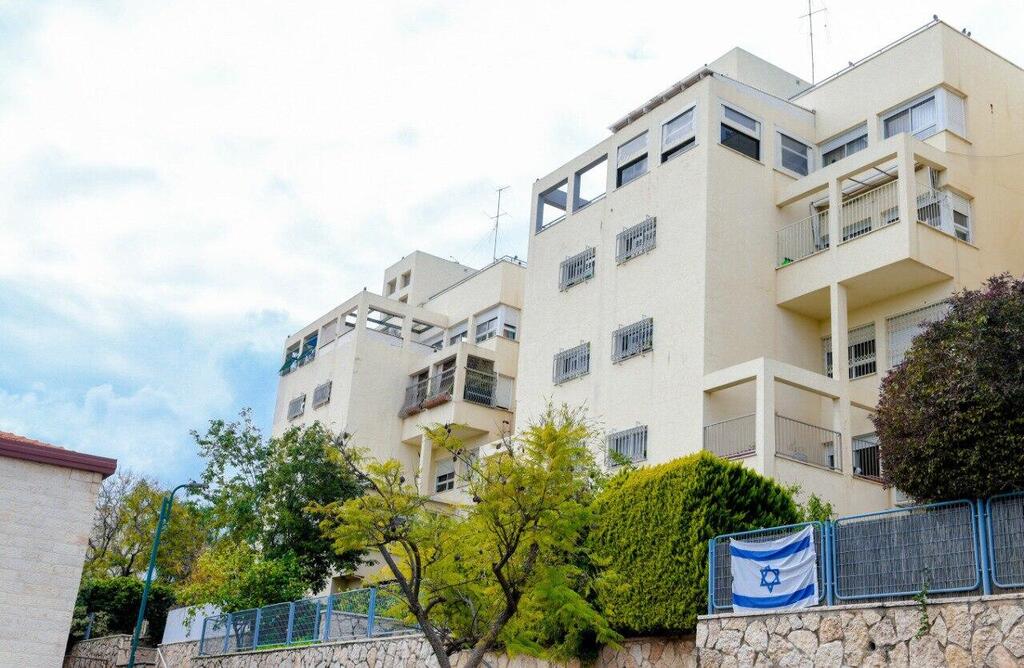
Beit Shemesh
(Photo: Rafi Kotz)
First, there is still no approved zoning plan (TABA) for the construction of the new neighborhood. The discussion on the plan, which Cohen and Kivity promoted to build 12,800 apartments, was supposed to take place in January but was postponed at the request of Mayor Shmuel Greenberg from the United Torah Judaism party because the plan was not coordinated with him. In a conversation with Calcalist, Greenberg explained that he would agree to advance the plan only if it includes sufficient employment and commercial areas.
According to his approach, more than 2.7 million square feet (about five towers) are required. He stated that the income from business property taxes is necessary for the municipality, as the property taxes paid by new residents do not cover their costs and could create a deficit. He will allow residential construction only alongside office tower construction, following this rule: for every office tower built, permits will be issued for 1,000 apartments.
Another significant issue is Greenberg's opposition to residential buildings taller than nine stories, while Cohen's plan included 12-story buildings. Nine-story buildings align with the halachic (Jewish legal) requirements of the ultra-Orthodox community. This means that under Greenberg's plan, a large portion of the new neighborhood, if not all of it, is intended for the ultra-Orthodox.
This presents another challenge: in a neighborhood designed for the ultra-Orthodox, compared to one for the general public, there is a much greater need for public institutions—such as mikvahs, synagogues, and gender-segregated schools—which inevitably reduces the number of housing units. Market estimates suggest that under Greenberg's conditions, about 8,000 apartments can be built, nearly 5,000 fewer than Cohen's original plan.
Another unknown is the betterment levies that developers are expected to pay upon approval of the plan. There is a legal argument that since the land was owned by a church, its owners are exempt from the levy, but the likelihood of the municipality adopting this argument is very low. Additionally, developers will eventually have to pay for developing the plots, including infrastructure such as electricity, water, and sidewalks, at a cost of about $41,000 per unit.
Adding to these challenges is an ongoing legal process in the Supreme Court. Although it seems likely to be resolved in Cohen's favor, there remains some uncertainty until a final ruling is issued. The case stems from a long-standing dispute between Cohen and the ultra-Orthodox developer Eli Klein's company, EKA Real Estate.
In 2004, a development agreement was signed between the Catholic order and Cohen's Kedmat Eden company. The deal did not go through because it did not receive the Pope's approval. Attorney David Shimron, a cousin of Prime Minister Netanyahu, became involved in 2010 to resolve the impasse. In an arbitration process concluded in 2014, Cohen's company was granted the right of first refusal to purchase the land.
Get the Ynetnews app on your smartphone: Google Play: https://bit.ly/4eJ37pE | Apple App Store: https://bit.ly/3ZL7iNv
In 2015, EKA Real Estate signed an agreement with the order to purchase the land for $82 million. This deal was approved by the Pope. However, Kedmat Eden did not relinquish its right of first refusal and fought the matter in court, ultimately reaching the Supreme Court, which ruled that Cohen retained the right to purchase the land. The District Court ruled in Cohen's favor in 2018, and in 2021, EKA withdrew an appeal it had filed with the Supreme Court.
However, EKA recently filed another appeal, claiming that Cohen's right of first refusal was exercised improperly. EKA argues that under the 2015 agreement it signed with the order, the deal had to be completed within two months—meaning the $82 million had to be transferred within that time frame—while Cohen took two years to pay the amount. There is also a legal question as to whether Cohen's right of first refusal applies when her contract with the church is invalid.