

The global arms industry is experiencing unprecedented growth. Revenue from weapons and military services sold by the world’s 100 largest arms manufacturers rose 5.9% in 2024, reaching a record $679 billion, according to new data published by the Stockholm International Peace Research Institute.
Over the past decade, from 2015 to 2024, revenue for the 100 leading suppliers increased 26%. Last year, for the first time since 2018, all five of the world’s largest arms producers reported revenue growth.

The strongest increases came from companies in Europe and the United States, though growth was reported across most regions represented in the top 100. The only exception was Asia and Oceania, where difficulties in China’s defense industry reduced regional totals.
European coverage of the report noted that the wars in Ukraine and Gaza contributed to higher demand. In Europe, the rise was linked to what SIPRI described as “the perception of the Russian threat by European countries.” Demand is driven both by Ukraine’s urgent needs and by countries that supplied Kyiv and now must replenish their own stockpiles. “We have seen programs underway that will generate additional demand,” the report said.
Czech artillery boom driven by Ukraine
Despite Europe’s overall rise, 39 of the top 100 arms suppliers are based in the United States, including the top three: Lockheed Martin, RTX and Northrop Grumman. Combined U.S. sales increased 3.8% to $334 billion, nearly half the global total. But several major U.S. defense programs, including the F-35 fighter jet and the Columbia-class submarine, are facing delays and budget overruns.
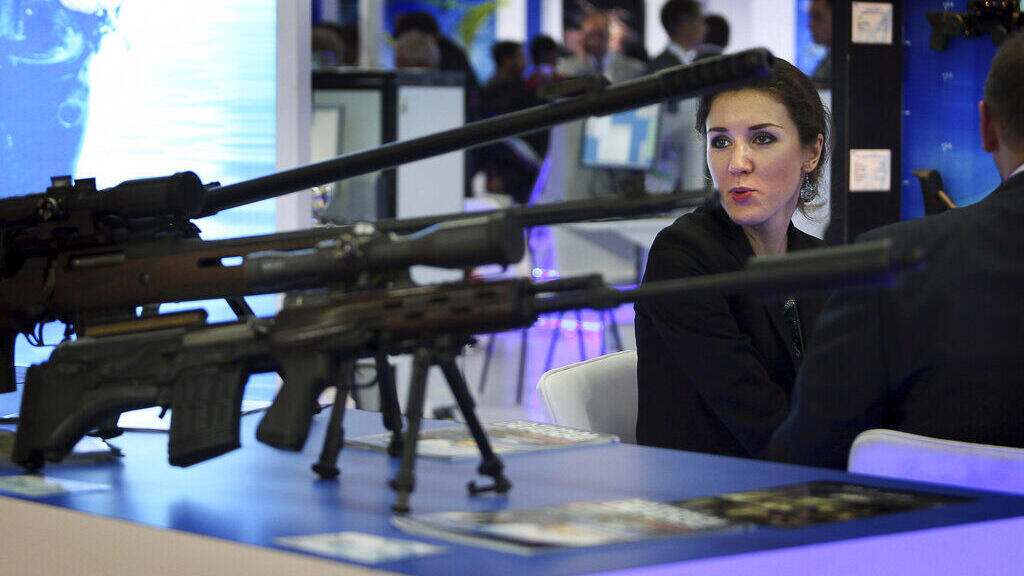
Global arms show
(Photo: AP)
In Europe, the 26 largest arms companies saw their combined revenue rise 13% to $151 billion. The Czech firm Czechoslovak Group, boosted by Prague’s ammunition initiative supplying artillery shells to Ukraine, recorded the steepest jump: a 193% surge to $3.6 billion.
European manufacturers face challenges meeting rising demand, including supply chain constraints. French companies such as Airbus and Safran, which sourced half their titanium from Russia before 2022, have been forced to find new suppliers. China’s restrictions on critical minerals have also raised costs for firms such as Thales in France and Rheinmetall in Germany.
Russian and Asian trends
Two Russian arms manufacturers also appear among the top 100: Rostec and United Shipbuilding Corporation. Their combined revenue rose 23% to $31.2 billion, driven by domestic demand amid international sanctions that have limited access to components.
SIPRI noted Russia’s defense sector is struggling to secure enough skilled labor “to support the production rates needed to meet the goals of Russia’s war.”

(Photo IWI part of SK Group)
Asia and Oceania were the only regions where revenue declined, falling 1.2% to $130 billion across 23 companies. SIPRI said corruption allegations in China’s weapons procurement system led to the delay or cancellation of major contracts in 2024, increasing uncertainty around Beijing’s military modernization plans. Meanwhile, Japanese and South Korean firms reported growth driven by European demand.
Israel’s defense industry remains strong
Nine of the top 100 companies are based in the Middle East, with a combined revenue of $31 billion. Three are Israeli—Elbit Systems, Israel Aerospace Industries and Rafael—which together accounted for more than half that total at $16.2 billion.
The report noted that “growing opposition to Israel’s actions in Gaza appears to have had little effect on interest in Israeli weapons,” underscoring ongoing demand for Israeli defense technologies.
If you want shorter homepage versions of the headline and sub-headline, I can generate them as well.