

Israel’s consumer price index (CPI) for September dropped 0.6%, marking a sharper decline than expected and signaling that inflation is easing significantly. Since the index fell 0.2% in September last year, annual inflation over the past 12 months fell to 2.5% from 2.9% in the previous reading—the lowest level since February 2024.
Economists now expect the Bank of Israel to cut the interest rate by 0.25% in its next decision at the end of November, possibly even earlier.
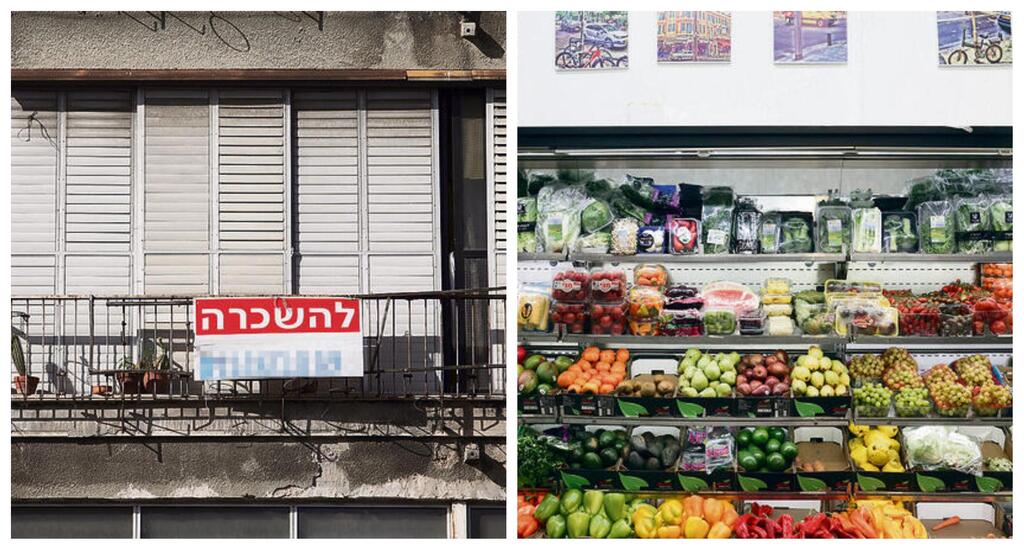
(Photo: Oz Mualem, Orel Cohen)
The steepest price drops were recorded in fresh fruit (down 3.2%), culture and entertainment (down 2.4%), transportation and communications (down 2.2%), food (down 0.5%), clothing and footwear (down 0.3%), and housing services and maintenance (down 0.2% each).
In contrast, notable increases were seen in fresh vegetables (up 3.5%), rent, and healthcare services (each up 0.3%).
As in previous months, airfare prices had a significant impact on the index. This time, they fell by 16% as many foreign airlines resumed operations in Israel and demand for flights dropped, pushing prices down substantially.
Rent and housing prices
Among renters who renewed their leases, rent rose by 2.6%, while new tenants (in apartments where there was turnover) saw rent increases of 5.3%.
Israel’s housing price index fell for the sixth consecutive time, completing a decline of more than 2% over the past six months. Comparing transactions made in July–August 2025 with those in June–July 2025, home prices dropped 0.6%.
On an annual basis, the housing price index still shows a slight increase, though growth has slowed sharply in recent months. Comparing July–August 2025 with the same period in 2024, prices rose only 0.7%.
Between July-August 2025 and June-July 2025, housing prices rose 1% in Jerusalem, while declines were recorded in the North (0.2%), Haifa (0.4%), the Central District (1.8%), Tel Aviv (0.9%), and the South (0.8%). Compared with the same period a year earlier, prices increased in the North by 8.4%, in Jerusalem by 4.2%, in Haifa by 3.7%, and in the South by 2.8%, while they fell 2.9% in the Central District and 1.5% in Tel Aviv.
New apartment market
Prices for new apartments fell 1.2% in July–August compared with the previous two-month period. The share of government-supported transactions rose from 31.7% to 39.4%. Excluding those, new apartment prices dropped 0.2%.
Year over year, new apartment prices rose just 0.5%, underscoring a sharp cooling in Israel’s once overheated housing market.