

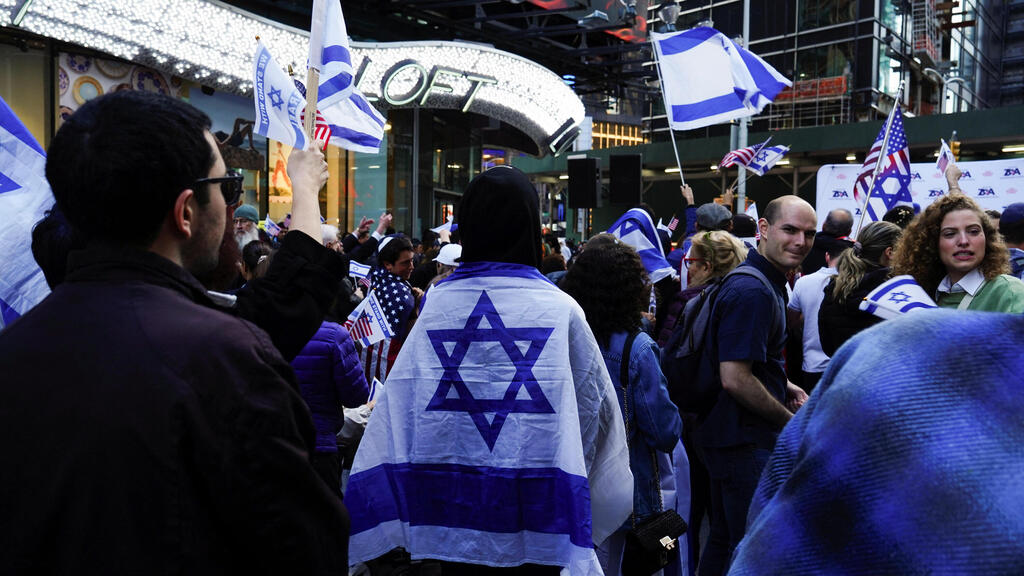
The most Jewish city in the U.S. is also almost the most Israeli: welcome to New York, home to the second-largest Israeli population in the United States (after Los Angeles).
How big is it? It depends who you ask, but estimates put it at around 150,000 people. The city has always been a magnet for Israelis, bustling with life like Tel Aviv, full of entertainment spots, museums, theaters, clubs and excellent restaurants. Less attractive aspects include the unbearable summer heat (not to mention the snowy winters), high humidity, and the cost of living - again, much like Tel Aviv.
From the very beginning of Israeli immigration to the U.S., New York has been a major attraction. One of the city’s longtime residents is Israeli real estate entrepreneur Jacky Teplitzky, who is now marking her 36th year in the Big Apple. When she entered the real estate business, she knew how crucial social connections were for doing business in the city, but it took her some time to figure out where to build them.
"I learned it the hard way. At first, I thought, what's the problem? There are skyscrapers and millions of apartments, but I stumbled and fell into an abyss. Why? Because I didn't have social connections. There's a clique of people here with very strong ties, and if you're not part of that circle, you can't do business. I realized that if I wanted to enter the high-society clique, I needed to be in the right places".
Back then, Teplitzky moved her children from public school to a private school that cost $50,000 per year per child. The investment paid off: she began to build social connections with other wealthy parents who owned multi-million-dollar apartments, and when they wanted to buy or sell, they turned to her or referred her to friends. Gradually, she established these networks and solidified her position in the city's real estate market.
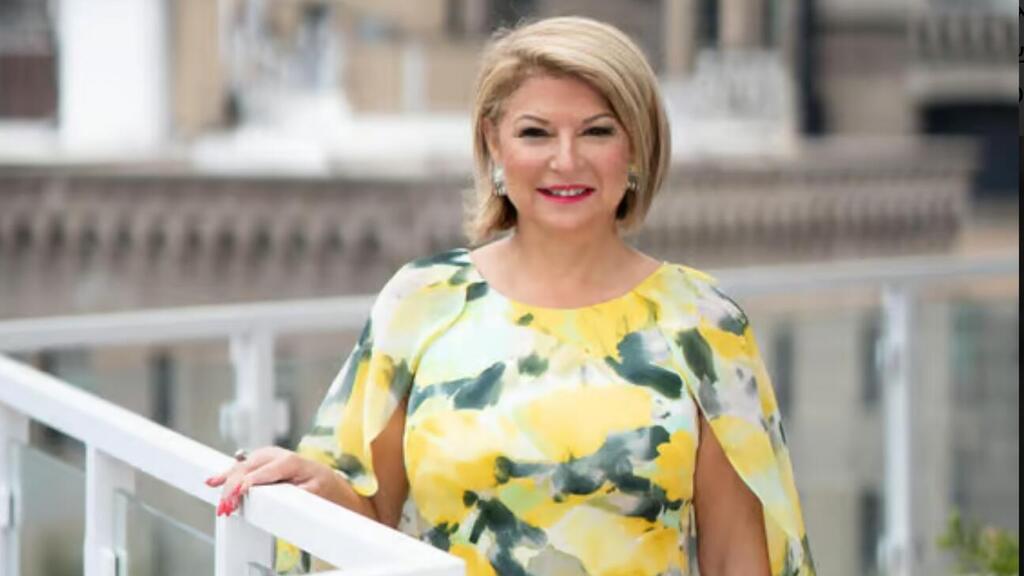
Jackie Teplitzky
"My children, now 27 and 30, will tell you how right that decision was", Teplitzky says. "They experienced both worlds, and the social connections they made at private school helped them later in their business lives".
Teplitzky works at Douglas Elliman, one of the largest and oldest real estate firms in the U.S. According to her, because housing prices in New York are so high, many Israelis choose to live in Williamsburg, Brooklyn, or in Hoboken and Tenafly, New Jersey, where they can buy homes with yards at lower prices than a Manhattan apartment. They continue working in New York, commuting by train, subway, or bus - about a half-hour trip, depending on their location.
According to Teplitzky and other Israelis in the community, the demographics of newcomers from Israel have shifted significantly compared to those who arrived in the 1980s and ’90s. "When I arrived in the city, many Israelis were young post-army, working in moving, renovations, and carts. There wasn't the highly educated layer you see today - people who came to do MBAs or work in tech", Teplitzky explains. "The cost of living in Manhattan is also very high today. You can't live here on less than $200,000-$300,000 a year, so the people coming from Israel now are economically very different from those who came before".
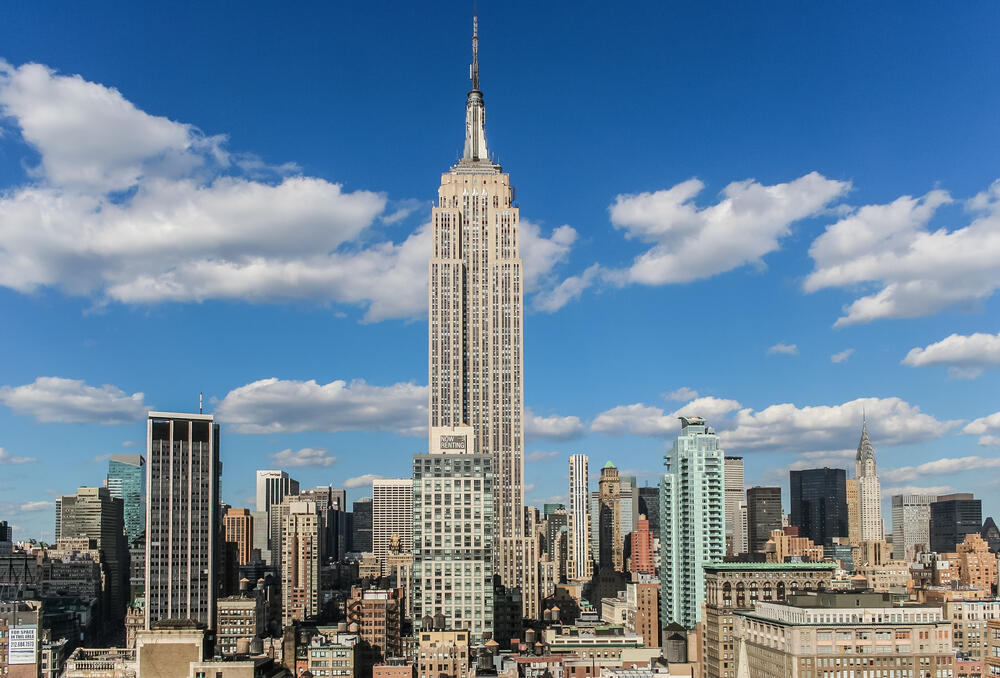
New York
(photo: shutterstock)
450 Israeli startups in New York
Guy Franklin is one of the tech professionals Teplitzky refers to. He moved to New York 13 years ago with his wife and son; their younger son, now 11, was born there. "I worked as an accountant in Israel and got an attractive offer from Ernst & Young", he recalls. "I started noticing a trend of Israeli startups moving to New York, whereas before they had gone to San Francisco and Silicon Valley. Since I couldn't find a comprehensive list of them, I decided to develop an interactive map of Manhattan, where you can see each day the number of Israeli startups operating in New York that morning. When I started, there were 56 Israeli startups on the map; today, there are 450".
Israeli tech professionals have received significant support from outgoing Mayor Eric Adams, especially after October 7. "We held meetings for Israeli tech companies at his residence; he helped us with everything. But I think that backing will stop with the new mayor. Starting in January, we're entering a period of uncertainty, and that's very unhealthy for business", they say.
However, Franklin tries to stay optimistic, believing that Zohran Mamdani will not be able to carry out all his promises that could harm businesspeople, real estate professionals and tech workers like him. "He claims he wants to make transportation free - on the surface it sounds good, but a policy where everything is equal for everyone hasn,t worked anywhere, and I don,t think it will work here either. The strength of the business community will prevent him from fulfilling all his promises", he says.
A few weeks ago, the world's largest stock exchange invited Franklin to ring the famous Wall Street bell in recognition of his contribution to New York's tech industry. "I decided to invite 12 leading Israeli CEOs to show just how strong Israeli tech is, and it was covered everywhere", he says proudly.
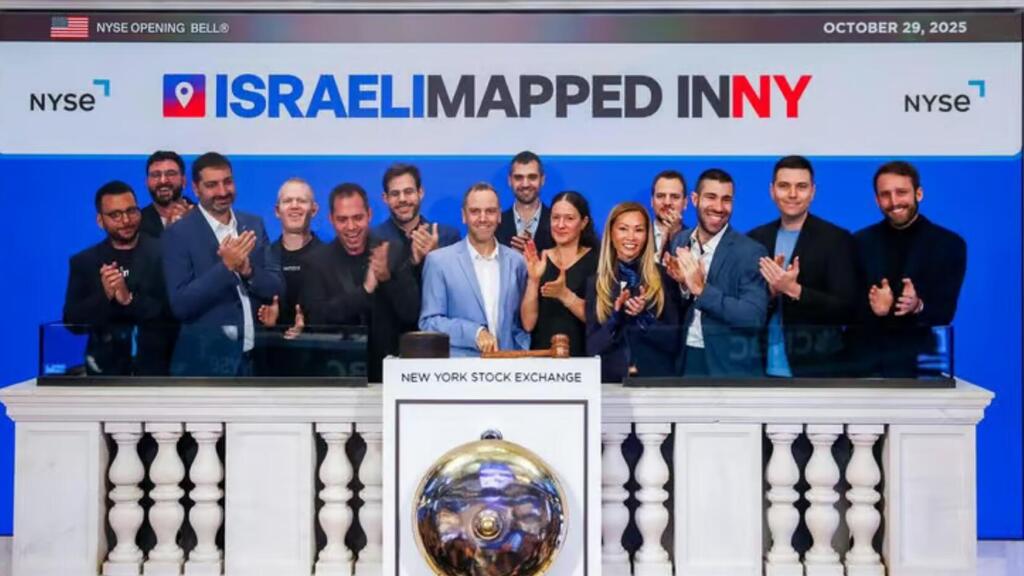
Guy Franklin ringing the Wall Street bell
Do you and the rest of New York’s tech community see yourselves staying in the city or eventually returning to Israel?
"I believe most will return to Israel. In the early 2000s, people came here intending to settle long-term. The new wave, those who arrived in the past ten years, come planning to experience New York as part of their career, work at a startup hoping it will be acquired - and after earning a certain amount, return to Israel. They don't see it as leaving Israel behind, and almost none of them announce they've come for the long haul".
How did New York become a hub for the Israeli tech industry?
"It started with Mayor Bloomberg, who gave the industry a push, provided incentives, and convinced investors to invest. Today, New York is home to the largest tech industry outside Israel. For Israelis, it's more attractive than San Francisco, partly due to its relative proximity to Israel - just seven hours' difference. There's also a large investor community here, as entrepreneurs want to stay close to the market and the industry".
In addition to Israeli tech and startup companies, New York is also home to a sizable community working in medicine, mainly those who studied medicine in the U.S. and decided to settle here. Tal Shuster moved from Kiryat Motzkin to the U.S. for a single semester of study, but that ultimately turned into completing both a bachelor's and a master's degree. She has lived in New York for 27 years. She and her husband have four children.
The couple runs several businesses in the U.S., and Shuster also serves as chair of the IAC (Israeli-American Council) in the U.S. Despite being born and raised in the United States, their son chose to enlist in the IDF. Shuster attributes his decision to the values and education he received at home, her involvement with the Israeli-American organization, and the education he received at the Heschel School in Manhattan.
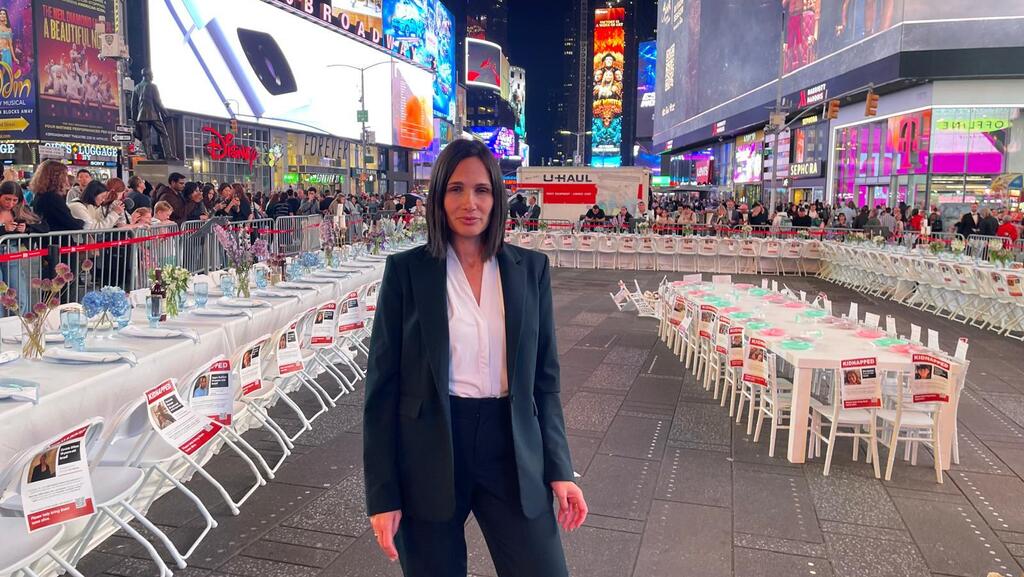
Tal Shuster
(photo: private collection)
According to Shuster, the Jewish community in the city became galvanized after October 7, stating that they are "through fire and water for Israel". Nevertheless, polls from the mayoral election showed that 33% of Jewish voters cast their ballots for Mamdani. "Since the election, I've been contacted by hundreds of volunteers saying: 'Tal, what can we do? How can we help?’. Perhaps this choice sparked a renewed sense of engagement", she says.
Shuster touches on an important point - the connection between Israelis in the city and the long-established Jewish community. In New York, there isn't always a natural bond between the Israeli community and the broader Jewish community. The main reason for this is the size and strength of the Israeli community itself - a network rich in services, institutions, businesses, cafés, restaurants, cultural events and community frameworks, all rooted in Israeli language and culture. For many Israelis living in the city, there is essentially a "whole Israeli world" that meets all their social, cultural, and sometimes religious needs, so there isn't necessarily a pressing need to integrate into or mingle with the local American-Jewish communities. As a result, in most cases, the two communities exist side by side, but largely separately.
At the same time, of course, there are quite a few Israelis who choose to integrate and even naturally blend into the American-Jewish community. In many cases, this is connected to their family life - for example, Israelis married to American partner, or to their work environment, especially when they are employed by organizations, institutions, or companies with ties to the local Jewish community. For them, the connection to the American-Jewish community develops more organically and sometimes becomes a significant part of their identity and social circle in the city.
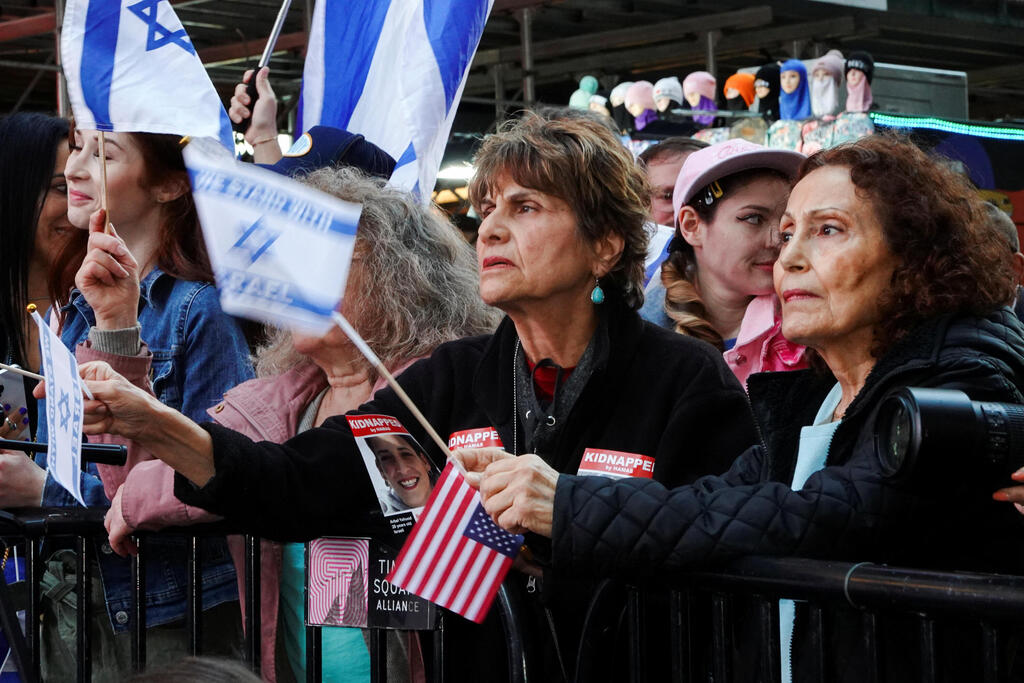
Celebrating Israeli independence day at Times Square, New York
(photo: REUTERS/Bing Guan)
Do you hear of Israelis planning to leave the city?
"Not really. I've heard of some Israelis who were wavering before and thought about leaving, but not because of this situation. We're not planning to give up; we have a strong and united community".
Have you seen many new Israelis moving to New York in recent years?
"In the past two years, we've seen Israelis coming from Israel, maybe some who needed a break from everything happening back home, but at the same time, I also see those making Aliyah, including many families with children".
According to Shuster, the Israeli community in the city is very active, celebrating Israel’s Independence Day together with a parade down Fifth Avenue attended by hundreds of thousands, including members of numerous Jewish organizations and even outgoing Mayor Eric Adams.
"The mayor always participated in this event, but I expect the new mayor won't come", she says. "We plan to show more presence and community involvement. In the coming years, we want to teach and encourage the community to be more engaged, for example, with the Department of Education and the City Council".
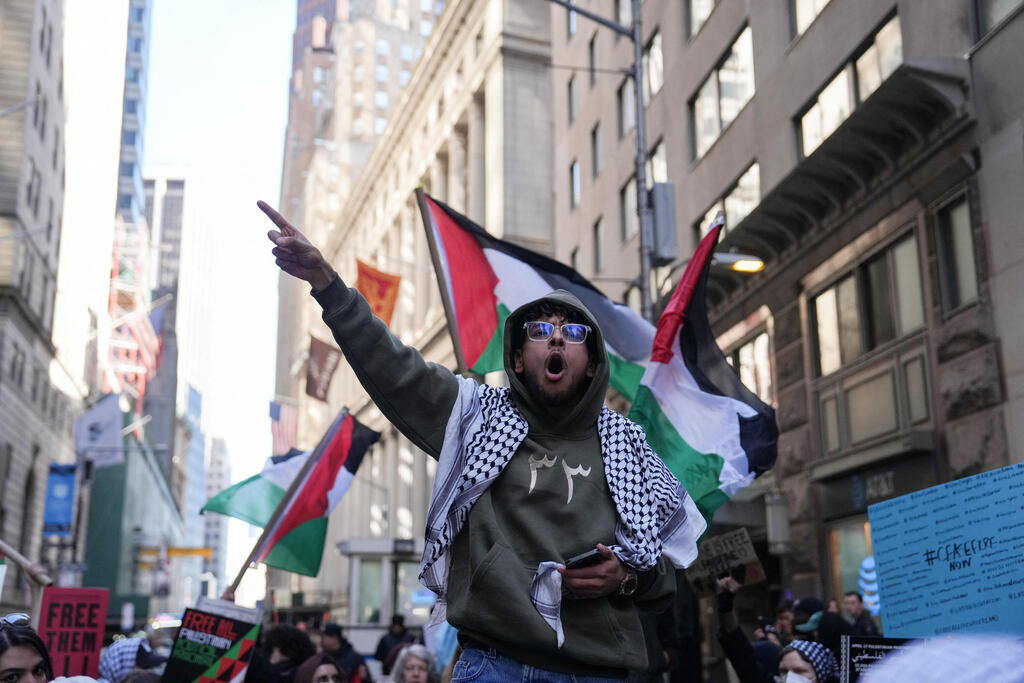
Pro-Palestinian rally, New York
(photo: David 'Dee' Delgado / רויטרס)
One of the concerns for members of the Israeli and Jewish community is the potential rise in antisemitic incidents. Already, the Jewish community faces instances of antisemitism, primarily targeting Orthodox Jews but also affecting businesses and restaurants.
"Personally, I haven't encountered antisemitism. You can walk around freely wearing a Star of David necklace, and Israeli restaurants here are very successful - sometimes it's hard to get a table", says Shuster. Among these popular establishments are Chef Eyal Shani's restaurant "Shmoneh" in Greenwich Village, which made the extended Michelin Guide list, his other restaurant "Miznon", the Middle Eastern restaurant "Balaboosta" by Chef Einat Admony, "Cheers Café 12", another Middle Eastern-style spot, "Ta'im" serving falafel, sabich, and hummus, as well as "Cleveland 19" and "Hummus Kitchen" in Chelsea.
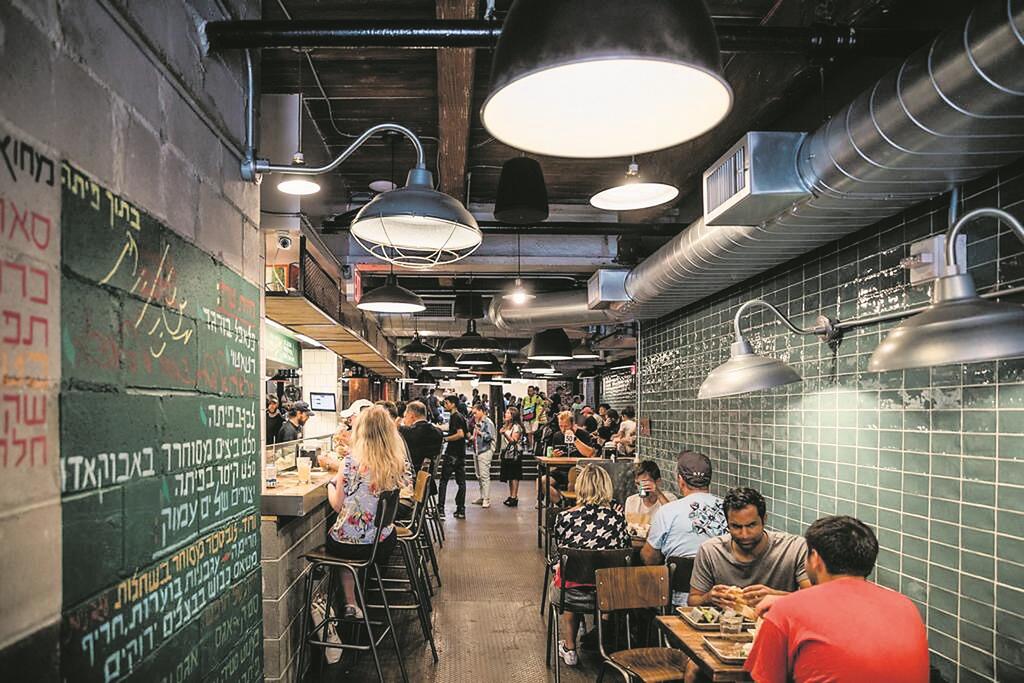
Miznon restaurant, New York
(photo: Matan Tzinman, PR)
The last two restaurants on the list faced direct pro-Palestinian activism a month after the outbreak of the war. At the first, diners had to stay inside while a pro-Palestinian march took place outside. The second experienced at least seven incidents, including hate graffiti, vandalism of the Israeli flag, protesters threatening staff, and even breaking a table during one of the demonstrations.
The Mamdani effect hasn’t been felt yet
Amid all the uncertainty, some residents choose to look ahead with hope. Ido Levin, an Israeli who has lived in New York for six years and currently works as an investment analyst in Manhattan, believes the storm surrounding the new mayor receives far more attention than it deserves. "Like any mayor, his term will pass", he says. "I'm not happy he's mayor, but I'm not rushing to panic either. I also believe those who voted for him will quickly realize their mistake. In any case, for us, New York is just a stopover. In a few years, we plan to return to Israel and raise our children there, close to family. Zionism is not a dirty word".
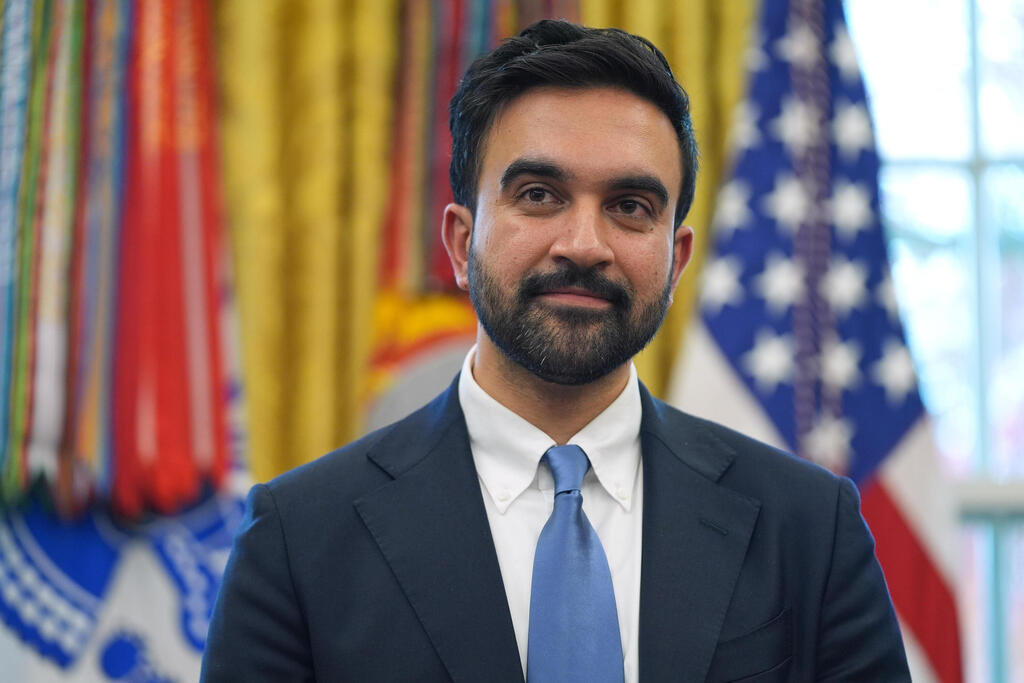
Zohran Mamdani
(photo: Evan Vucci / AP)
"It’s going to be a very challenging four years in New York, especially for Israelis and Jews", says Yoav Davis, owner of Davis Media. Davis, born in Israel to American parents, runs the social media network "Jews Of New York", where he has lived for the past ten years. "This is the largest digital channel in New York through which we reach millions of people every month, with over half a million followers, most of them in New York", Davis explains. "In every survey we conducted, 10–15% of our followers supported the new mayor. Our channel is the most pro-Israel, most Jewish, and most Zionist one out there. This only shows that even among those with pro-Israel views, some preferred him, partly because of the alternatives that ran against him".
Despite reports claiming that millionaires and Israelis are rushing to leave the city for Florida or other nearby states, it's not that simple. Jackie Teplitzky calls these rumors exaggerated. "I have a group of 15 people, and we also work in Florida. Everyone said: 'They're all going to Florida, and New York will become a ghost town'. But people don't really know New York or New Yorkers. There are families who have lived here for generations with deep roots. Leaving is hard for them. The Jewish community has very high standards when it comes to schools - they're elitist, and you won't find equivalents anywhere else in the U.S. Anyone with children will find it difficult to leave. Even during COVID, some went to Florida or Connecticut, but they didn't sell their homes, and in the end, everyone came back.”
Who can afford a $50,000-a-year school?
One of the most pressing issues for Israelis moving to New York is education. Not everyone can afford private schools in one of the world's most expensive cities. Those unable to pay $40,000–$50,000 a year for a Jewish private school often settle for the public school system, which, while free, lacks the same cultural and religious framework. In Manhattan, there are several Jewish schools, but the largest are The Frisch School on the Upper West Side and Ramah on the Upper East Side. Many Jewish parents choose to send their children there for exactly the reasons Teplitzky described - a combination of wanting to provide a high-quality Jewish education and the social connections both parents and children can build. Needless to say, attending these schools requires a correspondingly high income.
Teplitzky, who also sits on the board of the IAC, says she joined the organization to strengthen her children's Israeli identity. "It was on my shoulders - there weren't places where I could send my kids to really absorb this. They went to a Hebrew school in the afternoons, but all they taught there was how to prepare for their bar mitzvah. They didn't even know what they were reading, and no one talked to them about Israel. So every year I took them to Israel to meet other Israeli children and learn about the country.
"The assimilation rate among Israelis in the U.S. is higher than among American Jews because we take it for granted that they’ll marry Jews", she continues, "we’re Israelis, right? But it’s not like that. They grow up, go to college, and the chances of meeting and falling in love with someone who isn't Jewish are much higher".
That’s exactly what happened with her eldest son, who, despite all the investment in Jewish education and trips to Israel, married a non-Jewish partner. Her younger son, however, is married to Noa Kochava, who was crowned Miss Israel in 2021 and is now active in advocacy work in the U.S.