

Israeli defense technology company Smart Shooter said Wednesday it had won a contract worth up to $150 million from the U.S. Department of War to supply its SMASH systems for intercepting small drones, sending its shares up about 20% in Tel Aviv trading.
Under the agreement, Smart Shooter will serve as the sole supplier of the systems to Joint Interagency Task Force 401, or JIATF 401, which was established in August 2025 to lead efforts against small unmanned aerial vehicles.
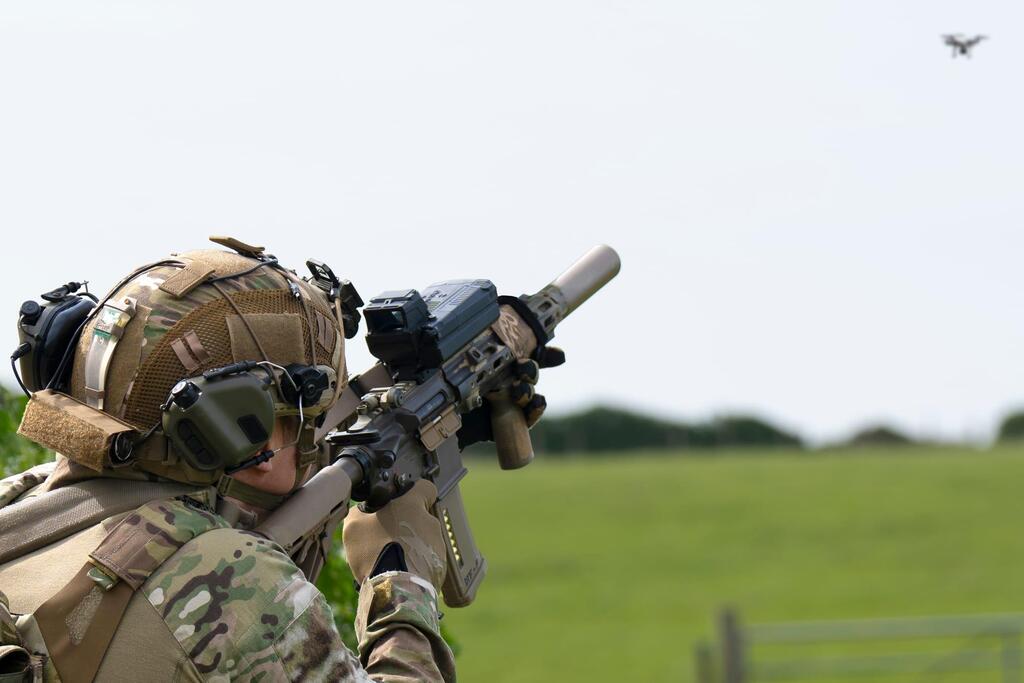
Smart Shooter’s rifle sight
(Photo: PR)
The task force brings together capabilities from the U.S. Army, Air Force, Navy and Marine Corps, as well as federal law enforcement agencies, to protect bases and counter drone threats in the United States and abroad. The contract is part of the Domestic Shield program, which supports force protection, base defense and responses to unmanned aircraft threats.
“There are two achievements in this agreement: recognition of our solution as the preferred one, which gives us sole-source supplier status, and the significant budget framework,” said Smart Shooter founder and CEO Michal Mor.
“The award is a major milestone in expanding our activity in the U.S. defense market. The SMASH systems are designed to provide the tools needed to stop small, fast-moving drones before they can strike forces, bases and strategic assets.”
The three-year agreement covers systems, training and service. The company said the technology is intended to improve the probability of hitting small, lightweight drones, increasing the effectiveness and survivability of soldiers using it.
It is the largest U.S. order Smart Shooter has received. The company stressed, however, that the $150 million figure represents the maximum value of the framework and does not obligate the U.S. government to purchase the full amount.
From precision missiles to rifle sights
Smart Shooter develops advanced fire-control sights mounted on small arms. Its SMASH systems use algorithms to process a target image, perform ballistic calculations and lock onto the target. Once the soldier pulls the trigger, the system releases the shot only when the calculated conditions are met.
Mor, who studied cognitive psychology, previously spent years at Rafael working in human factors engineering in the precision-missile division. The idea for Smart Shooter emerged after her husband was called up for reserve duty during the Lebanon War, when conversations with him convinced her that technology could help reservists regain shooting proficiency more quickly.
“I came from the world of precision missiles, where the trend is to make them smaller with the goal of minimum fire, maximum hit,” she said.
Mor and fellow Rafael veterans went on to develop the rifle-mounted system, which has gained traction as militaries increasingly seek ways to counter small drones.
The war in Ukraine and the growing battlefield threat from unmanned aircraft accelerated demand. SMASH systems are now used by security forces in the United States, Israel, Britain, Germany and other NATO members and allied countries.
The latest contract follows a series of new and follow-on agreements awarded to Smart Shooter over the past year in support of the U.S. Army, Navy, Air Force and Marine Corps. Thousands of SMASH systems are already in use across the U.S. military.
Smart Shooter went public on the Tel Aviv Stock Exchange in 2026 at a valuation of 900 million shekels. Revenue rose 27% in the first half of the year to $16.3 million, while its order backlog climbed to $51.6 million. The company ended the second quarter with a profit of $1.7 million.