


NIS 1.752 billion in card transactions—that is how much Israelis spent on Tuesday, election day for the 26th Knesset. Israelis took advantage of the election-day holiday to shop, visit cafes and enjoy outings with their children, spending more than on previous Knesset election days, according to data from Shva, the company that manages and develops Israel's national payments system.
The figure represents a 30.2% increase over the NIS 1.346 billion spent during the election for the 25th Knesset on Nov. 1, 2022. It is also about 10% higher than the previous election-day spending record, set during the municipal elections on Feb. 27, 2024, when card transactions in Israel totaled NIS 1.591 billion.
Gallery
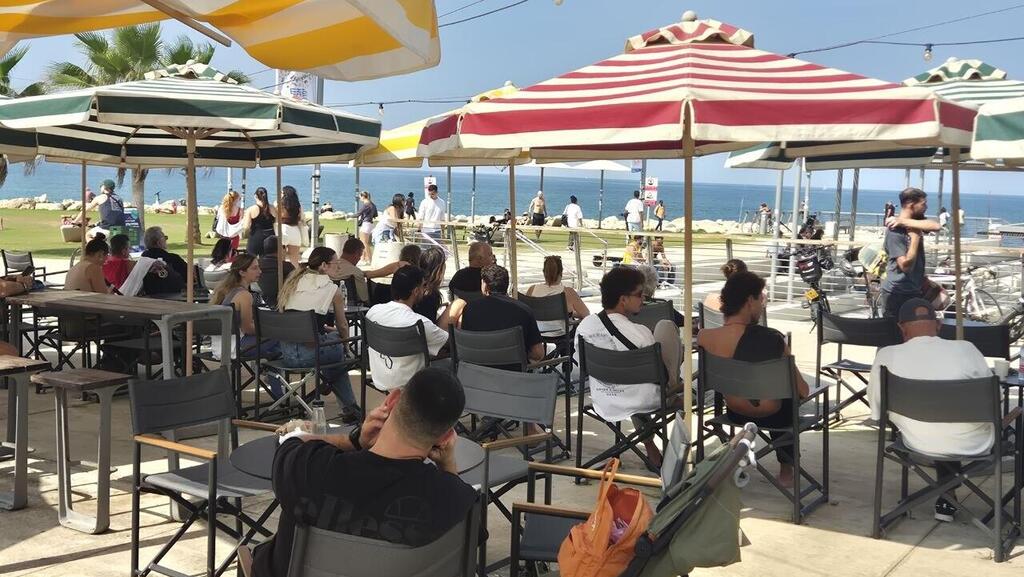
Tel Aviv's beaches and cafes on the election-day holiday for the 26th Knesset
(Photo: Assaf Kamar)
During the peak shopping hours Tuesday, between 8 a.m. and 5 p.m., Israelis spent NIS 1.149 billion using payment cards.
Spending increased by tens of percentage points across most sectors compared with previous election days. During the 2022 Knesset election, Israelis spent NIS 117.854 million at restaurants, cafes and fast-food outlets, compared with NIS 127.617 million during the 2024 municipal elections. This time, spending in the sector reached NIS 181.365 million, an increase of 53.89% over 2022 and 42.12% over the municipal elections.
Spending on leisure, entertainment and attractions was 72% to 136.6% higher than on previous election days, while hotel spending increased by 15% to 142%. Purchases of electrical appliances and electronics rose by 9% to 11%. As usual, the largest share of spending went to supermarket chains, totaling NIS 238.196 million, a sector where prices have also risen sharply since 2024.
For comparison, Israelis spent NIS 1.346 billion during the election for the 25th Knesset in November 2022, and NIS 1.249 billion during the election for the 24th Knesset on March 23, 2021. During the election for the 23rd Knesset on March 2, 2020, total card spending reached NIS 1.191 billion.
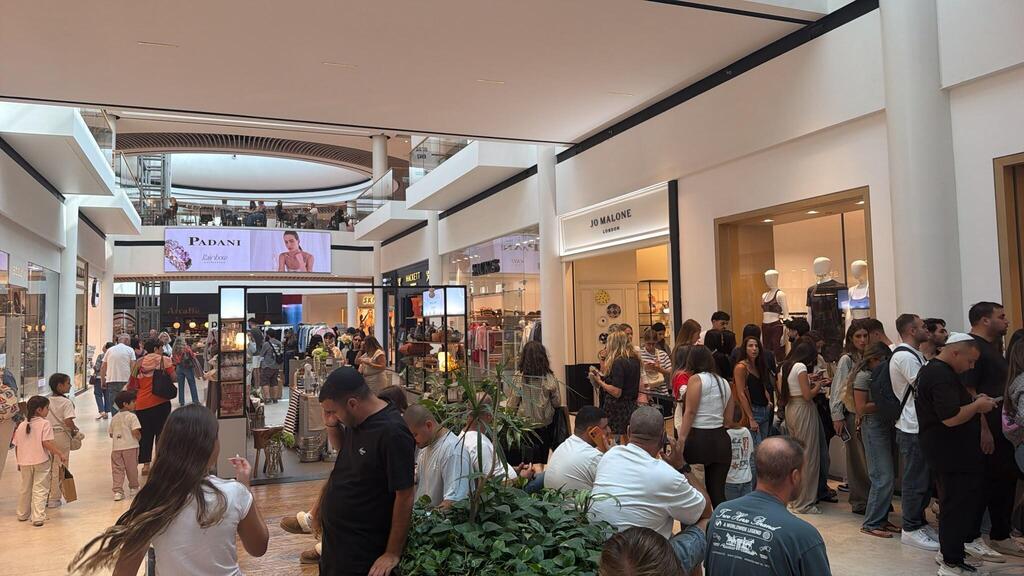
Shoppers line up outside stores at Ofer Ramat Aviv Mall at 9 a.m. on election day
(Photo: PR)
Fintech company Hyp reported that as of 5 p.m., the number of transactions had increased by 4.3% compared with the previous Tuesday, a regular shopping day. The fashion sector led the surge, with a 148% increase in transactions, while the average transaction value rose by about 9.8%. Fashion retailers are currently offering discounts ranging from 15% to 50%.
According to Hyp, the restaurant sector also recorded a 44.2% increase in the number of transactions, while the average transaction value jumped 47.5%. Food delivery services, however, saw a 15.3% decline in transactions, apparently because Israelis were not ordering meals to their workplaces and were spending the day outside their homes instead.
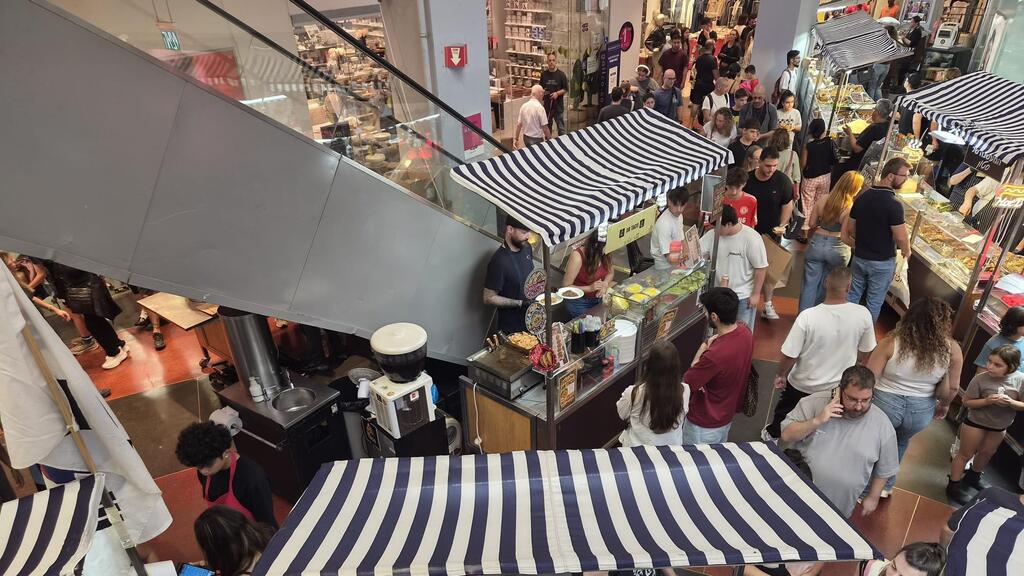
The food market at Dizengoff Center on election day
(Photo: Meirav Crystal)
According to an analysis by Adar Goren, Isracard's vice president of data, digital and marketing, "On election day, Israelis preferred sitting in cafes and doing plenty of shopping rather than buying online. In-store transactions rose by 58%, while online sales fell by 44% in value. The only sector to record an increase in online sales was clothing and footwear, where sales rose by 35%, although the increase in physical stores was 140%. In the electrical appliances sector, online shopping fell by 58%, compared with a 126% increase in in-store transactions."
Regionally, Eilat recorded a 7% decline in shopping, while purchases in the Sharon region tripled and those in Hadera and the Krayot area increased 2.5-fold. Tel Aviv recorded a more modest increase of 60%.
Electrical appliance retailer A.L.M. reported a 280% surge in visitors to its stores, 13% more than on election day in 2022. The day's leading sellers included the iPhone Duo, air filters and purifiers, and robotic vacuum cleaners. According to Maya Shalev Sharoni, A.L.M.'s vice president of marketing and deputy CEO, "The election-day holiday proved to be an exceptionally strong opening to November."
BIG Glilot reported "a much stronger day than Friday, the eve of a holiday or the intermediate days of a festival." According to the company, "By noon, more than 10,000 people had visited BIG Fashion Glilot, an increase of 134% compared with a regular day."
Retailers at Dizengoff Center reported a threefold increase in sales. The shopping center's food market was operating at a pace comparable to, or even busier than, a typical Friday.
Maor Zion, Dizengoff Center's marketing manager, said: "As of 1 p.m., election day is shaping up to be a major day for leisure activities at Dizengoff Center, similar to the trend we saw in previous elections. So far, about 22,000 visitors have arrived at the center, 2.5 times the number on a regular day. This year, demand for our sustainability tours has been particularly high, and they sold out quickly. There has also been strong interest in the food market, with chefs offering election-day specials."
Omer Ogolnik, CEO of Ofer Malls, told ynet: "Right now, we're seeing three times the number of visitors compared with a regular day, and 30% more than on the previous election day."
What about sales? Not everyone who visits a mall actually makes a purchase.
"That's a figure that changes constantly, but it's roughly 2.5 times the usual level. Israeli retail chains are offering discounts of around 30%. Some of the best promotions are the buy-one-get-one-free deals. International chains aren't offering special promotions today, although their sales are also up. There's a real festive atmosphere, and you can feel that people have come to spend the day here, have fun and enjoy their day off."
Are any malls seeing particularly high visitor numbers?
"Right now, Ramat Aviv Mall is absolutely packed. The Grand Mall in Petah Tikva is packed, and so is Rehovot Mall. The malls in Haifa and the Grand Mall in Beersheba are also extremely busy. We've increased security and reinforced our cleaning services."