

The war with Iran has lasted longer than many expected, but the oil market is still holding up. Despite high fuel prices, which have cost the average U.S. household nearly $800 since the war began, crude oil is still largely reaching its destinations more than six months into the conflict, and there is no significant shortage.
A CNN analysis found that the market has avoided extreme price spikes by finding alternative routes around the Strait of Hormuz, drawing on crude oil inventories and reducing global oil consumption.
Several oil analysts told CNN that the market could maintain this new status quo for the foreseeable future, even if the Strait of Hormuz remains in its current state — neither fully open nor completely closed. Under such a scenario, the Trump administration could, in theory, continue its confrontation with Iran for an extended period.
Others, however, fear that the delicate, improvised measures holding the oil market together will eventually fail, draining global inventories to a "tipping point." Energy prices would then have nowhere to go but up, potentially forcing the United States to end the war to avert an economic disaster.
Alternative routes found, but Houthis pose a threat
A special analysis by Natasha Kaneva, JPMorgan's head of global commodities strategy, concludes that the oil market has weathered the major shock far better than many had expected. Oil prices are high, but they have not reached record levels.
First, she noted, the market has managed to find significant alternative routes to bypass the Strait of Hormuz or move supplies through it. Saudi Arabia has used pipelines to divert several million barrels of oil a day to ports beyond Iran's reach, though the Houthis' military advances have raised questions about the viability of that strategy.
The U.S. military has coordinated with Gulf states to escort a covert shuttle operation designed to move oil through the strait. The United States, Venezuela, Brazil, Guyana and Canada have together increased production by about 2 million barrels a day.
Second, most countries outside the United States and China have drawn down their oil reserves far less than expected, preserving supplies that governments can tap if conditions deteriorate significantly.
Third, global oil demand has fallen sharply during the war — by about 5 million barrels a day. Consumers around the world have canceled travel plans, switched to electric vehicles or begun taking buses. Some businesses have encouraged employees to work from home to reduce commuting.
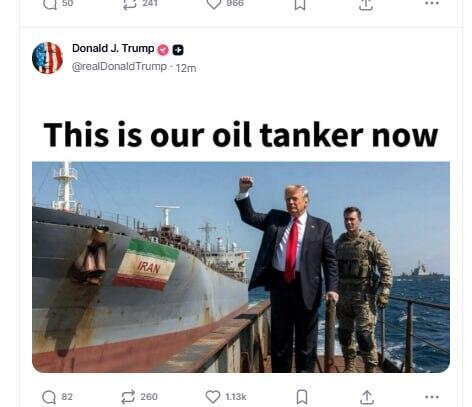
AI-generated post shared by Trump; mutual threats over control of oil and the strait
Together, those factors have helped offset the roughly 13 million barrels a day lost during the war. Kaneva argues that this new balance could last for some time. The market is functioning, albeit at somewhat higher prices.
JPMorgan is not forecasting an endless war. But if that were to happen, Kaneva said oil prices would likely stabilize at around $87 a barrel — well below current levels. If the war ends, the bank estimates prices could fall much further, to $64 a barrel.
Bob McNally, president and co-founder of Rapidan Energy Group, is more pessimistic. His outlook assumes either an endless war or what he calls a "muddle-through" scenario, which would leave Brent crude at about $89 a barrel next year.
"We don't see a full return of Hormuz," said McNally, who served as an energy adviser to President George W. Bush. "A forever war – by jeopardizing the world’s most important supply region – will accelerate the boom in oil and gas prices."
'Probably a forever war'
Although the oil market has stabilized into a new normal, the fragile system keeping it functioning contains several weak points that could fail if tested over time.
The United States and China have relied heavily on their oil reserves to cushion the impact of the war. Those stockpiles have lasted much longer than expected.
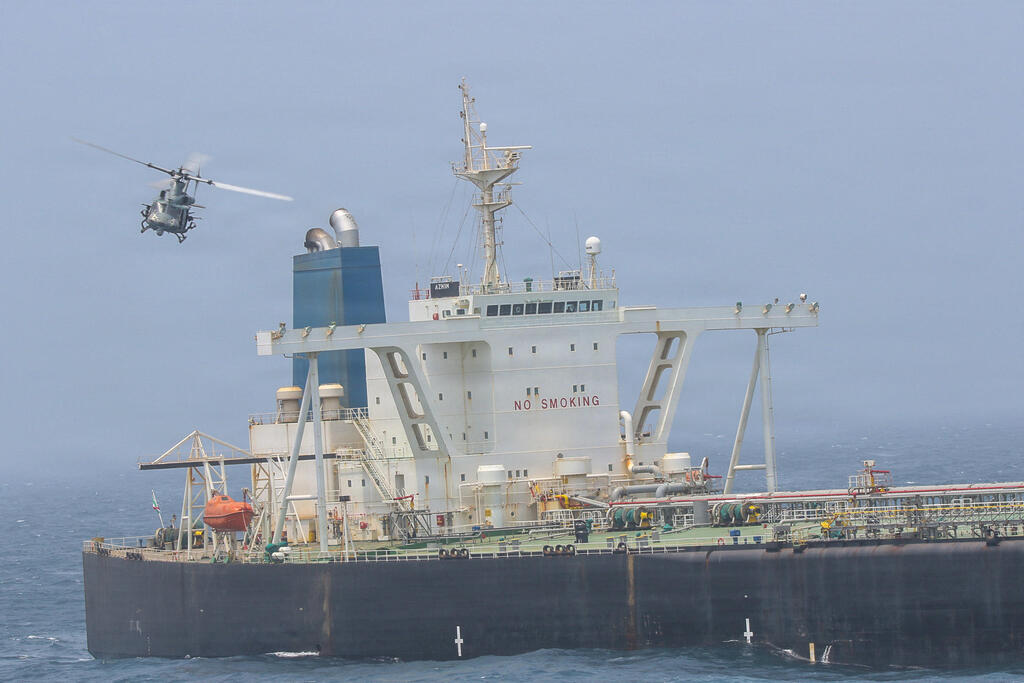
US Marines board an oil tanker in the Gulf of Oman
(Photo: AFP PHOTO / NAVCENT PUBLIC AFFAIRS / U.S. MARINE CORPS)
At some unknown point in the future, however, those inventories will be depleted if the war continues for a prolonged period, said Hamad Hussain, a commodities economist at Capital Economics. That could create an extreme imbalance between supply and demand and send oil prices sharply higher — exactly what most analysts initially expected at the start of the war.
"It’s not the hidden hand of the market. It’s the military finding a way," said Helima Croft, head of global commodity strategy at RBC Capital Markets.
Croft, a former CIA analyst, stressed that U.S. military power is not unlimited.
One CEO of a major bank told CNN that the U.S.-Iran confrontation "probably is a forever war."
"I’m not losing sleep over it, but we should be prepared for that," the bank CEO said. "A forever war would leave everyone feeling edgy, but after a certain point you realize it’s just the new normal."
"The market isn't returning to calm," said Jim Burkhard, head of global crude oil research at S&P. "It is adjusting to the new normal defined by unresolved conflict and persistent maritime risk."